

Contents
- Why Fleet Risk Is Inherently Multimodal
- Why Single-Source Safety Models Keep Missing Risk
- What Multimodal AI Fusion Actually Looks Like
- How Multimodal AI Improves Risk Prediction
- Fleet Use Cases That Become Sharper With Fusion
- What a Solid Multimodal Stack Requires
- Business ROI That Actually Materializes
- FAQ
Why Fleet Risk Is Inherently Multimodal
Fleet safety risk does not emerge from a single failure point. It develops gradually, often invisibly, across driver behavior, vehicle dynamics, operational pressure, and regulatory constraints. Yet many fleet safety systems still operate as if risk can be understood through one lens at a time.
A camera may detect lane drift. Telematics may register a speed fluctuation. An ELD log may show a driver nearing the end of a long duty cycle. Each signal tells part of the truth, but none tells the whole story. When these signals are evaluated independently, fleets are forced to guess at intent, severity, and preventability.
Multimodal AI for Fleet Safety addresses this structural blind spot. It treats driving as a complex, interconnected system rather than a sequence of isolated events. By fusing video, telematics, and ELD data into a single analytical framework, multimodal AI reveals patterns that no single-source model can detect.
This shift matters because the road itself is multimodal. Risk is not an alert — it is a convergence. Fleets that recognize this move beyond reactive safety programs and toward predictive risk control. Increasingly, platforms that integrate AI video, vehicle telemetry, and compliance data are showing measurable reductions in incidents, claims, and driver turnover because context sharpens judgment.
Why Single-Source Safety Models Keep Missing Risk
Video-Only Models Misread Driver Intent
AI-powered cameras have transformed visibility into driver behavior. Lane departures, close following, distraction, rolling stops, and near-miss events can now be detected automatically and at scale. However, video-only systems struggle with one critical limitation: they capture what happened, not why it happened.
For example, a forward-facing camera may flag a hard braking event. Without additional context, that event may be labeled as aggressive driving. In reality, the driver may have been responding appropriately to a sudden cut-in, an unexpected obstacle, or a steep downhill grade.
Vehicle physics matter. Road conditions matter. Traffic flow matters. Without telematics inputs — such as speed delta, brake force, grade, or yaw — video models risk overestimating danger and misclassifying defensive behavior as risky conduct.
This is not a trivial problem. Over time, misclassification erodes driver trust and undermines coaching effectiveness. Drivers are less likely to accept feedback when the system consistently ignores situational reality.
Telematics-Only Models Miss the Human Layer
Telematics systems excel at measuring motion and force. They quantify speeding, harsh braking, rapid acceleration, sharp turns, and tailgating with precision. These metrics are invaluable, but they are incomplete.
Telematics cannot see distraction, fatigue, eye movement, or situational awareness. It cannot distinguish between a driver reacting late due to inattention and a driver responding quickly to an external hazard. As a result, telematics-only models often trigger alerts without explaining causality.
This gap leads to inefficient coaching. Safety managers may spend time correcting behavior that was actually appropriate, while genuine human-risk factors — fatigue, distraction, cognitive overload — remain unaddressed.
Industry guidance consistently shows that pairing telematics events with video context transforms abstract metrics into actionable insights. Multimodal AI for Fleet Safety automates this pairing and scales it across the fleet.
ELD-Only Models See Compliance but Not Danger
ELD systems are designed for regulatory compliance, not behavioral risk assessment. They are excellent at tracking hours of service, break patterns, and duty status changes. They are also a powerful indicator of fatigue exposure.
However, ELD data does not observe real-world driving behavior. A driver may be fully compliant on paper and still operating at elevated risk due to distraction, stress, or environmental complexity. Conversely, a driver near an HOS threshold may be operating safely under stable conditions.
When ELD data is evaluated in isolation, fleets risk conflating paperwork violations with safety risk — and missing genuine danger that occurs within regulatory bounds. Multimodal AI resolves this by aligning compliance context with behavioral and vehicle data.
Single-source systems, in effect, act like clinicians diagnosing patients based on one vital sign. They provide signals, not understanding.
What Multimodal AI Fusion Actually Looks Like
Multimodal AI for Fleet Safety is not about collecting more data. It is about aligning data streams into a shared timeline so relationships become visible.
Video Intelligence Layer
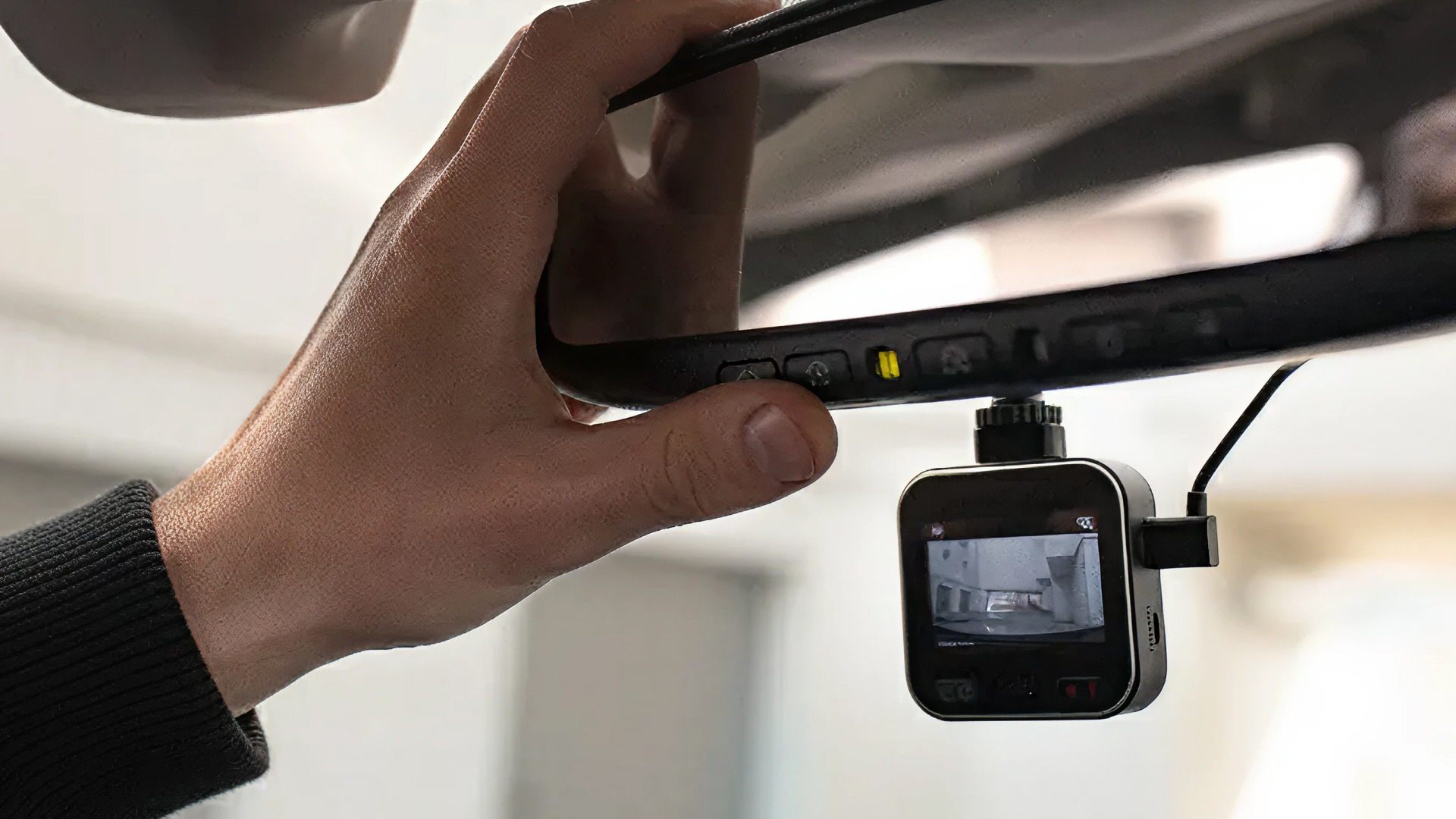
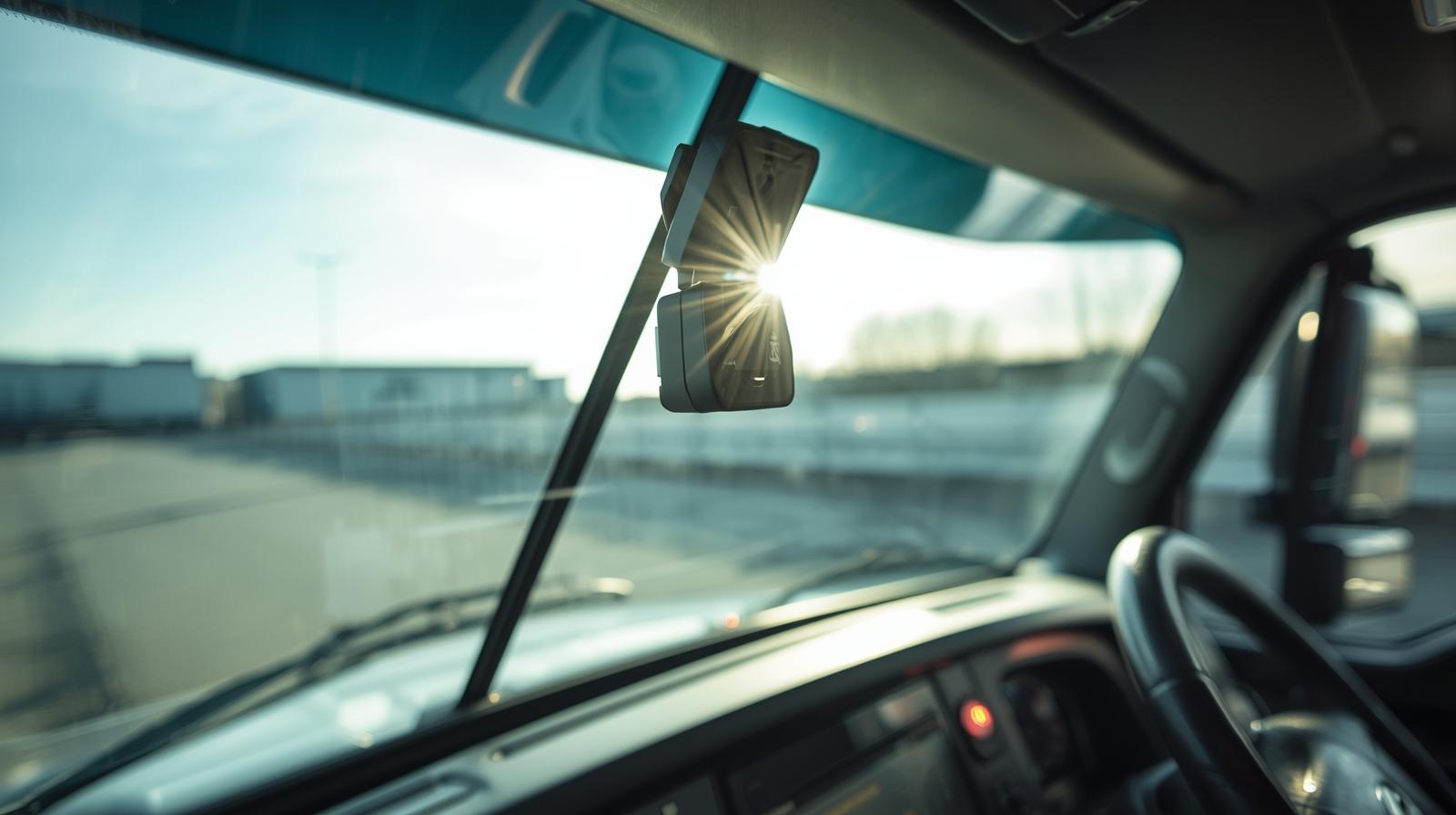
AI-powered dashcams — both road-facing and cabin-facing — form the observational layer. These systems detect:
- Lane drift and lane departures
- Close following and tailgating
- Driver distraction and drowsiness indicators
- Cut-ins, blind-spot conflicts, and near misses
- Traffic signal and stop sign compliance
Edge AI processes these events locally, enabling low-latency alerts and offline functionality while sending condensed, relevant clips to the cloud.
Telematics and Vehicle Signal Layer
Telematics provides the physical and environmental context:
- Speed profiles and acceleration curves
- Braking force and steering input
- Yaw rate and stability metrics
- Engine diagnostics and fault codes
- GPS-derived grade, curvature, and road type
These signals explain how the vehicle responded to a situation and whether driver input aligned with safe operating limits.
ELD and Duty-Time Context Layer
ELD data contributes temporal and regulatory insight:
- Hours remaining in the duty window
- Break timing and compliance patterns
- Circadian rhythm and fatigue exposure
- Split sleeper configurations
- Adverse driving condition annotations
The true value emerges when these layers are synchronized. Multimodal AI learns compound relationships, such as:
- Night driving + high duty load + lane variability = fatigue escalation
- Harsh braking + cut-in video + downhill grade = defensive maneuver
This is how context transforms alerts into understanding.
How Multimodal AI Improves Risk Prediction
Better Recall on Real Risk
Risk rarely announces itself loudly. More often, it appears as a combination of weak signals that only become meaningful when viewed together. Multimodal AI improves recall by detecting these compound patterns earlier.
Research in driver monitoring consistently demonstrates that multimodal systems outperform single-sensor approaches because behavior is layered across visual, physical, and temporal dimensions. In fleet operations, the same principle applies.
Fewer False Positives
False positives are costly. They consume manager time, frustrate drivers, and dilute attention from true risk. Fusion allows the system to downgrade or reclassify events that appear dangerous in isolation but are normal given context.
This precision reduces alert fatigue and increases the credibility of safety interventions.
More Precise Coaching
Context-based coaching is measurably more effective than generic feedback. Multimodal AI enables coaching conversations that are specific, situational, and defensible.
Drivers can see what happened, understand why it mattered, and learn exactly how to respond differently next time. That specificity accelerates behavior change.
Fleet Use Cases That Become Sharper With Fusion
Fatigue Prediction
Fatigue emerges gradually. ELD shows long duty cycles. Video detects slower eye movement or lane variability. Telematics reveals micro-corrections and delayed inputs.
Together, these signals enable early intervention — before fatigue becomes an incident.
Aggressive vs. Defensive Driving Separation
Multimodal AI distinguishes between risky behavior and appropriate response. This prevents unfair coaching and preserves driver trust, which is critical for long-term safety culture.
High-Risk Corridor Mapping
By combining GPS clustering, telematics events, video validation, and time-of-day patterns, fleets can identify structurally dangerous corridors and adjust routing or training accordingly.
Compliance Edge Case Support
Fusion reduces audit friction by validating parked status, stop duration, and intent during split sleeper or adverse condition scenarios.
Insurance-Grade Safety Scoring
Multi-signal safety scores are more credible, more actionable, and more defensible. They align with real-world behavior rather than abstract metrics.
What a Solid Multimodal Stack Requires
- Precise timestamp synchronization across devices
- Event-level fusion, not raw data overload
- Edge inference for resilience and speed
- Transparent scoring logic drivers can understand
- Closed-loop learning where coaching outcomes refine models
Without these elements, multimodal AI becomes a marketing claim rather than an operational advantage.
Business ROI That Actually Materializes
Multimodal AI for Fleet Safety drives measurable returns:
- Fewer preventable incidents
- Reduced false alerts and wasted coaching time
- Faster driver improvement curves
- Lower claim exposure through better evidence
- Higher driver retention due to perceived fairness
- Reduced administrative burden in audits and investigations
These outcomes align directly with executive priorities: cost control, risk reduction, and operational resilience.
Multimodal AI for Fleet Safety represents a structural evolution, not a feature upgrade. It reflects a more realistic understanding of how risk forms on the road — through interaction, not isolation.
Fleets that adopt fusion move from hindsight to foresight. They stop reacting to incidents and start preventing them. In an environment where margins are tight and expectations are rising, that shift is no longer optional. It is the new baseline.
FAQ
1. What is multimodal AI in fleet safety?
It is an AI approach that fuses video, telematics, and ELD data into a unified model to assess risk using full behavioral, vehicle, and duty context.
2. Why are video-only systems insufficient?
They lack vehicle physics and duty context, which leads to misinterpretation of defensive maneuvers.
3. How does fusion reduce false alerts?
By cross-validating signals, isolated events are interpreted within real-world conditions.
4. Can multimodal AI predict fatigue earlier?
Yes. It detects converging fatigue indicators before critical thresholds are reached.
5. Does this help with compliance?
Yes. It reduces form-and-manner errors and strengthens audit defensibility.
6. What data quality issues matter most?
Timestamp accuracy, GPS reliability, camera calibration, and clean ELD metadata.
7. Is it cost-effective for small fleets?
Often yes, because fusion improves ROI from systems fleets already pay for.