

Contents:
- The Evolution of ELD Technology
- What Is a Self-Healing ELD System?
- How Automatic Troubleshooting Works in the Cloud
- The Role of Artificial Intelligence in Self-Healing Systems
- Predictive Maintenance and Fleet Reliability
- Operational Benefits for Fleet Managers
- Cybersecurity Challenges and Autonomous Protection
- The Future of Autonomous Fleet Ecosystems
- FAQ:
- What is a self-healing ELD system?
- How does automatic troubleshooting work in cloud-based ELD platforms?
- Why are self-healing ELD systems important for fleet management?
- Can self-healing ELD systems operate during internet connectivity loss?
- How does artificial intelligence improve ELD reliability?
- What types of issues can self-healing ELD systems resolve automatically?
- Do self-healing ELD systems improve FMCSA compliance?
- How do self-healing systems support predictive maintenance?
- Are cloud-based self-healing ELD systems secure?
- What is the future of self-healing fleet technology?
The transportation and logistics industry is undergoing a profound technological transformation driven by automation, cloud computing, and intelligent telematics infrastructure. At the center of this evolution stands the Electronic Logging Device (ELD), a system that has become indispensable for regulatory compliance, operational visibility, and fleet management efficiency. However, as fleets increasingly depend on connected technologies, the reliability of ELD systems has emerged as a mission-critical concern. Device malfunctions, synchronization failures, connectivity interruptions, and firmware instability can significantly disrupt operations, increase compliance risks, and reduce fleet productivity.
To address these challenges, the industry is moving toward a new generation of intelligent telematics platforms known as self-healing ELD systems. These cloud-based architectures leverage artificial intelligence (AI), predictive diagnostics, and automated recovery protocols to detect, diagnose, and resolve technical issues autonomously. Instead of relying exclusively on manual troubleshooting or technical support intervention, self-healing systems can recover from failures in real time while maintaining operational continuity.
As fleet ecosystems become increasingly digitized, self-healing ELD infrastructure represents a major advancement in reliability engineering, compliance assurance, and autonomous fleet operations.
The Evolution of ELD Technology
Traditional ELD systems were primarily designed to replace paper logs and ensure Hours of Service (HOS) compliance under Federal Motor Carrier Safety Administration (FMCSA) regulations. Early implementations focused mainly on recording driver activity, tracking vehicle movement, and storing compliance-related data. While these systems improved transparency and regulatory enforcement, they also introduced new technological dependencies.
Modern fleets now operate within highly interconnected digital ecosystems that combine telematics, GPS tracking, engine diagnostics, route optimization, maintenance platforms, and cloud-based analytics. In such environments, even minor ELD malfunctions can create cascading operational disruptions. Connectivity interruptions may result in delayed data synchronization, corrupted logs, or inaccurate driver records. Firmware incompatibilities can affect engine communication, while cloud outages may interrupt real-time fleet visibility.
The increasing complexity of fleet operations has therefore shifted the industry’s focus from simple data recording toward intelligent infrastructure resilience. Self-healing ELD systems are the result of this transition.
What Is a Self-Healing ELD System?
A self-healing ELD system refers to an intelligent telematics environment capable of autonomously identifying technical anomalies and initiating corrective actions without requiring direct human intervention. Borrowed from concepts originally developed in cloud computing and autonomous network management, self-healing architectures aim to minimize downtime through continuous monitoring and automated recovery mechanisms.
These systems combine several advanced technologies, including:
- Cloud-native infrastructure
- Artificial intelligence and machine learning
- Predictive analytics
- Remote diagnostics
- Automated firmware management
- Redundant communication channels
- Edge computing capabilities
Unlike conventional ELD solutions that rely heavily on manual troubleshooting, self-healing systems continuously evaluate their own operational status. If a fault occurs, the platform can automatically determine the source of the problem and implement recovery procedures in real time.
For example, if an ELD temporarily loses cellular connectivity, the system may buffer operational data locally, maintain uninterrupted driver logging, and automatically synchronize records once connectivity is restored. Similarly, if a software update introduces instability, the platform may autonomously roll back to a previously stable firmware version without affecting fleet operations.
This autonomous troubleshooting capability significantly reduces operational disruption while improving overall system reliability.
How Automatic Troubleshooting Works in the Cloud
The effectiveness of self-healing ELD systems depends heavily on cloud computing infrastructure. Cloud-based architectures provide centralized visibility, scalable processing power, and continuous communication between vehicles, devices, and management platforms.
Self-healing workflows generally follow four primary stages.
Continuous Monitoring
The system continuously collects operational telemetry from both vehicles and ELD devices. Key monitored parameters include:
- GPS synchronization accuracy
- Engine Control Module (ECM) communication
- Driver log integrity
- Firmware performance
- Battery and hardware health
- Cloud synchronization latency
- Application responsiveness
This constant monitoring creates a dynamic operational baseline that allows the platform to identify abnormalities immediately.
Fault Detection
Artificial intelligence and machine learning algorithms analyze incoming telemetry data for signs of instability or abnormal behavior. Unlike static rule-based systems, AI-driven diagnostics can recognize patterns that may indicate emerging failures before they escalate into critical incidents.
Examples of detectable anomalies include:
- Irregular communication intervals
- Unexpected device restarts
- GPS drift inconsistencies
- Abnormal engine data transmission
- Delayed HOS synchronization
By correlating these signals across thousands of vehicles and devices, cloud systems can rapidly identify both isolated malfunctions and broader systemic issues.
Automated Diagnosis
Once an anomaly is detected, the platform evaluates potential root causes using historical fault data, firmware records, and operational analytics. AI-driven systems can distinguish between hardware failures, network interruptions, software corruption, or cloud synchronization issues.
This diagnostic stage is particularly valuable because it eliminates much of the uncertainty traditionally associated with technical troubleshooting.
Autonomous Recovery
After identifying the issue, the system initiates corrective actions automatically. Recovery procedures may include:
- Restarting failed software services
- Re-establishing cloud synchronization
- Reconfiguring communication protocols
- Switching to backup network channels
- Rolling back unstable updates
- Repairing corrupted data sessions
- Restoring cached operational records
In many cases, these recovery processes occur silently in the background without requiring driver awareness or administrative intervention.
The Role of Artificial Intelligence in Self-Healing Systems
Artificial intelligence serves as the core decision-making engine behind autonomous ELD troubleshooting. AI-driven systems can process vast amounts of telematics data far more efficiently than conventional monitoring tools.
Machine learning models continuously improve their diagnostic accuracy by analyzing historical operational patterns across entire fleets. Over time, these systems develop predictive capabilities that allow them to identify potential failures before they occur.
For instance, AI may recognize that certain firmware behaviors consistently precede synchronization failures under specific network conditions. The system can then proactively adjust configurations or deploy preventative updates before operational disruption occurs.
This predictive capability transforms fleet management from a reactive discipline into a proactive operational model.
Additionally, AI enables self-healing systems to adapt dynamically to evolving operational environments. Unlike static software architectures, intelligent cloud systems continuously refine their recovery strategies based on new data and emerging operational trends.
Predictive Maintenance and Fleet Reliability
Self-healing ELD systems are closely connected to the broader concept of predictive fleet maintenance. Because ELD platforms already collect extensive vehicle telemetry, they serve as ideal gateways for monitoring equipment health and maintenance conditions.
By integrating engine diagnostics, sensor analytics, and historical maintenance records, cloud systems can identify early indicators of mechanical degradation. Examples include:
- Abnormal engine temperature patterns
- Battery voltage irregularities
- Transmission performance anomalies
- Brake system inconsistencies
- Excessive idle behavior
Predictive analytics allows fleet managers to address maintenance issues before they result in roadside failures or operational downtime. This capability significantly improves vehicle availability while reducing maintenance costs and unplanned service interruptions.
As predictive maintenance technologies mature, self-healing systems will likely evolve into comprehensive autonomous fleet reliability platforms.
Operational Benefits for Fleet Managers
The implementation of self-healing ELD systems offers several strategic advantages for transportation companies.
Reduced Downtime
Autonomous troubleshooting dramatically shortens recovery times by eliminating delays associated with manual diagnosis and technical support escalation. Faster recovery directly improves fleet utilization and operational continuity.
Improved FMCSA Compliance
Automated synchronization and data integrity controls help ensure accurate HOS reporting and reduce the risk of compliance violations caused by corrupted or incomplete records.
Lower IT and Support Costs
Because many technical issues are resolved automatically, fleets require fewer manual support interventions. This reduces both operational overhead and dependence on external technical services.
Enhanced Driver Experience
Driver frustration associated with malfunctioning ELD systems can negatively affect productivity and retention. Self-healing platforms reduce interruptions and minimize the need for manual troubleshooting procedures during active routes.
Greater Fleet Visibility
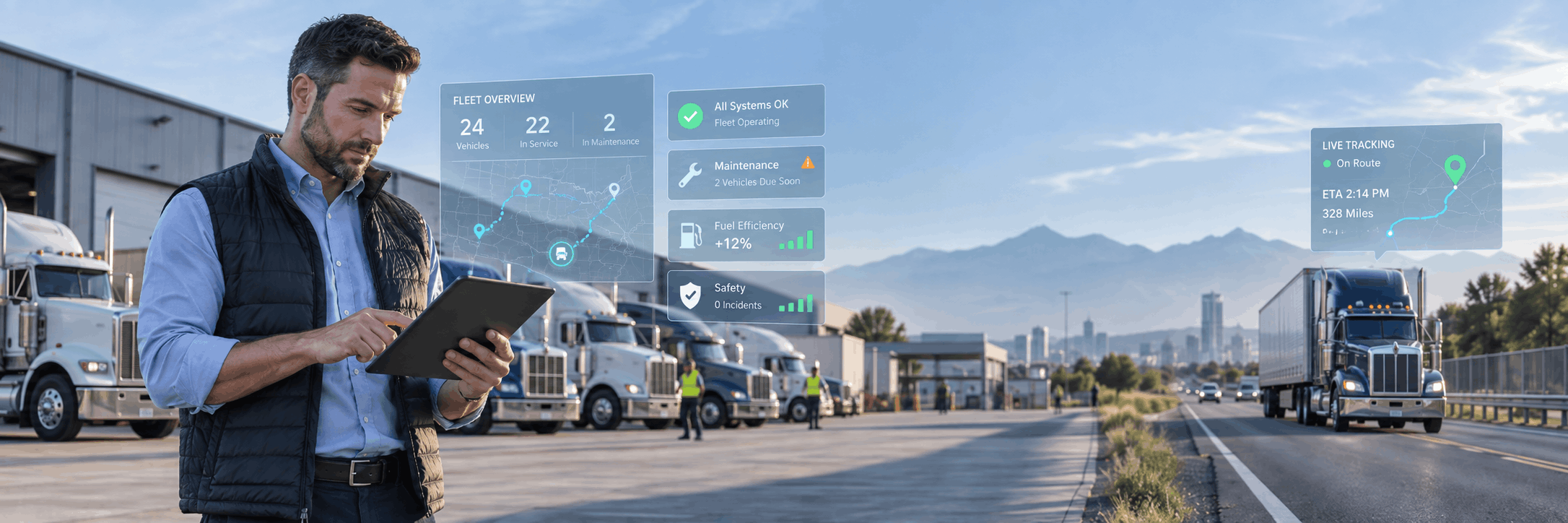
Cloud-native architectures provide centralized dashboards that allow fleet managers to monitor device health, compliance status, and operational performance in real time across the entire fleet ecosystem.
Cybersecurity Challenges and Autonomous Protection
As fleet systems become increasingly connected, cybersecurity has emerged as a major operational concern. Connected ELD devices may become targets for unauthorized access, firmware manipulation, or data interception attempts.
Self-healing architectures can also contribute to cybersecurity resilience through automated threat detection and recovery mechanisms.
Modern systems may incorporate:
- Encrypted cloud communication
- Firmware integrity verification
- Automated anomaly detection
- Unauthorized access isolation
- Secure over-the-air (OTA) update validation
- Autonomous rollback procedures
If suspicious activity is detected, the platform may isolate affected services, restore verified firmware versions, or block compromised communication channels automatically.
This capability is becoming increasingly important as fleets expand their reliance on connected infrastructure and remote operational management.
The Future of Autonomous Fleet Ecosystems
Self-healing ELD systems represent only the early stages of a broader movement toward fully autonomous fleet infrastructure. Emerging technologies such as edge AI, digital twins, and generative diagnostics are expected to further expand the capabilities of intelligent fleet management platforms.
Future systems may be capable of:
- Fully autonomous maintenance scheduling
- Real-time infrastructure adaptation
- Self-optimizing telematics performance
- Predictive compliance enforcement
- Autonomous communication routing
- Vehicle-to-cloud collaborative diagnostics
As AI models become more sophisticated, fleets may eventually operate within near-zero-downtime digital ecosystems where technical disruptions are corrected automatically before human operators become aware of them.
This evolution will fundamentally redefine operational reliability in the transportation industry.
Self-healing ELD systems are redefining how modern fleets approach reliability, compliance, and operational continuity. By integrating cloud computing, artificial intelligence, predictive diagnostics, and autonomous recovery capabilities, these platforms create a resilient telematics ecosystem capable of minimizing disruptions while maximizing efficiency.
As the logistics industry continues its transition toward fully connected infrastructure, the ability of fleet systems to detect and resolve problems independently will become increasingly valuable. Organizations that adopt intelligent self-healing technologies early will be better positioned to reduce downtime, improve compliance performance, optimize maintenance operations, and maintain competitive advantage within an increasingly data-driven transportation environment.
FAQ:
What is a self-healing ELD system?
A self-healing ELD system is an advanced telematics platform capable of automatically detecting, diagnosing, and resolving technical issues without requiring direct human intervention. These systems use cloud computing, artificial intelligence, and predictive analytics to maintain operational continuity, reduce downtime, and improve system reliability.
How does automatic troubleshooting work in cloud-based ELD platforms?
Cloud-based ELD systems continuously monitor device performance, connectivity status, firmware health, and operational telemetry. When anomalies are detected, AI-driven diagnostics evaluate the root cause and initiate automated corrective actions such as restarting services, restoring synchronization, rolling back software updates, or switching communication channels.
Why are self-healing ELD systems important for fleet management?
Modern fleet operations rely heavily on uninterrupted telematics connectivity and accurate compliance reporting. Self-healing systems minimize operational disruptions, reduce manual troubleshooting requirements, improve fleet uptime, and enhance overall reliability within connected transportation ecosystems.
Can self-healing ELD systems operate during internet connectivity loss?
Yes. Most self-healing ELD platforms incorporate edge computing and local data buffering capabilities. During connectivity interruptions, operational data is temporarily stored locally and automatically synchronized with the cloud once network access is restored.
How does artificial intelligence improve ELD reliability?
Artificial intelligence enables ELD systems to analyze large volumes of telemetry data in real time, identify abnormal operational patterns, predict potential failures, and automate recovery procedures. Machine learning algorithms continuously improve diagnostic accuracy based on historical fleet-wide operational data.
What types of issues can self-healing ELD systems resolve automatically?
Self-healing platforms can address a wide range of technical problems, including:
- GPS synchronization failures
- Cloud communication interruptions
- Firmware instability
- Corrupted data sessions
- Delayed Hours of Service synchronization
- Device performance anomalies
- Software service crashes
Do self-healing ELD systems improve FMCSA compliance?
Yes. Automated synchronization, continuous data integrity monitoring, and real-time diagnostics help reduce the risk of incomplete or inaccurate driver logs. These capabilities support more consistent Hours of Service compliance and improve regulatory reporting accuracy.
How do self-healing systems support predictive maintenance?
By integrating engine diagnostics and sensor telemetry, self-healing ELD systems can identify early signs of mechanical degradation. Predictive analytics enables fleet operators to address maintenance issues proactively before they result in vehicle breakdowns or operational delays.
Are cloud-based self-healing ELD systems secure?
Modern self-healing platforms typically include advanced cybersecurity mechanisms such as encrypted communications, firmware integrity validation, automated anomaly detection, secure over-the-air updates, and autonomous rollback procedures designed to protect fleet infrastructure against cyber threats.
What is the future of self-healing fleet technology?
The future of self-healing fleet systems will likely include deeper integration with edge AI, autonomous maintenance coordination, digital twins, and predictive compliance technologies. These innovations are expected to create highly resilient transportation ecosystems capable of minimizing downtime through fully automated operational recovery.