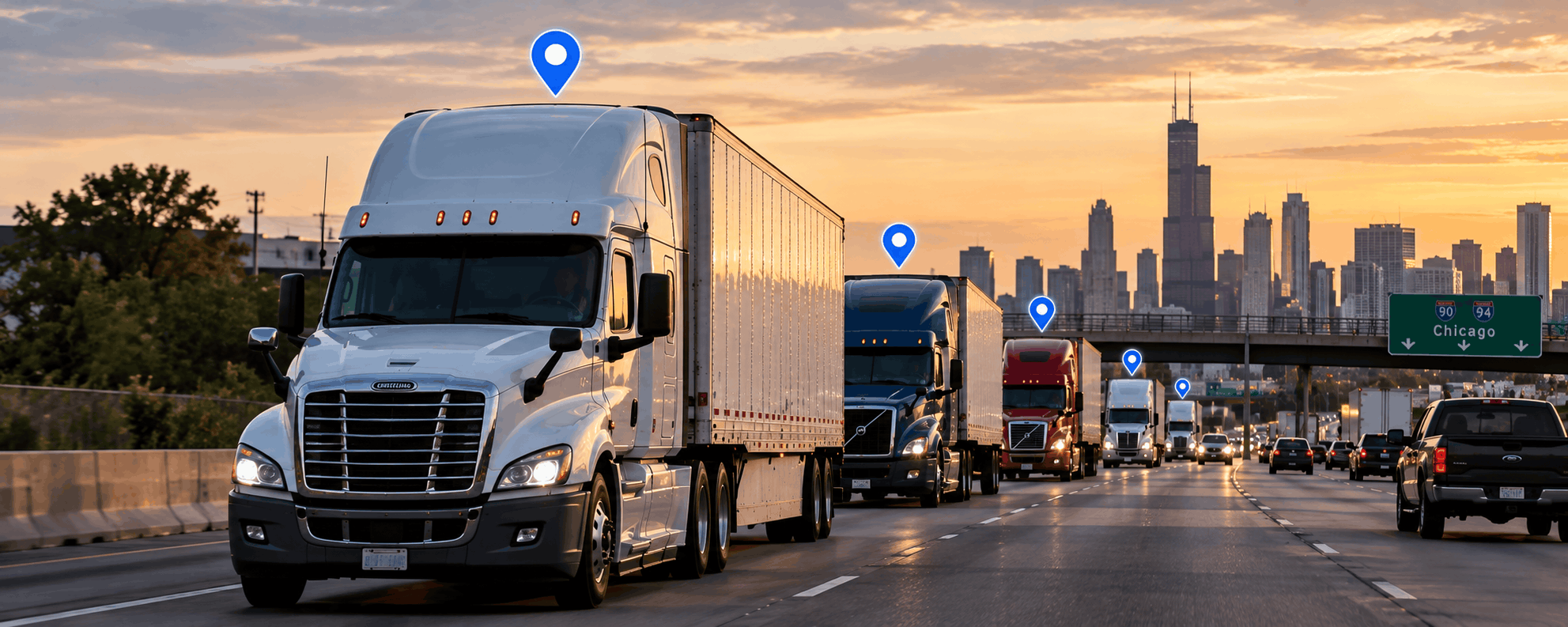


Driver productivity has a direct impact on fleet efficiency, operating costs, customer service, and overall business performance. For companies managing delivery vehicles, service vans, construction fleets, logistics operations, or mobile workforces, inefficient routes, excessive idling, unnecessary stops, and poor dispatching can reduce the number of jobs completed each day.
GPS tracking helps businesses improve driver productivity by providing real-time vehicle visibility and historical trip data. Fleet managers can use this information to optimize routes, reduce wasted time, improve dispatching, monitor vehicle utilization, and make better operational decisions.
When implemented correctly, GPS tracking is not simply a monitoring tool. It becomes a practical system for improving fleet performance and helping drivers complete their work more efficiently.
What Is Driver Productivity in Fleet Management?
Driver productivity refers to how effectively drivers use their working time to complete assigned tasks.
Depending on the business, productivity may be measured by:
- jobs or deliveries completed per shift;
- driving time versus idle time;
- average trip duration;
- miles driven per job;
- on-time arrival rate;
- stop duration;
- overtime hours;
- route efficiency.
The goal is not simply to make drivers travel faster. Productivity depends on reducing unnecessary activity while maintaining safe and efficient operations.
GPS fleet tracking gives managers the data required to identify where time and mileage are being lost.
How GPS Tracking Improves Driver Productivity
Real-Time Vehicle Tracking
Real-time GPS tracking allows dispatchers and fleet managers to see the current location of vehicles.
Without GPS visibility, dispatchers may need to call drivers to ask where they are or estimate vehicle locations based on schedules. This creates unnecessary communication and can result in inefficient job assignments.
With real-time tracking, dispatchers can identify the closest available driver and assign work more efficiently.
For example, if an urgent service request appears, the system can help determine which vehicle is already nearby. This reduces unnecessary travel and can improve response times.
More Efficient Route Planning
Poor route planning can lead to unnecessary mileage, longer travel times, and fewer completed jobs.
GPS tracking provides actual trip data that managers can analyze to identify inefficient routes, repeated detours, or delays.
When combined with route optimization tools, GPS data can help businesses:
- select more efficient routes;
- organize multiple stops;
- reduce unnecessary mileage;
- avoid repeated travel through congested areas;
- improve daily scheduling.
Better routing allows drivers to spend less time traveling and more time completing productive work.
Reduced Idle Time
Excessive engine idling can indicate lost productivity and unnecessary fuel use.
GPS fleet tracking systems can identify when vehicles remain stationary with the engine running and record how long these events last.
Managers can then determine whether excessive idling is caused by:
- waiting for assignments;
- loading or unloading delays;
- customer delays;
- inefficient scheduling;
- driver habits.
This distinction is important. GPS data should be used to identify operational problems, not automatically assume that the driver is responsible.
Reducing avoidable idle time can improve vehicle utilization and make more working time available for productive tasks.
Better Dispatching
Dispatching decisions are more effective when managers know where every vehicle is located.
GPS tracking makes it easier to assign new jobs based on proximity, workload, and availability.
This can reduce situations where one driver travels across the service area while another driver is already nearby.
More efficient dispatching can lead to:
- shorter travel distances;
- faster customer response;
- fewer schedule disruptions;
- improved vehicle utilization;
- more jobs completed per shift.
For businesses with large service areas, dispatch efficiency can have a major impact on productivity.
Improved Schedule Adherence
GPS tracking allows managers to compare planned schedules with actual vehicle activity.
They can see:
- when a vehicle leaves;
- when it arrives at a customer location;
- how long it remains there;
- when the next trip begins.
This data can reveal recurring scheduling problems.
For example, if drivers regularly need 40 minutes at a location that was allocated only 20 minutes, the schedule may be unrealistic.
Using historical GPS data helps fleet managers create more accurate schedules and reduce unnecessary pressure on drivers.
Fewer Unnecessary Stops and Detours
GPS trip history shows where vehicles traveled during the working day and how long they remained at each location.
This can help managers identify repeated route deviations or unnecessarily long stops.
However, individual events should always be reviewed in context. Traffic conditions, mandatory breaks, customer requirements, road closures, and operational changes may all explain route deviations.
The most useful approach is to analyze patterns over time.
GPS Tracking Provides Better Driver Performance Data
GPS tracking provides objective information about fleet activity.
Common metrics include:
- total driving time;
- idle time;
- trip duration;
- stop duration;
- total mileage;
- arrival and departure times;
- route deviations;
- vehicle utilization.
These metrics can help managers identify trends that would otherwise be difficult to see.
For example, if several drivers experience delays on the same route, the problem is probably not individual driver performance. The route or schedule may need to be changed.
This makes GPS data valuable for both driver performance management and broader process improvement.
GPS Tracking Reduces Administrative Work
Drivers and dispatchers often spend valuable time communicating basic operational information.
Drivers may need to call the office to report:
- their current location;
- arrival at a customer site;
- completion of a job;
- mileage;
- departure time.
GPS tracking can automate much of this information.
Location history and trip records can provide a digital record of vehicle movements, reducing the need for repeated calls and manual reporting.
This allows drivers to focus more on their actual work while dispatchers spend less time checking vehicle status.
Benefits of GPS Tracking for Drivers
GPS tracking is often discussed as a management tool, but it can also improve the working experience for drivers.
Benefits may include:
- fewer calls from dispatch asking for location updates;
- more efficient job assignments;
- clearer schedules;
- better route information;
- automatic trip records;
- faster support when delays occur;
- objective records of arrival and departure times.
GPS data can also help verify that a driver arrived at a customer location as scheduled.
For this reason, businesses should clearly explain how GPS data will be collected and used.
How GPS Tracking Supports Fleet Efficiency
Driver productivity and fleet efficiency are closely connected.
When drivers follow more efficient routes and spend less time idling or waiting for assignments, businesses can often reduce unnecessary vehicle usage.
GPS tracking can help identify:
- unnecessary trips;
- repeated route inefficiencies;
- excessive idling;
- poor vehicle allocation;
- inefficient scheduling.
These improvements may also contribute to lower fuel consumption and reduced vehicle wear.
However, GPS technology alone does not automatically create savings. The value comes from analyzing the data and making operational changes based on what it reveals.
Best Practices for Improving Productivity With GPS Tracking
Businesses should define clear goals before using GPS tracking as a productivity tool.
A good strategy may include:
- selecting a small number of relevant KPIs;
- comparing performance trends over time;
- considering traffic and job complexity;
- reviewing route efficiency regularly;
- using data for coaching rather than punishment;
- communicating tracking policies clearly;
- protecting driver privacy;
- complying with applicable employment and privacy rules.
Managers should avoid using one metric as the sole measure of productivity.
For example, shorter travel time does not necessarily mean better performance if it results from unrealistic scheduling or unsafe driving.
How to Measure Results
To determine whether GPS tracking is improving productivity, compare operational metrics before and after implementation.
Useful KPIs include:
- jobs completed per day;
- average travel time;
- idle time;
- miles driven per job;
- average stop duration;
- on-time arrival rate;
- overtime hours;
- total fleet mileage.
Tracking these metrics over several weeks or months can provide a clearer picture of whether operational changes are working.
Frequently Asked Questions
Can GPS tracking improve driver productivity?
Yes. GPS tracking can improve productivity by providing better visibility into routes, vehicle locations, idle time, trip duration, and scheduling. The greatest benefits come when businesses use the data to improve workflows and dispatching.
Does GPS tracking reduce idle time?
It can help identify when and where excessive idling occurs. Managers can then investigate the cause and address avoidable delays.
Can GPS tracking improve route planning?
Yes. GPS trip history helps managers understand actual travel patterns, while route optimization tools can use location data to improve route selection and stop sequencing.
Is GPS tracking useful for small fleets?
Yes. Small fleets can benefit because even a few inefficient trips, long idle periods, or poorly assigned jobs can significantly affect operating costs and customer service.
GPS tracking can improve driver productivity by giving businesses clearer insight into how vehicles and drivers operate throughout the working day.
Real-time vehicle tracking, route history, idle-time monitoring, and trip data can help fleet managers improve dispatching, create more realistic schedules, reduce unnecessary mileage, and make better use of available vehicles.
The most effective approach is to use GPS tracking as a tool for operational improvement rather than simple surveillance.
When combined with clear performance goals, transparent policies, and thoughtful analysis, GPS tracking can help businesses create more efficient workflows, improve driver performance, and increase overall fleet productivity.