

Managing a fleet efficiently requires more than knowing where vehicles are. Fleet managers also need to understand how vehicles are being used, where delays are happening, how drivers are performing, and which operational issues require immediate attention.
Real-time analytics gives fleet operators access to live data about vehicles, routes, drivers, fuel usage, and other key performance indicators. Instead of waiting until the end of the day or week to review reports, managers can see what is happening across the fleet as events occur.
This visibility can help businesses make faster decisions, reduce inefficiencies, improve vehicle utilization, and respond to operational problems before they become more expensive.
What Is Real-Time Fleet Analytics?
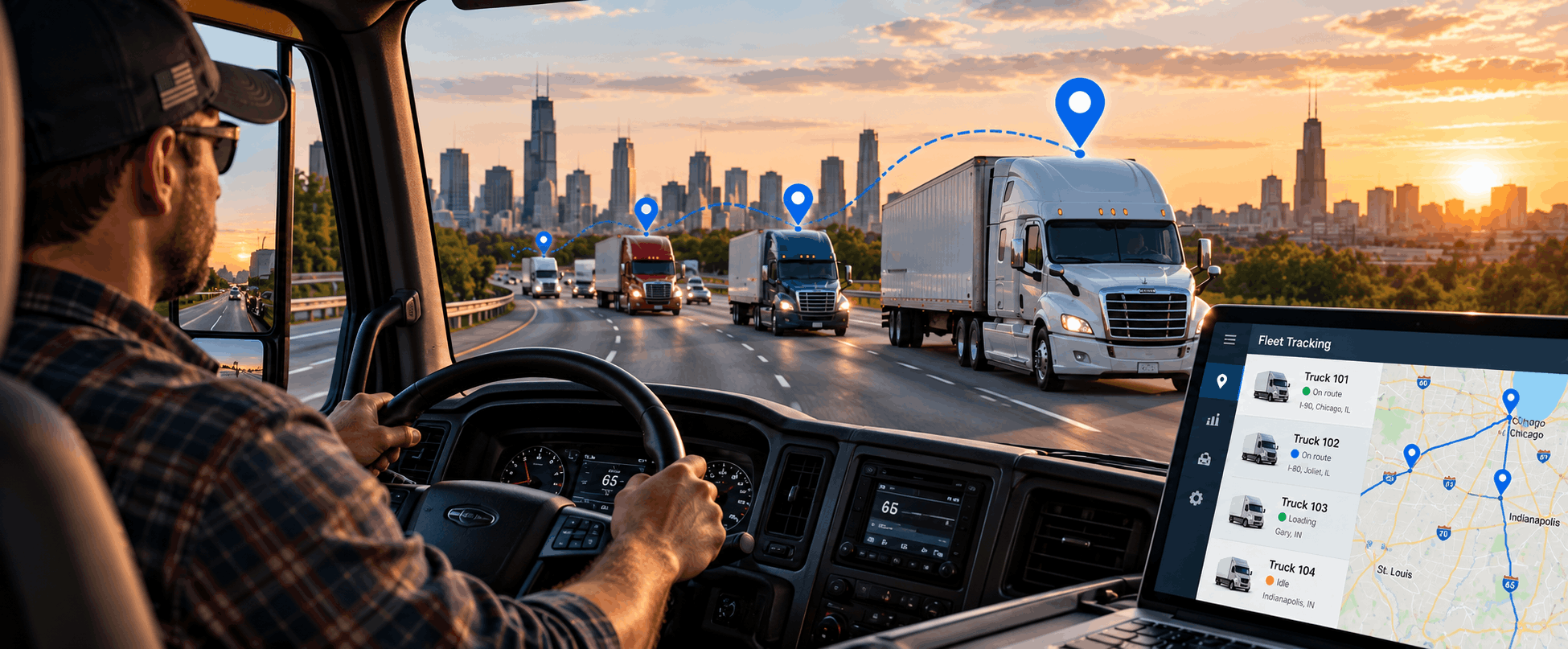
Real-time fleet analytics is the process of collecting and analyzing live data from vehicles and fleet management systems.
Depending on the technology used, this data may include:
- vehicle location;
- speed;
- route progress;
- idle time;
- fuel usage;
- engine status;
- driver behavior;
- trip duration;
- stop duration;
- delivery or job status.
The main difference between real-time analytics and traditional reporting is timing.
Traditional reports explain what already happened. Real-time analytics helps managers understand what is happening now.
Both are valuable, but live data gives fleet operators the ability to respond immediately when a problem appears.
Why Real-Time Data Matters for Fleet Performance
Fleet performance can change throughout the day.
Traffic congestion, unexpected vehicle issues, delayed deliveries, excessive idling, and route deviations can all affect productivity.
Without real-time data, managers may not discover these problems until they have already caused delays or increased operating costs.
Live analytics can help fleet managers:
- identify problems quickly;
- respond to delays;
- allocate vehicles more efficiently;
- improve dispatching;
- monitor driver activity;
- reduce unnecessary downtime.
The value of real-time analytics comes from turning live information into operational decisions.
How Real-Time Analytics Improves Fleet Performance
Better Vehicle Utilization
Vehicle utilization measures how effectively fleet assets are being used.
Some vehicles may be overused while others remain idle for long periods. Real-time analytics can help managers identify these imbalances.
By monitoring vehicle status, location, and workload, managers can redistribute assignments and improve the use of available assets.
Better utilization can help businesses reduce unnecessary vehicle use and make more effective decisions about fleet size.
Reduced Idle Time
Excessive idling can increase fuel consumption and reduce productivity.
Real-time analytics can show when vehicles are stationary with the engine running and how long these events last.
Managers can then investigate whether the cause is:
- driver behavior;
- traffic congestion;
- loading delays;
- customer wait times;
- poor scheduling.
This is important because not every idle event is avoidable.
By understanding the cause, fleet managers can focus on the areas where changes are most likely to improve performance.
Improved Route Efficiency
Routes rarely operate exactly as planned.
Traffic conditions, construction, road closures, and customer changes can affect travel time.
Real-time analytics allows managers to monitor route progress and identify:
- delays;
- detours;
- route deviations;
- unnecessary mileage;
- congestion.
When combined with route optimization tools, live data can help dispatchers adjust routes and reduce wasted travel time.
Faster Dispatching
Dispatching is more effective when managers know where every vehicle is and which drivers are available.
Real-time fleet data helps dispatchers assign jobs based on location, workload, and availability.
For example, if an urgent service request comes in, the dispatcher can identify the nearest suitable vehicle.
This can reduce response time, unnecessary mileage, and delays between jobs.
Better Driver Performance Management
Real-time analytics can also provide insights into driver performance.
Depending on the system, managers may be able to monitor:
- speed;
- harsh braking;
- rapid acceleration;
- route adherence;
- stop duration;
- idle time;
- driving hours.
This data can help identify recurring patterns.
However, it should be reviewed in context. Traffic, road conditions, job requirements, and customer delays can all affect driver performance.
The most useful approach is to use analytics for coaching and operational improvement rather than relying on isolated events.
Improved On-Time Performance
Late arrivals can affect customers, schedules, and downstream operations.
Real-time analytics helps managers monitor estimated arrival times and identify when a vehicle is likely to be delayed.
This allows dispatchers to react earlier by:
- adjusting schedules;
- reassigning jobs;
- notifying customers;
- rerouting vehicles.
Early intervention can help reduce the impact of delays.
Key Fleet Metrics to Monitor in Real Time
Not every fleet needs to track every available metric.
The most useful KPIs depend on the type of operation.
Common real-time fleet metrics include:
- vehicle utilization;
- idle time;
- fuel consumption;
- total mileage;
- average trip duration;
- stop duration;
- route deviation;
- on-time arrival rate;
- driver hours;
- vehicle status;
- cost per mile;
- cost per trip.
Fleet managers should focus on the metrics that directly support business goals.
Tracking too many KPIs can make dashboards harder to use and reduce the value of the data.
Real-Time Analytics and Fuel Efficiency
Fuel is often one of the largest operating costs in a fleet.
Real-time analytics can help identify activities that contribute to unnecessary fuel use.
These may include:
- excessive idling;
- unnecessary mileage;
- inefficient routes;
- aggressive acceleration;
- poor vehicle utilization.
Managers can use this information to adjust routes, coach drivers, and improve dispatching.
The technology does not automatically reduce fuel costs, but it provides the visibility needed to identify where fuel is being wasted.
Using Real-Time Analytics for Preventive Maintenance
Fleet performance depends heavily on vehicle availability.
Unexpected breakdowns can delay jobs and create additional costs.
Real-time vehicle data can help managers identify maintenance needs earlier.
Depending on the system, managers may monitor:
- engine alerts;
- fault codes;
- mileage;
- service intervals;
- vehicle health indicators.
This data can help maintenance teams schedule service before minor problems become major failures.
Real-time alerts may also help managers remove a vehicle from service before a mechanical issue causes a roadside breakdown.
Improving Driver Safety with Real-Time Analytics
Real-time analytics can support safety programs by identifying risky driving patterns.
Common safety-related metrics include:
- speeding;
- harsh braking;
- rapid acceleration;
- sharp cornering;
- excessive driving hours.
Managers can use this data to identify recurring behavior and provide targeted coaching.
The goal should be to reduce risk and improve driving standards.
Analytics is most effective when it is used as part of a broader safety strategy rather than as a punishment tool.
Real-Time Alerts and Exception Management
Fleet managers do not need to watch dashboards continuously.
Automated alerts can help them focus on events that require attention.
Examples include:
- excessive idling;
- speeding;
- route deviation;
- vehicle entering or leaving a geofence;
- engine fault;
- delayed arrival;
- unexpected stop.
This approach is often called exception management.
Instead of reviewing every data point, managers are notified when activity falls outside expected parameters.
This can make real-time analytics much more practical for larger fleets.
How Real-Time Analytics Improves Customer Service
Fleet performance directly affects the customer experience.
Real-time data can help businesses provide more accurate information about arrival times, deliveries, and service appointments.
Managers can use live fleet data to improve:
- ETA accuracy;
- delivery updates;
- response times;
- appointment scheduling;
- customer communication.
If a delay occurs, the business can inform the customer earlier instead of waiting until the expected arrival time has already passed.
This level of visibility can improve trust and reduce uncertainty.
Real-Time Analytics vs. Traditional Fleet Reporting
Real-time analytics and historical reporting serve different purposes.
Traditional reporting is useful for understanding long-term trends.
It can help answer questions such as:
- Which routes are consistently inefficient?
- Which vehicles have the highest operating costs?
- Has idle time improved over the last quarter?
- Which drivers need additional coaching?
Real-time analytics focuses on current activity.
It helps managers answer questions such as:
- Which vehicle is delayed right now?
- Which driver is closest to a new job?
- Which vehicle has an active fault alert?
- Where is excessive idling occurring?
The strongest fleet management strategy uses both.
Real-time data supports immediate decisions, while historical data helps improve long-term planning.
Common Challenges When Implementing Real-Time Fleet Analytics
Real-time analytics can be valuable, but poor implementation can reduce its effectiveness.
Common challenges include:
- collecting too much data;
- tracking irrelevant KPIs;
- inaccurate or incomplete information;
- too many alerts;
- lack of manager training;
- driver resistance;
- poor system integration.
Alert overload is a particularly common problem.
If managers receive too many notifications, important alerts may be ignored.
Businesses should configure systems so that only meaningful exceptions require immediate attention.
Best Practices for Managing Fleet Performance with Analytics
A successful analytics strategy starts with clear goals.
Fleet managers should identify the performance areas they want to improve before selecting KPIs.
Best practices include:
- focus on a limited number of meaningful metrics;
- customize alerts;
- combine real-time and historical data;
- review trends regularly;
- train managers and dispatchers;
- communicate tracking policies clearly;
- use data for process improvement;
- review driver performance in context.
Analytics should make decision-making simpler, not more complicated.
How to Measure ROI from Real-Time Fleet Analytics
The impact of real-time analytics should be measured using operational data.
Fleet managers can compare performance before and after implementation.
Useful indicators may include:
- fuel cost per mile;
- idle time;
- jobs completed per day;
- vehicle utilization;
- overtime;
- maintenance costs;
- on-time delivery rate;
- total fleet mileage;
- vehicle downtime.
It is usually more useful to evaluate these metrics over several weeks or months rather than relying on short-term changes.
Frequently Asked Questions
What is real-time fleet analytics?
Real-time fleet analytics uses live vehicle, telematics, and operational data to help managers monitor fleet performance as events happen.
What fleet metrics should be tracked in real time?
Common metrics include vehicle location, utilization, idle time, route progress, fuel usage, vehicle status, and driver-related performance data.
Can real-time analytics reduce fleet costs?
It can help identify inefficiencies related to fuel, routing, vehicle utilization, maintenance, and downtime. Cost reductions depend on how the business responds to the data.
How does real-time analytics improve driver performance?
Managers can use live and historical data to identify recurring driving patterns, operational delays, and opportunities for coaching.
Is real-time fleet analytics useful for small fleets?
Yes. Smaller fleets can benefit from improved visibility, dispatching, vehicle utilization, and faster response to operational problems.
Real-time analytics gives fleet managers greater visibility into vehicles, drivers, routes, and day-to-day operations.
By monitoring live data, businesses can respond faster to delays, improve dispatching, reduce unnecessary idling, increase vehicle utilization, and identify maintenance issues earlier.
The greatest value does not come from collecting more data. It comes from turning the right data into better decisions.
When fleet managers combine real-time analytics with clear performance goals, well-defined KPIs, and historical reporting, they can create a more efficient, responsive, and data-driven fleet operation.