

Contents:
- Fleet Safety Is Entering a New Era
- The Limitations of Traditional ELD-Based Safety Monitoring
- Why Reactive Safety Management Creates Unnecessary Risk
- The Shift Toward Predictive Fleet Safety
- Introducing the EZlogz AI Safety Service
- Real-Time Fatigue Detection
- Detecting Mobile Phone Usage Before It Becomes Dangerous
- Monitoring Tailgating and Unsafe Following Distances
- From Detection to Driver Coaching
- The Financial Impact of Preventive Safety Programs
- How Safer Fleets Can Influence Insurance Costs
- The Future of Fleet Safety Is Predictive
- Ready to Build a Safer Fleet?
- Why Compliance Data Alone Is No Longer Enough
- Building a Proactive Safety Culture
- How Real-Time Alerts Improve Driver Decision-Making
- The Relationship Between Fleet Safety and Insurance Costs
- AI Safety and Fleet Reputation Management
- The Evolution from Reactive Reporting to Predictive Intelligence
- Why the Future of Fleet Safety Is Predictive
- FAQ:
Key Takeaways:
- Traditional ELD systems primarily provide historical data after safety incidents occur.
- Modern fleets require predictive safety tools capable of identifying risks before accidents happen.
- AI-powered monitoring systems can detect fatigue, mobile phone usage, and unsafe following distances in real time.
- Proactive driver coaching helps reduce unsafe behaviors and improve fleet safety performance.
- Lower incident rates may contribute to reduced insurance costs and improved operational efficiency.
- The upgraded EZlogz AI Safety Service functions as an active safety companion, helping fleets move from reactive reporting to predictive risk management.
Fleet Safety Is Entering a New Era
For years, fleet safety management has relied heavily on historical information. Following an accident, safety managers review driver logs, examine telematics data, analyze dash cam footage, and identify contributing factors. While this process provides valuable insights, it shares a fundamental limitation: the incident has already occurred.
At that point, organizations are no longer focused on prevention. They are focused on response.
The consequences can be significant. Accidents frequently result in vehicle damage, operational disruptions, insurance claims, regulatory scrutiny, legal exposure, and reputational harm. Even relatively minor incidents can create substantial financial and administrative burdens.
As transportation operations become increasingly data-driven, fleet managers are recognizing that historical reporting alone is no longer sufficient. Modern safety programs require technologies capable of identifying dangerous behaviors before they contribute to accidents.
This need has accelerated the adoption of artificial intelligence within fleet safety management.
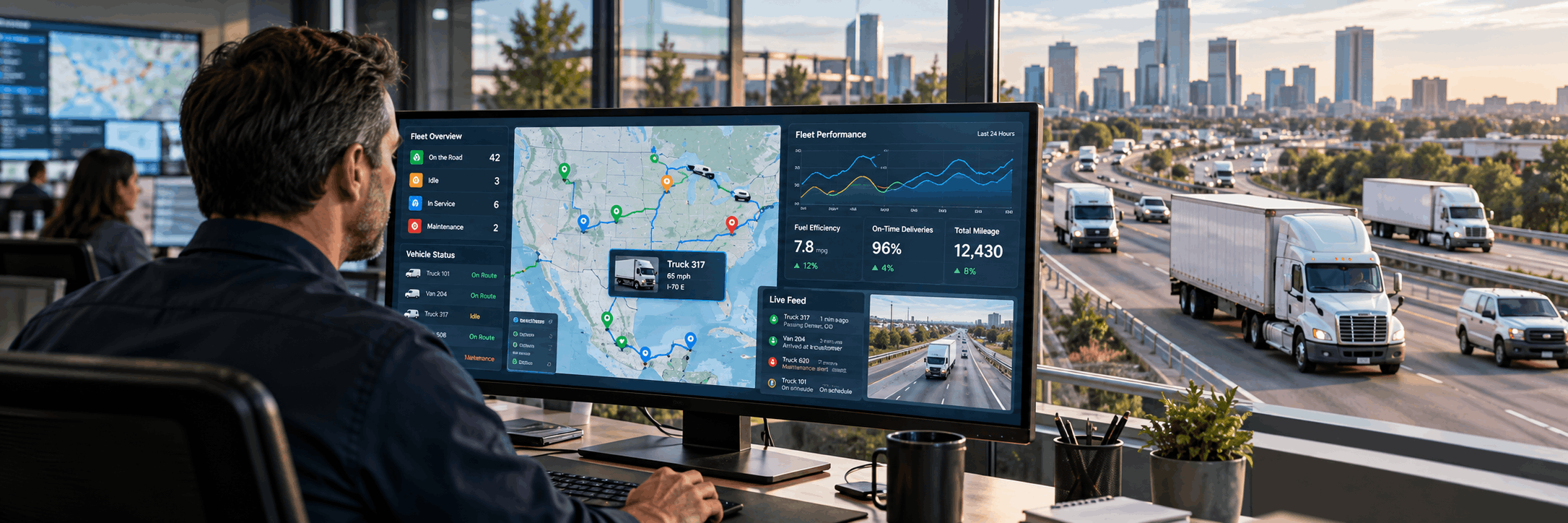
Rather than simply documenting what happened yesterday, AI-powered systems help fleets understand what may happen next. This shift from reactive analysis to proactive prevention represents one of the most significant advancements in commercial transportation safety.
The Limitations of Traditional ELD-Based Safety Monitoring
Electronic Logging Devices have transformed compliance management by automating Hours of Service tracking and improving record accuracy. However, ELD systems were never designed to function as comprehensive safety platforms.
Their primary purpose is regulatory compliance.
Most traditional ELD solutions focus on collecting and storing information such as:
- Driving hours
- Duty status changes
- Vehicle movement records
- Location history
- Compliance documentation
Although this data can be useful during post-incident investigations, it typically provides limited support for accident prevention.
For example, an ELD may confirm that a driver was operating within legal Hours of Service limits immediately before a collision. However, it generally cannot determine whether that driver was fatigued, distracted by a mobile device, or following another vehicle too closely.
By the time safety managers review the data, the event has already occurred.
This reactive approach leaves fleets vulnerable to preventable risks that develop long before a crash takes place.
Why Reactive Safety Management Creates Unnecessary Risk
Reactive safety programs focus on identifying and correcting problems after incidents occur.
While this approach remains common throughout the industry, it presents several challenges.
Accidents Have Already Happened
The most obvious limitation is that corrective action occurs only after a loss event.
Even when investigations successfully identify root causes, organizations still face:
- Repair expenses
- Downtime
- Insurance claims
- Driver injuries
- Potential litigation
- Customer service disruptions
The ability to prevent these incidents altogether offers significantly greater value than simply understanding them afterward.
Unsafe Behaviors Often Go Undetected
Many dangerous driving habits develop gradually.
Examples include:
- Increasing driver fatigue
- Frequent mobile phone distractions
- Aggressive following distances
- Declining situational awareness
Without real-time monitoring, these behaviors may remain unnoticed until they contribute to a serious safety event.
Coaching Opportunities Are Missed
Driver coaching is most effective when it occurs close to the behavior being addressed.
If a safety manager reviews an event days or weeks later, the opportunity for immediate corrective action has already passed.
Real-time feedback creates more meaningful learning opportunities and supports continuous performance improvement.
The Shift Toward Predictive Fleet Safety
Leading fleets are increasingly adopting predictive safety strategies that focus on prevention rather than reaction.
Predictive safety uses artificial intelligence, computer vision, and behavioral analytics to monitor driving conditions continuously and identify elevated risk levels before accidents occur.
Instead of asking, “What caused this accident?”
Organizations can begin asking:
- Which drivers are showing signs of fatigue?
- Who is developing unsafe driving habits?
- Which vehicles are experiencing repeated safety events?
- Where are the greatest risks emerging across the fleet?
This shift allows safety departments to intervene earlier, reduce incident frequency, and improve overall risk management outcomes.
Introducing the EZlogz AI Safety Service
The upgraded EZlogz AI Safety Service was developed to help fleets move beyond traditional reporting models.
Rather than functioning solely as a recording tool, the system serves as an active safety companion that continuously evaluates driving conditions and driver behavior.
Using advanced artificial intelligence and real-time monitoring capabilities, the platform identifies safety concerns as they occur and provides actionable information that supports immediate intervention.
This proactive approach enables fleets to address risks before they escalate into accidents, violations, or costly claims.
Real-Time Fatigue Detection
Driver fatigue remains one of the most persistent safety concerns in commercial transportation.
Even when drivers comply with Hours of Service regulations, fatigue can still develop due to:
- Poor sleep quality
- Health conditions
- Extended work schedules
- Irregular sleep patterns
- Stress and workload demands
Traditional ELD systems cannot accurately identify these conditions.
AI-powered monitoring technologies provide a more comprehensive solution.
The EZlogz AI Safety Service analyzes behavioral indicators associated with fatigue, including:
- Eye closure duration
- Blink frequency
- Head positioning
- Facial movement patterns
- Attention levels
When fatigue-related behaviors exceed predefined thresholds, alerts can be generated in real time.
This allows drivers to take corrective action before diminished alertness contributes to a safety incident.
Detecting Mobile Phone Usage Before It Becomes Dangerous
Distracted driving remains a leading contributor to roadway incidents across all vehicle categories.
For commercial fleets, mobile phone distractions create particularly serious risks due to vehicle size, stopping distances, and operational complexity.
Although company policies often prohibit handheld device usage while driving, enforcement can be challenging without visibility into driver behavior.
AI-powered safety monitoring helps address this challenge by identifying mobile phone usage events in real time.
Rather than discovering distraction after an accident investigation, fleet managers gain immediate awareness of behaviors that may require intervention.
This proactive visibility supports stronger safety cultures and reinforces accountability across the organization.
Monitoring Tailgating and Unsafe Following Distances
Following distance plays a critical role in accident prevention.
Commercial vehicles require significantly greater stopping distances than passenger vehicles, making safe following practices essential.
Tailgating reduces reaction time and increases collision risk, particularly in congested traffic conditions.
The EZlogz AI Safety Service continuously evaluates vehicle spacing and identifies situations where following distances fall below safe operating thresholds.
When unsafe conditions are detected, alerts can help drivers adjust their behavior before a dangerous situation develops.
Over time, this visibility supports improved driving habits and contributes to safer fleet operations.
From Detection to Driver Coaching
Technology alone does not improve safety.
The true value of AI-powered monitoring lies in its ability to support meaningful coaching programs.
Safety managers can use AI-generated insights to identify recurring patterns and address them through targeted coaching initiatives.
This approach offers several advantages:
Personalized Coaching
Rather than applying broad safety messaging across the entire fleet, managers can focus on specific behaviors demonstrated by individual drivers.
Objective Performance Data
Coaching conversations become more constructive when supported by objective evidence rather than subjective observations.
Continuous Improvement
Real-time monitoring allows fleets to track behavioral changes over time and measure coaching effectiveness more accurately.
The result is a more proactive and data-driven approach to driver development.
The Financial Impact of Preventive Safety Programs
Fleet safety is often discussed primarily in terms of compliance and risk reduction. However, the financial implications are equally important.
Every preventable accident carries direct and indirect costs.
These may include:
- Vehicle repairs
- Cargo losses
- Legal expenses
- Administrative costs
- Lost productivity
- Customer service disruptions
- Increased insurance premiums
Reducing incident frequency can generate substantial financial benefits across multiple areas of the business.
This is one reason many organizations are investing in AI-powered safety technologies as part of broader operational improvement strategies.
How Safer Fleets Can Influence Insurance Costs
Insurance providers increasingly evaluate fleet safety performance when assessing risk profiles and determining premium structures.
Carriers that demonstrate strong safety programs, lower incident rates, and proactive risk management practices may be better positioned during insurance renewals.
By identifying and addressing dangerous behaviors before accidents occur, AI-powered safety systems help fleets build stronger safety records over time.
Depending on fleet performance, claims history, and insurer criteria, proactive safety programs may contribute to commercial insurance savings of up to 20%.
While results vary between organizations, the relationship between improved safety performance and insurance costs continues to become more significant throughout the transportation industry.
The Future of Fleet Safety Is Predictive
The transportation industry is moving beyond traditional safety models that rely primarily on post-incident analysis.
Advances in artificial intelligence, computer vision, and behavioral analytics are enabling fleets to identify risks earlier, intervene more effectively, and prevent incidents before they occur.
This transition represents a fundamental shift in how organizations approach driver safety.
The most successful fleets of the future will not simply analyze accidents after they happen. They will leverage predictive technologies to reduce the likelihood of accidents occurring in the first place.
With real-time fatigue detection, mobile phone monitoring, tailgating alerts, and actionable coaching insights, the EZlogz AI Safety Service helps fleets embrace this new safety paradigm.
By moving beyond reactive logging and toward predictive risk management, organizations can improve safety outcomes, reduce operational costs, and create a stronger foundation for long-term success.
Ready to Build a Safer Fleet?
Preventing accidents is far more valuable than analyzing them afterward.
Discover how the upgraded EZlogz AI Safety Service can help your organization identify risks earlier, improve driver performance, strengthen safety culture, and reduce operational exposure.
Contact the EZlogz team today to learn how predictive safety technology can transform your fleet operations.
Why Compliance Data Alone Is No Longer Enough
For many years, fleet safety technology focused primarily on compliance. The goal was to ensure that carriers maintained accurate Hours of Service records, complied with FMCSA regulations, and possessed sufficient documentation during audits or roadside inspections.
While compliance remains essential, modern transportation operations face a broader challenge: risk management.
A fleet can remain fully compliant with Hours of Service regulations and still experience preventable accidents caused by distraction, fatigue, poor decision-making, or unsafe driving habits. Compliance data provides important information about what drivers did, when they did it, and whether regulatory requirements were met. However, it often provides limited insight into how drivers behaved behind the wheel.
This distinction is increasingly important.
Regulators evaluate compliance. Insurance providers evaluate risk. Customers evaluate reliability. Fleet operators must manage all three simultaneously.
Artificial intelligence helps bridge the gap between compliance management and proactive risk prevention by providing visibility into behaviors that traditional logging systems cannot detect.
As the industry continues to evolve, organizations that rely exclusively on compliance data may find themselves at a competitive disadvantage compared to fleets that utilize predictive safety technologies.
Building a Proactive Safety Culture
Technology alone cannot eliminate risk.
The most successful fleet safety programs combine advanced monitoring systems with a strong organizational commitment to continuous improvement.
AI-powered safety tools play an important role in supporting this objective because they provide real-time visibility into driver behaviors and operational trends.
This information enables organizations to move beyond disciplinary approaches and adopt coaching-based safety strategies.
Rather than waiting for an accident to trigger intervention, safety managers can identify emerging risks and provide support before incidents occur.
This proactive model creates several benefits:
Earlier Intervention
Small behavioral issues often become larger problems when left unaddressed.
AI-powered monitoring allows safety teams to intervene while behaviors remain manageable and before they contribute to accidents or violations.
Consistent Performance Standards
Objective safety data helps organizations establish clear expectations across the fleet.
Drivers receive consistent feedback based on measurable behaviors rather than subjective observations.
Stronger Driver Engagement
Many drivers respond positively when coaching programs focus on improvement rather than punishment.
By using AI-generated insights constructively, fleets can create a culture centered on professional development and long-term safety success.
How Real-Time Alerts Improve Driver Decision-Making
One of the most significant advantages of AI-powered safety technology is the ability to provide immediate feedback.
Traditional safety programs often rely on weekly reports, monthly reviews, or post-incident investigations.
Unfortunately, delayed feedback limits effectiveness.
Research across multiple industries has consistently demonstrated that individuals learn and adapt more effectively when feedback is delivered close to the behavior being addressed.
Real-time alerts help drivers recognize potentially unsafe actions as they occur.
For example:
- A fatigue alert may encourage a driver to take a break before alertness deteriorates further.
- A distracted driving notification may prompt immediate attention to the roadway.
- A tailgating warning may encourage greater following distance in congested traffic.
These interventions occur at the moment they are most valuable—before a dangerous situation escalates.
Over time, repeated feedback can help reinforce safer driving habits and support long-term behavioral improvement.
The Relationship Between Fleet Safety and Insurance Costs
Insurance expenses represent one of the largest operating costs for many transportation companies.
Commercial auto insurers increasingly rely on data-driven risk assessments when evaluating fleets.
Several factors influence insurance pricing, including:
- Accident frequency
- Claims severity
- Driver performance
- Vehicle utilization
- Safety program effectiveness
- Historical loss experience
As insurers gain access to more operational data, the ability to demonstrate proactive risk management becomes increasingly important.
AI-powered safety technologies help fleets establish stronger risk profiles by documenting safety initiatives and reducing incident rates over time.
While insurance outcomes vary based on numerous factors, carriers that consistently improve safety performance may be positioned to negotiate more favorable insurance terms.
For many organizations, even modest reductions in premium costs can generate substantial annual savings.
When combined with reduced accident expenses and improved operational efficiency, the return on investment associated with proactive safety technologies can be significant.
AI Safety and Fleet Reputation Management
Safety performance affects more than regulatory compliance and insurance costs.
It also influences customer relationships, business development opportunities, and corporate reputation.
Shippers increasingly evaluate carrier safety records when selecting transportation partners.
A strong safety culture demonstrates professionalism, reliability, and operational discipline.
Conversely, repeated accidents or poor safety performance may raise concerns regarding risk exposure and service quality.
AI-powered safety programs help organizations strengthen their reputation by supporting measurable improvements in fleet performance.
This creates value beyond accident prevention alone.
Organizations that invest in advanced safety technologies often position themselves as forward-thinking transportation partners committed to protecting drivers, cargo, and the public.
The Evolution from Reactive Reporting to Predictive Intelligence
The transportation industry is currently experiencing a broader technological transformation.
Historically, fleet technologies were designed primarily to record information.
Examples include:
- Paper logbooks
- Early telematics systems
- Traditional ELD platforms
- Basic GPS tracking devices
These tools excelled at documenting activity.
Modern AI platforms serve a different purpose.
Rather than simply recording events, they actively interpret information, identify patterns, and generate recommendations.
This evolution mirrors developments occurring across numerous industries, where artificial intelligence is transforming large datasets into actionable intelligence.
In fleet management, this means moving from questions such as:
“What happened?”
to questions such as:
“What is likely to happen next?”
and
“What can we do to prevent it?”
The ability to answer these questions represents one of the most significant competitive advantages available to modern fleets.
Why the Future of Fleet Safety Is Predictive
Every major advancement in transportation safety has focused on improving prevention.
Seat belts, anti-lock braking systems, collision mitigation technologies, and electronic stability control were all developed to reduce risk before accidents occur.
Artificial intelligence represents the next stage in this progression.
By continuously monitoring driver behavior, evaluating environmental conditions, and identifying emerging risks, AI-powered systems provide an unprecedented level of operational awareness.
The objective is not merely to document accidents more effectively.
The objective is to prevent them.
As predictive technologies continue to mature, fleets that adopt these solutions will gain stronger safety performance, improved operational efficiency, lower risk exposure, and greater competitive advantages within an increasingly data-driven industry.
For carriers seeking to move beyond reactive logging and embrace the future of transportation safety, AI-powered risk management is rapidly becoming an operational necessity rather than a technological luxury.
FAQ:
What is AI-powered fleet safety technology?
AI-powered fleet safety technology uses artificial intelligence, computer vision, and behavioral analytics to monitor driver activity and vehicle operations in real time. Unlike traditional safety systems that primarily record events, AI-driven platforms can identify risk factors as they develop and provide alerts before accidents occur.
How is AI safety different from a traditional ELD?
Traditional Electronic Logging Devices (ELDs) are primarily designed to track Hours of Service (HOS), duty status changes, and regulatory compliance information. AI safety solutions go beyond compliance by monitoring driver behavior, detecting safety risks such as fatigue or distracted driving, and supporting proactive intervention strategies.
Can AI detect driver fatigue in real time?
Yes. Advanced AI safety systems can analyze indicators associated with fatigue, including eye movement patterns, blink frequency, head positioning, and attention levels. When signs of driver fatigue are detected, the system can generate alerts that encourage corrective action before safety is compromised.
How does AI identify mobile phone usage while driving?
AI-powered cameras and computer vision technologies can recognize behaviors commonly associated with distracted driving, including handheld mobile phone use. Real-time detection allows fleets to address unsafe behaviors immediately rather than discovering them after an incident investigation.
What is tailgating detection and why is it important?
Tailgating detection uses artificial intelligence to monitor the distance between vehicles and identify unsafe following behaviors. Because commercial vehicles require longer stopping distances, maintaining appropriate space between vehicles is critical for accident prevention and overall roadway safety.
How does proactive driver coaching improve fleet safety?
Proactive coaching enables safety managers to address risky driving behaviors before they contribute to accidents or violations. Using objective data collected by AI systems, fleets can provide targeted feedback, reinforce safe driving habits, and support continuous performance improvement across the organization.
Can AI safety technology help reduce insurance costs?
Many insurance providers evaluate fleet safety performance when determining risk profiles and premium structures. By reducing accident frequency, improving driver behavior, and strengthening overall risk management practices, AI-powered safety programs may contribute to lower commercial insurance costs. In some cases, fleets may achieve premium reductions of up to 20%, depending on performance and insurer criteria.
Is AI safety technology suitable for fleets of all sizes?
Yes. AI-powered safety solutions can benefit small, medium-sized, and enterprise fleets alike. Organizations of all sizes can use real-time monitoring, predictive analytics, and driver coaching tools to improve safety performance, reduce operational risk, and strengthen compliance initiatives.
Why is predictive safety considered the future of fleet management?
Predictive safety focuses on preventing incidents before they occur rather than analyzing them afterward. By identifying fatigue, distraction, tailgating, and other risk factors in real time, AI-powered systems enable fleets to intervene earlier, reduce accident rates, improve driver performance, and create safer, more efficient transportation operations.