

Contents:
- Understanding Standalone GPS Trackers
- What Is an Integrated Fleet Management Platform?
- Core Feature Comparison
- Real-Time Fleet Visibility
- Dispatch and Workflow Automation
- Driver Performance Management
- Maintenance and Vehicle Health
- Fuel Management
- Artificial Intelligence and Predictive Analytics
- Compliance Management
- Reporting and Business Intelligence
- Scalability for Growing Fleets
- Total Cost of Ownership
- Which Solution Is Right for Your Business?
- Why Businesses Choose EZLOGZ
- FAQ:
Modern fleet management has evolved far beyond simple vehicle tracking. While GPS technology remains the foundation of fleet visibility, today’s transportation businesses require solutions that optimize operations, improve driver safety, automate maintenance, reduce fuel costs, and simplify regulatory compliance.
When evaluating fleet technology, companies generally choose between two approaches: standalone GPS trackers and integrated fleet management platforms. Although both provide location data, they serve very different purposes and deliver vastly different business value.
Standalone GPS trackers focus primarily on monitoring vehicle locations and basic trip history. Integrated fleet platforms, on the other hand, combine GPS tracking with dispatch, telematics, driver management, compliance tools, maintenance scheduling, reporting, and AI-powered analytics within a single cloud-based ecosystem.
Choosing the right solution depends on fleet size, operational complexity, business goals, and long-term growth plans. This guide explains the key differences to help organizations make an informed investment.
Understanding Standalone GPS Trackers
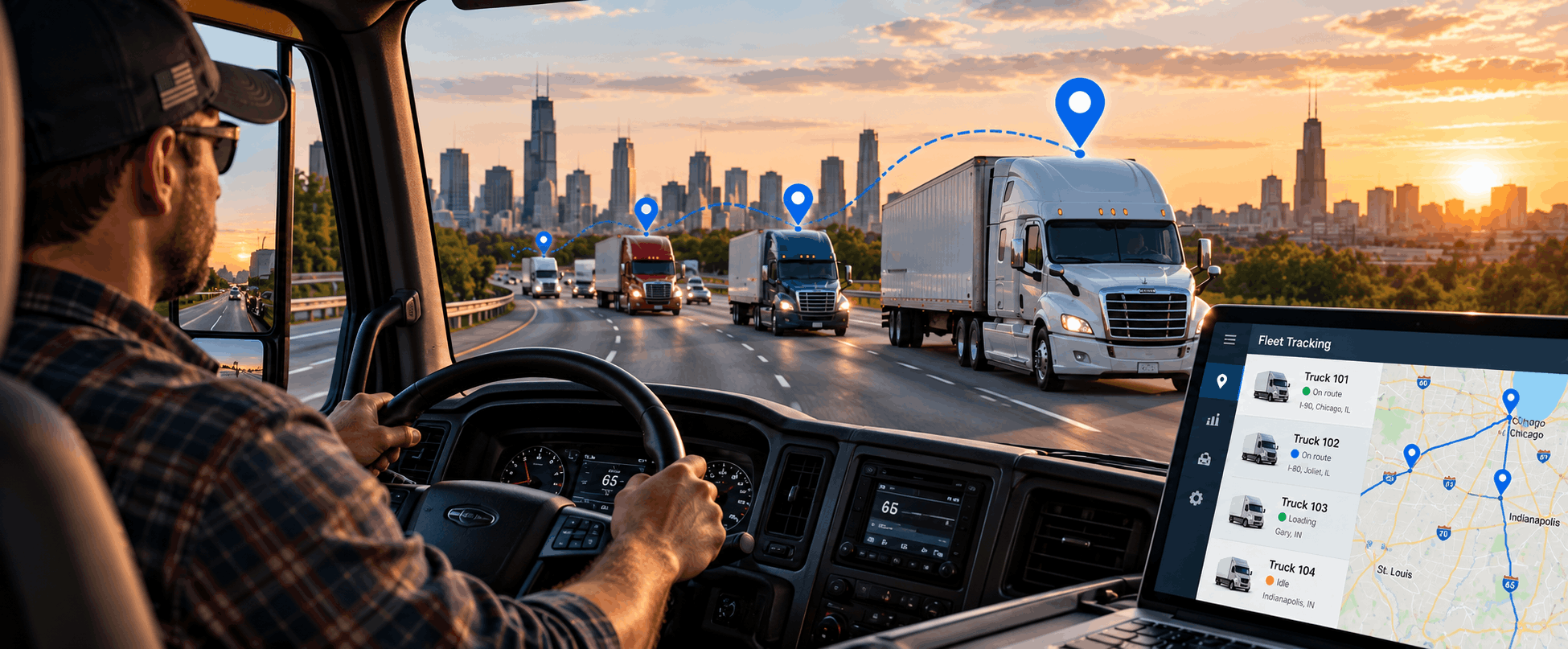
A standalone GPS tracker is designed primarily to determine the location of a vehicle using satellite positioning technology. The device continuously transmits location data through a cellular network, allowing fleet managers to monitor vehicles in real time.
Most standalone GPS solutions provide a limited set of features, including:
- Real-time vehicle location
- Route history
- Speed monitoring
- Basic geofencing
- Trip playback
- Simple notifications
For businesses whose primary objective is preventing vehicle theft or confirming driver locations, these capabilities may be sufficient.
However, as fleet operations become more complex, organizations often discover that location data alone does not provide enough information to improve productivity or reduce operating costs.
What Is an Integrated Fleet Management Platform?
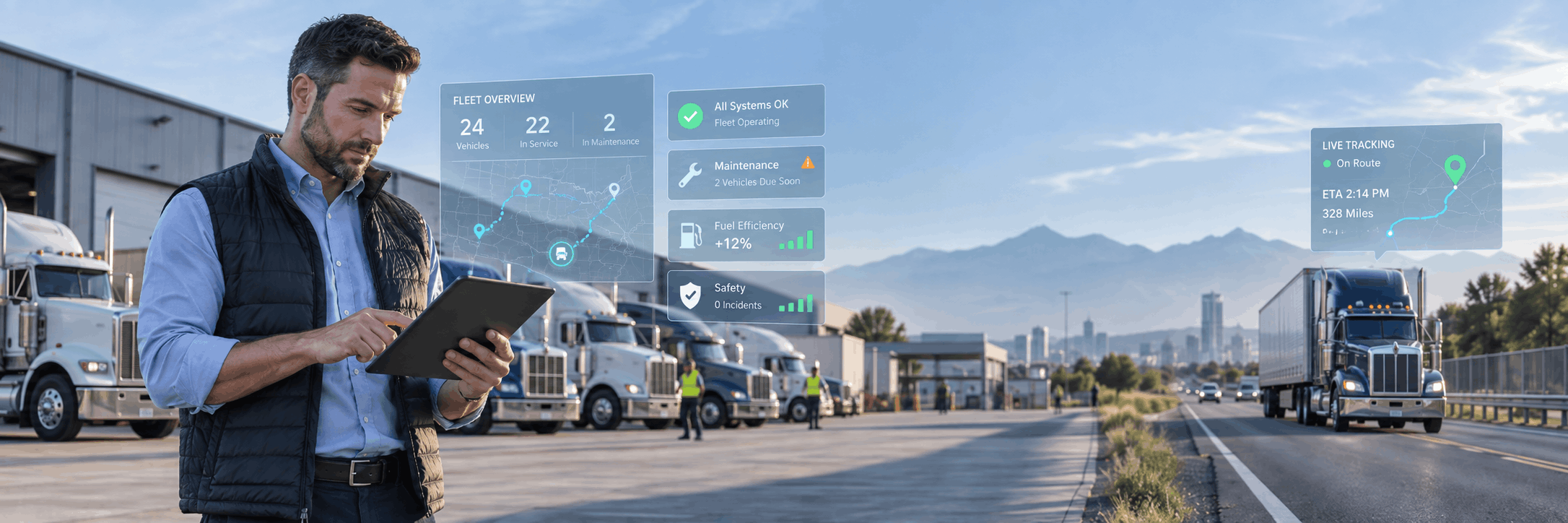
An integrated fleet management platform combines multiple operational systems into one centralized solution.
Instead of using separate applications for GPS tracking, dispatching, maintenance, compliance, and reporting, businesses manage everything from one interface.
A modern integrated platform typically includes:
- GPS fleet tracking
- Dispatch management
- Driver communication
- Electronic Logging Device (ELD) compliance
- Hours of Service monitoring
- Vehicle maintenance scheduling
- Fuel management
- Driver behavior analysis
- Dash camera integration
- Route optimization
- Asset tracking
- Mobile applications
- Business analytics
- Artificial intelligence
Rather than answering only “Where is my vehicle?”, integrated platforms answer questions such as:
- Which driver should receive the next job?
- Which vehicle requires maintenance?
- Which routes consume the most fuel?
- Which drivers need safety coaching?
- Which assets are underutilized?
- Which operational trends affect profitability?
Core Feature Comparison
Although GPS tracking exists in both solutions, the overall capabilities differ substantially.
| Feature | Standalone GPS Tracker | Integrated Fleet Platform |
|---|---|---|
| Real-Time Vehicle Tracking | ✔ | ✔ |
| Trip History | ✔ | ✔ |
| Geofencing | Basic | Advanced |
| Driver Communication | ✖ | ✔ |
| Route Optimization | ✖ | ✔ |
| Maintenance Scheduling | ✖ | ✔ |
| Fuel Analytics | Limited | ✔ |
| Driver Scorecards | ✖ | ✔ |
| AI Analytics | ✖ | ✔ |
| Asset Tracking | Limited | ✔ |
| ELD Compliance | ✖ | ✔ |
| Dash Camera Integration | Rare | ✔ |
| Business Reporting | Basic | Advanced |
| API Integrations | Limited | ✔ |
As fleet operations grow, the additional functionality provided by integrated platforms often becomes essential for maintaining efficiency.
Real-Time Fleet Visibility
Knowing where a vehicle is represents only one aspect of fleet management.
Integrated platforms provide operational visibility across the entire fleet by combining vehicle location with live operational data.
Fleet managers can monitor:
- Vehicle status
- Driver availability
- Active deliveries
- Customer ETAs
- Route deviations
- Fuel consumption
- Maintenance alerts
- Compliance status
- Equipment utilization
This comprehensive visibility enables faster decision-making while reducing operational delays.
Dispatch and Workflow Automation
Dispatching is often one of the most time-consuming fleet management activities.
Integrated platforms automate much of the dispatch process by combining vehicle locations, driver availability, traffic conditions, and delivery priorities into one intelligent workflow.
Smart Job Assignment
The software automatically recommends the most appropriate vehicle based on:
- Current location
- Available driving hours
- Vehicle capacity
- Estimated arrival time
- Existing workload
Driver Communication
Drivers receive assignments directly through mobile applications, eliminating unnecessary phone calls and reducing communication delays.
Digital Workflows
Electronic job management allows drivers to:
- Accept assignments
- Navigate optimized routes
- Capture signatures
- Upload delivery photos
- Report incidents
- Complete inspections
Standalone GPS trackers do not provide these operational capabilities.
Driver Performance Management
Drivers have a direct impact on fleet profitability.
Integrated fleet platforms continuously evaluate driver behavior to identify opportunities for coaching and performance improvement.
Driver Behavior Monitoring
Typical safety metrics include:
- Speeding
- Harsh braking
- Rapid acceleration
- Aggressive cornering
- Excessive idling
- Seatbelt usage
Driver Scorecards
Performance dashboards allow managers to compare drivers using standardized safety and efficiency metrics.
Coaching Opportunities
Historical driving data supports targeted coaching programs that improve safety while reducing insurance claims and fuel costs.
Maintenance and Vehicle Health
Unexpected vehicle breakdowns increase operating expenses and disrupt customer service.
Integrated platforms support preventive maintenance by tracking:
- Mileage
- Engine hours
- Service intervals
- Diagnostic trouble codes
- Inspection history
Automated Maintenance Scheduling
Maintenance reminders are generated automatically before scheduled service becomes overdue.
Reduced Downtime
Early detection of mechanical issues minimizes costly emergency repairs while extending vehicle lifespan.
Standalone GPS trackers generally lack maintenance management functionality, requiring businesses to rely on spreadsheets or separate software.
Fuel Management
Fuel represents one of the largest operating expenses for commercial fleets.
Integrated platforms help businesses improve fuel efficiency through continuous monitoring and analysis.
Fuel Consumption Analysis
Managers can compare fuel usage by:
- Vehicle
- Driver
- Route
- Region
- Time period
Idle Time Monitoring
Excessive idling wastes fuel while increasing engine wear.
Integrated systems automatically identify unnecessary idle events.
Route Efficiency
Optimized routing reduces mileage, lowers fuel costs, and improves delivery performance.
Artificial Intelligence and Predictive Analytics
Artificial intelligence is rapidly becoming one of the most valuable components of fleet management technology.
Rather than simply displaying operational data, AI helps businesses predict future outcomes and automate decision-making.
Predictive Maintenance
Machine learning identifies maintenance patterns that may indicate future equipment failures.
Managers receive recommendations before costly breakdowns occur.
Driver Risk Analysis
AI continuously evaluates driver behavior to identify accident risks and recommend coaching opportunities.
Intelligent Dispatch
Advanced algorithms automatically assign jobs based on real-time operational conditions.
Dynamic Route Optimization
Routes are continuously updated according to:
- Traffic
- Weather
- Construction
- Delivery priorities
- Vehicle availability
These intelligent recommendations improve productivity while reducing operational costs.
Compliance Management
Commercial transportation companies operate within complex regulatory environments.
Integrated fleet platforms simplify compliance through built-in tools such as:
Electronic Logging Devices (ELD)
Automatic recording of driving hours helps fleets comply with FMCSA regulations.
Hours of Service (HOS)
Managers receive notifications before drivers approach legal driving limits.
Driver Vehicle Inspection Reports (DVIR)
Digital inspections improve recordkeeping while reducing paperwork.
Using one integrated platform minimizes administrative workload while improving regulatory compliance.
Reporting and Business Intelligence
Fleet data becomes valuable only when it supports better decision-making.
Integrated platforms transform operational information into actionable insights.
Operational Dashboards
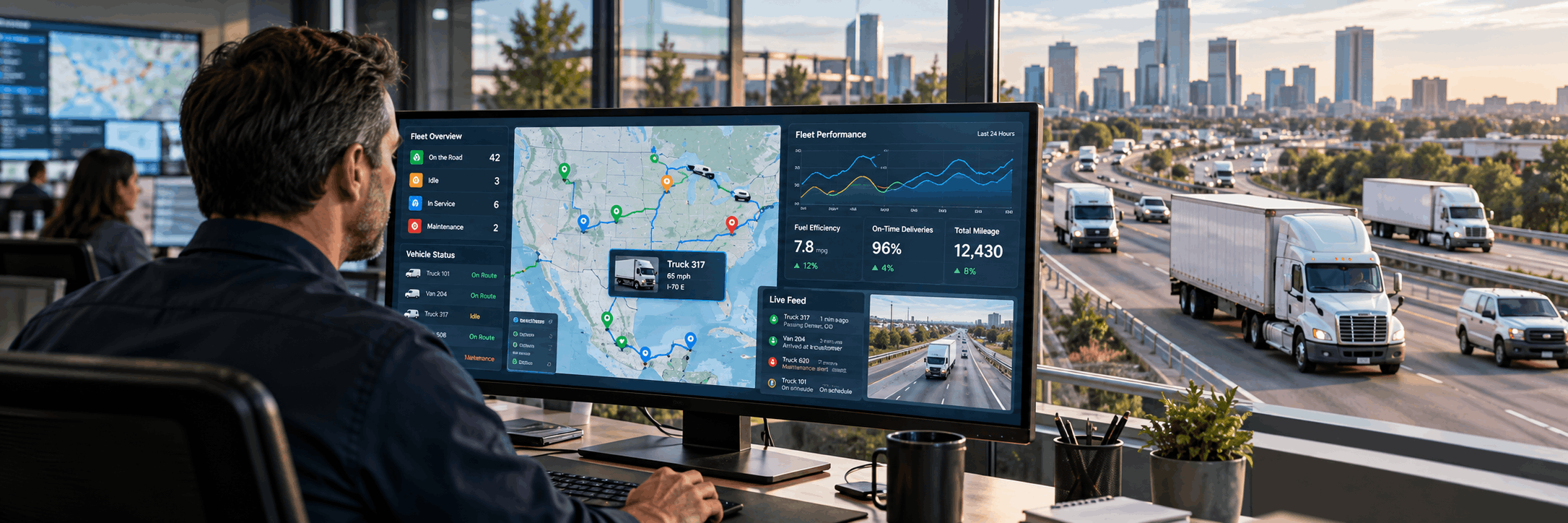
Managers gain real-time visibility into fleet performance through customizable dashboards.
Fleet Performance Reports
Comprehensive reports typically include:
- Vehicle utilization
- Driver productivity
- Fuel efficiency
- Maintenance costs
- Delivery performance
- Safety metrics
- Idle time
- Route efficiency
Long-Term Trend Analysis
Historical reporting helps businesses identify recurring operational issues and measure the effectiveness of improvement initiatives.
Scalability for Growing Fleets
Technology should support business growth rather than limit it.
Integrated platforms allow organizations to expand by adding:
- Vehicles
- Drivers
- Dispatchers
- Asset trackers
- Cameras
- New locations
- Additional users
- Third-party integrations
Businesses can continue using the same platform as operations become more sophisticated.
Total Cost of Ownership
Standalone GPS trackers often appear less expensive because they require a smaller initial investment.
However, organizations should evaluate the complete cost of operating multiple disconnected systems.
Additional software may be required for:
- Dispatch
- Maintenance
- Driver communication
- Compliance
- Fuel management
- Reporting
Each additional application increases subscription costs, training requirements, and administrative complexity.
Integrated fleet platforms consolidate these functions into one solution, reducing both operational expenses and software management overhead.
Which Solution Is Right for Your Business?
Standalone GPS tracking remains appropriate for organizations with simple tracking requirements, such as:
- Small vehicle fleets
- Equipment monitoring
- Theft prevention
- Personal vehicle tracking
However, businesses managing commercial transportation operations typically benefit from an integrated platform that supports every stage of fleet management.
Industries that benefit most include:
- Trucking
- Logistics
- Delivery services
- Construction
- Passenger transportation
- Utilities
- Government fleets
- Field service organizations
Why Businesses Choose EZLOGZ
EZLOGZ delivers far more than vehicle tracking.
Its cloud-based fleet management platform combines:
- Real-time GPS tracking
- Dispatch management
- Route optimization
- Driver management
- Maintenance scheduling
- Fuel monitoring
- Geofencing
- ELD compliance
- AI-powered analytics
- Dash camera integration
- Asset tracking
- Mobile applications
- Advanced reporting
By bringing these capabilities together within one intelligent ecosystem, EZLOGZ helps organizations streamline operations, improve driver safety, reduce operating costs, and make data-driven decisions with confidence.
GPS tracking remains an essential component of fleet management, but it is no longer enough for organizations seeking to maximize operational efficiency. While standalone GPS trackers provide basic location visibility, they lack the broader capabilities required to manage today’s complex transportation operations.
Integrated fleet management platforms unify tracking, dispatch, maintenance, compliance, reporting, and analytics into a single solution that supports long-term business growth. As fleets continue adopting connected technologies and AI-driven decision-making, integrated platforms provide the flexibility, scalability, and operational intelligence needed to remain competitive.
For businesses looking beyond simple vehicle tracking, an all-in-one solution like EZLOGZ delivers greater visibility, stronger performance, and a significantly higher return on investment.
FAQ:
What is the main difference between a standalone GPS tracker and an integrated fleet platform?
A standalone GPS tracker primarily provides vehicle location and trip history, while an integrated fleet platform combines GPS tracking with dispatch, maintenance, driver management, compliance, analytics, and reporting.
Which solution is better for commercial fleets?
Integrated fleet management platforms are generally better suited for commercial fleets because they centralize operations, improve efficiency, and support regulatory compliance.
Can an integrated platform reduce fleet operating costs?
Yes. Features such as route optimization, predictive maintenance, fuel monitoring, and driver coaching help reduce fuel expenses, vehicle downtime, and administrative costs.
Do integrated fleet platforms include GPS tracking?
Yes. Real-time GPS tracking is a core feature of integrated platforms, enhanced by telematics, AI-powered analytics, and operational management tools.
Are standalone GPS trackers suitable for small businesses?
They can be a practical option for businesses that only need basic vehicle location tracking or theft prevention. However, growing fleets often outgrow standalone solutions as operational requirements become more complex.
Why should businesses choose EZLOGZ?
EZLOGZ provides an all-in-one cloud-based fleet management platform that combines GPS tracking, dispatch, ELD compliance, maintenance management, fuel monitoring, geofencing, AI-powered analytics, asset tracking, and advanced reporting, helping fleets operate more efficiently and scale with confidence.