

As a transportation company grows, fleet management becomes increasingly complex. Adding more vehicles usually means more drivers, trailers, routes, maintenance schedules, customer requests, safety events, and compliance records to manage. Processes that worked for a small fleet – spreadsheets, phone calls, and separate applications – can quickly become inefficient as the business expands.
The right fleet technology should therefore do more than solve today’s problems. It should also support future growth by improving visibility, compliance, safety, reporting, and operational efficiency without creating unnecessary complexity.
Start With the Problems You Need to Solve
Before comparing fleet management platforms, identify the operational problems that create the most work or expense.
Growing fleets often struggle with questions such as:
- Where are vehicles and trailers?
- Are dispatchers spending too much time calling drivers?
- Is HOS compliance becoming harder to monitor?
- Are maintenance records spread across several systems?
- Is fuel consumption increasing?
- Is accident investigation taking too long?
- Are employees entering the same information into multiple platforms?
- Does management lack reliable fleet KPIs?
The source structure emphasizes creating a prioritized list of these problems rather than choosing software based simply on the number of available features.
A platform with hundreds of features provides little value if the fleet only uses a small percentage of them.
1. Make Real-Time GPS Tracking a Priority
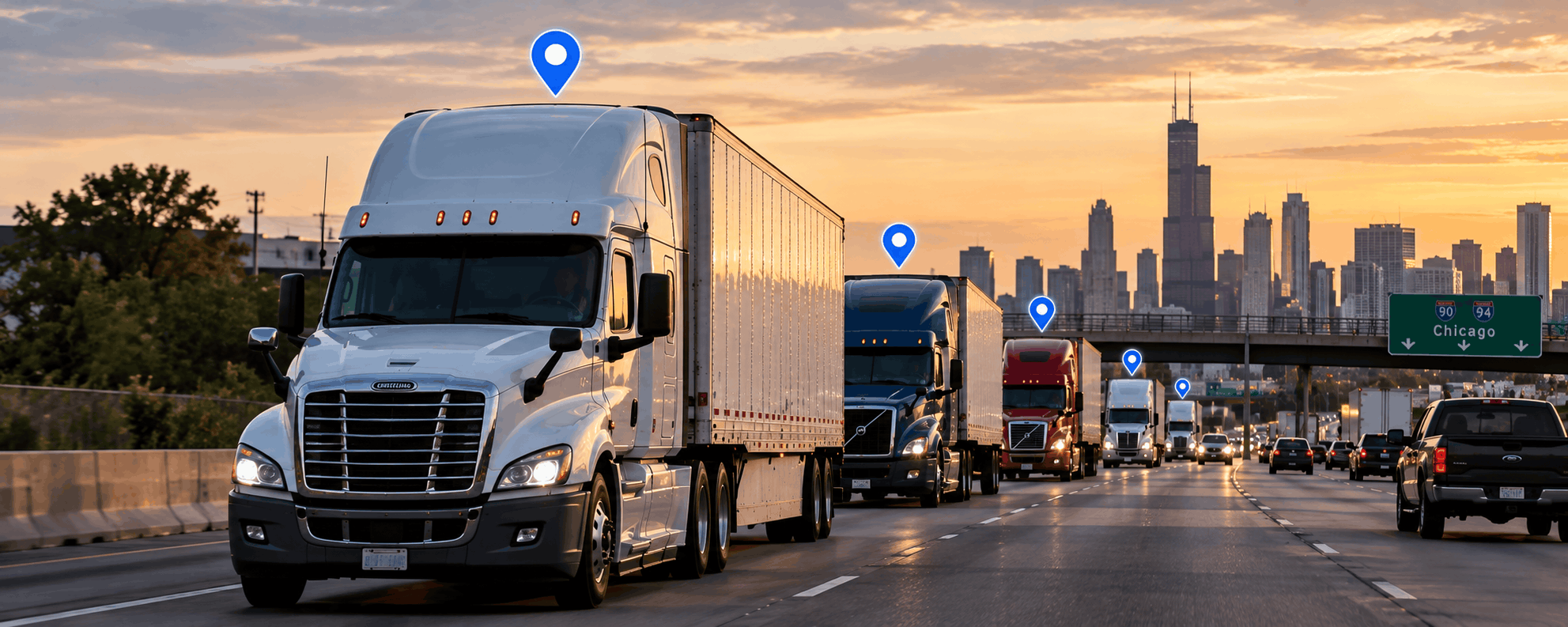
GPS tracking is often the foundation of modern fleet technology.
A useful platform should give fleet managers access to information such as:
- Real-time vehicle location
- Route history
- Trip playback
- Mileage
- Vehicle speed
- Idle time
- Geofencing
- Arrival and departure alerts
These capabilities can improve dispatch decisions, reduce unnecessary mileage, simplify customer updates, and reduce manual driver status calls.
For a growing company, this visibility becomes increasingly important because managers can no longer rely on direct communication with every driver.
2. Add Trailer and Asset Tracking
Tracking tractors is only part of the challenge.
As a fleet expands, trailers, containers, equipment, and other non-powered assets also become more difficult to manage.
Asset tracking can provide information about:
- Current or last known location
- Movement
- Geofence activity
- Utilization history
- Dwell time
This helps reduce time spent searching for equipment and can improve trailer utilization and asset allocation. It also helps companies understand whether they actually need to purchase additional equipment or whether existing assets are simply underused.
3. Choose ELD and HOS Technology That Can Scale
For fleets subject to applicable ELD requirements, compliance tools need to scale alongside the driver workforce.
Important capabilities include:
- Electronic driver logs
- Real-time HOS clocks
- Remaining driving time
- Approaching-limit alerts
- Unassigned driving review
- Log certification
- Driver availability information
One of the most useful integrations combines HOS information with vehicle location.
A dispatcher should know not only which driver is geographically closest to a new load but also whether that driver has sufficient available hours to complete the assignment legally.
This becomes even more valuable as dispatch operations grow more complex.
4. Use Telematics to Understand Performance
GPS tells managers where a truck is. Telematics helps explain how the truck is being operated.
Typical data may include:
- Mileage
- Speed
- Idle time
- Engine activity
- Driver behavior
- Vehicle usage
Fleet managers can use this information to compare vehicles, identify excessive idling, monitor driver performance, and establish measurable KPIs.
For a growing fleet, telematics helps management focus on exceptions instead of manually reviewing every trip.
5. Strengthen Safety With Dashcams and Video Telematics
Safety oversight becomes harder when drivers operate across multiple locations.
Fleet dashcams can provide additional context around driving events and accidents.
Useful capabilities may include:
- Road-facing cameras
- Driver-facing cameras
- Event-based recording
- Cloud video access
- Safety alerts
- AI event detection
- GPS integration
Video telematics can support driver coaching, accident investigation, claims documentation, and faster safety-event review.
Instead of relying only on a harsh-braking notification, managers may be able to see what happened before and during the event.
6. Connect DVIR With Maintenance
Growing fleets also create more inspections, service intervals, defects, and repair records.
Digital DVIR tools can make this information easier to manage.
Useful features include:
- Mobile inspection forms
- Digital checklists
- Defect reporting
- Photo attachments
- Maintenance notifications
- Centralized inspection history
Maintenance tools may also include mileage-based service reminders, repair history, preventive maintenance schedules, open-defect tracking, and reporting.
The main advantage is faster communication between drivers and maintenance teams.
Drivers can report defects digitally instead of waiting for a paper form to reach the office.
7. Use Technology to Control Fuel Costs
Fuel becomes increasingly important as total fleet mileage grows.
Fleet software should help managers track:
- MPG
- Fuel cost per mile
- Idle time
- Fuel consumption
- Route efficiency
- Driver behavior
- Fuel transactions
Managers can then look for excessive idling, unnecessary mileage, inefficient routing, unusual transactions, or driver behaviors that increase fuel use.
The important point is to move beyond simply tracking total fuel spend. Fleet managers need data that explains why fuel costs are changing.
8. Prioritize Reporting and Analytics
Growing fleets can generate more information than managers can reasonably review manually.
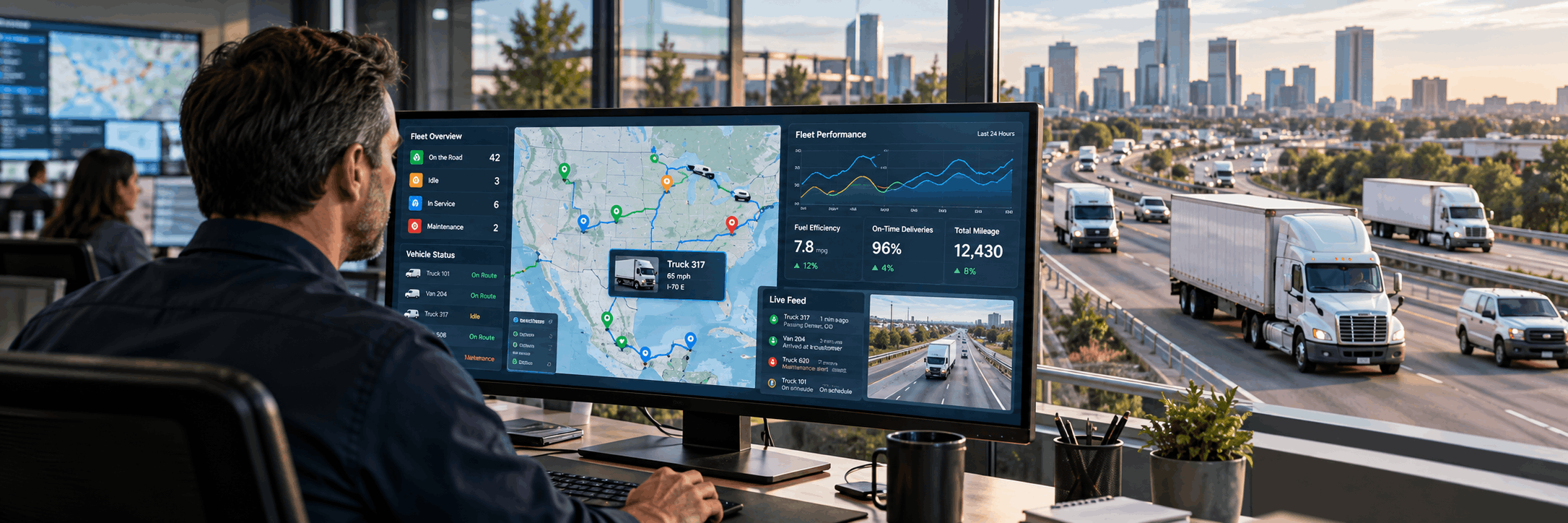
A good fleet management platform should convert that data into useful KPIs.
Important metrics may include:
| KPI | What It Helps Measure |
| Cost per mile | Overall operating efficiency |
| Fuel economy | Vehicle efficiency |
| Idle percentage | Fuel waste |
| Vehicle utilization | Asset productivity |
| Driver safety events | Safety risk |
| Maintenance cost | Vehicle reliability |
| Downtime | Fleet availability |
| HOS violations | Compliance performance |
Good reporting should also provide custom reports, filters, historical trends, and exception-based views.
Exception reporting is particularly useful for growing fleets because it allows managers to focus on unusual activity instead of reviewing every normal record.
9. Consider AI-Powered Fleet Management
Artificial intelligence can help management teams analyze larger volumes of fleet data.
Potential applications include:
- Driver-risk analysis
- Fuel inefficiency detection
- Automated reports
- Maintenance insights
- Route analysis
- Operational summaries
- Natural-language fleet data queries
The source structure positions AI primarily as a way to help managers focus on exceptions rather than reviewing every data point.
AI should therefore be evaluated according to the practical business problem it solves, not simply because it is a new technology.
10. Make Mobile Access Part of the Platform
Fleet operations do not happen only inside an office.
Managers, drivers, maintenance teams, and supervisors may need access to fleet information while traveling or working at different locations.
Mobile fleet tools can provide access to:
- Vehicle tracking
- Driver status
- DVIR
- Alerts
- HOS information
- Reports
- Fleet communication
Mobile functionality becomes increasingly valuable as operations expand across multiple terminals or regions.
Integrated Platform or Separate Applications?
Growing companies often reach a point where they must decide whether to keep adding standalone tools or move toward a more integrated fleet platform.
| Area | Integrated Platform | Separate Tools |
| Data | Centralized | Fragmented |
| User accounts | Fewer systems | Multiple logins |
| Reporting | Unified | Separate reports |
| Training | Simpler | More complex |
| Data entry | Less duplication | More manual work |
| Integration | Easier | May require custom work |
| Scalability | More consistent | Can become difficult |
The source material notes that specialized tools may still have value, but disconnected systems become harder to manage as operational complexity increases.
Integration Capabilities Matter
A growing fleet rarely operates independently from the rest of the business.
Fleet technology may need to exchange information with:
- ERP systems
- CRM platforms
- Transportation Management Systems
- Accounting software
- Fuel-card systems
- Maintenance platforms
- Payroll
- Customer applications
API capabilities become increasingly important because they allow data to move automatically between systems.
When evaluating API support, look for documented interfaces, vehicle and driver data access, GPS information, historical records, third-party integration support, and secure authentication.
Scalability Should Be a Buying Criterion
Fleet software should work not only for the current fleet but also for the company you expect to operate several years from now.
Ask whether the platform can support:
- More trucks
- More drivers
- More trailers
- Additional terminals
- More managers
- New departments
- Additional integrations
- Higher data volumes
Also consider whether you can configure permissions by role and whether reporting remains practical as the fleet grows.
Compare Total Cost of Ownership
Subscription price is only one part of fleet technology cost.
Potential expenses may include:
- Software subscriptions
- Per-vehicle charges
- ELD hardware
- GPS devices
- Dashcams
- Asset trackers
- Cellular service
- Installation
- API access
- Training
- Support
The better approach is to calculate the complete annual technology cost and compare it with the operational and administrative benefits the platform may generate.
Measure ROI
Before implementing new technology, establish a performance baseline.
Potential benefits may come from:
- Lower fuel consumption
- Reduced idle time
- Fewer empty miles
- Less administrative work
- Better maintenance planning
- Reduced downtime
- Improved asset utilization
- Lower compliance risk
A simple ROI formula is:
ROI = (Annual Financial Benefits − Annual Technology Cost) / Annual Technology Cost × 100
Baseline KPIs matter because they provide a concrete point of comparison after implementation.
Implement Fleet Technology in Phases
Growing companies do not necessarily need to replace every system at once.
A practical implementation roadmap is:
- Identify operational problems.
- Establish baseline KPIs.
- Define essential features.
- Compare providers.
- Request a demonstration.
- Implement the highest-value functions first.
- Train drivers, dispatchers, maintenance staff, and managers.
- Measure results against the original baseline.
This phased approach is consistent with the implementation roadmap in the supplied structure.
Questions to Ask Before Choosing a Provider
Before committing to a fleet platform, ask:
- How easily can you add new vehicles and drivers?
- Is GPS tracking included?
- Does the platform support ELD and HOS?
- Can it track trailers and other assets?
- Are dashcams available?
- Is digital DVIR supported?
- What reporting tools are included?
- Does the platform provide API access?
- Can it integrate with ERP and CRM systems?
- What hardware is required?
- What support is included?
- What is the complete annual cost?
- Can additional modules be introduced later?
- How is fleet data protected?
- Can the platform support multiple locations?
The best fleet technology for a growing company is not necessarily the platform with the most features. It is the system that solves important operational problems today while remaining flexible enough to support tomorrow’s fleet.
GPS tracking provides visibility. ELD and HOS tools support compliance. Asset tracking improves equipment utilization. Digital DVIR strengthens maintenance workflows. Dashcams support safety, while fuel analytics and reporting help managers control costs.
As the company expands, integration and scalability become increasingly important. Fleet software should exchange data with ERP, CRM, TMS, accounting, and other systems while maintaining centralized reporting and reliable access controls.
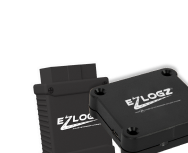
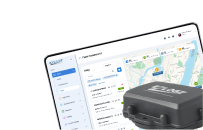
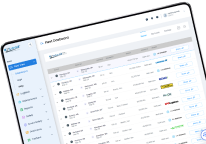
EZLOGZ’s product ecosystem is aligned with many of these areas, including GPS and asset tracking, ELD/HOS, dashcams, DVIR, analytics, mobile fleet monitoring, AI tools, and API integration.
The most effective strategy is to start with the business problems that create the greatest cost or operational friction, implement technology in manageable stages, and measure results using clear fleet KPIs.
FAQ:
A growing fleet typically benefits from a combination of GPS tracking, telematics, ELD and HOS management, maintenance tools, driver safety systems, asset tracking, and reporting. GPS provides real-time vehicle visibility, while telematics helps analyze vehicle and driver performance. Maintenance software supports preventive service, and asset tracking helps manage trailers and equipment. As the company expands, centralized reporting and integrations become increasingly important.
A company should consider upgrading when manual work increases, fleet data is spread across disconnected systems, or managers no longer have a clear view of vehicles, drivers, maintenance, and costs. Other warning signs include difficulty adding new vehicles, excessive spreadsheet use, slow reporting, duplicate data entry, and limited integration with other business systems.
An integrated platform can simplify fleet management by keeping GPS, ELD, maintenance, safety, driver, and asset data in one environment. This reduces duplicate entry and simplifies reporting. Separate applications can still be useful when a company needs highly specialized functionality, but they may require additional integrations and create more administrative complexity as the fleet grows.
API integration becomes increasingly important as a transportation company adds ERP, CRM, accounting, TMS, maintenance, and other business systems. APIs allow information to move automatically between platforms instead of being transferred manually. For example, GPS data can update delivery status in a CRM, while ELD information can support dispatch decisions in a TMS. This improves data consistency and reduces repetitive work.
Fleet technology can help lower costs by identifying excessive idling, unnecessary mileage, inefficient routes, maintenance problems, and underused vehicles. Automated reporting can reduce administrative workload, while preventive maintenance can decrease unexpected downtime. Better GPS visibility and dispatching may also reduce empty miles and improve asset utilization. The actual savings depend on how effectively the fleet uses the available data.
Scalable fleet software should support additional vehicles, drivers, trailers, users, and locations without requiring a complete system replacement. It should also allow companies to add new modules, configure user permissions, integrate with third-party systems through APIs, and maintain effective reporting as data volumes increase. Multi-location support is especially important for companies expanding into new terminals or regions.
Companies should establish baseline KPIs before implementing new technology. These may include fuel cost per mile, idle time, maintenance expense, downtime, empty miles, administrative hours, safety events, and vehicle utilization. After implementation, companies can compare the same metrics over several months.
A basic calculation is:
ROI = (Annual Financial Benefits − Annual Technology Cost) / Annual Technology Cost × 100
Companies should consider both immediate savings and longer-term improvements such as better scalability, reduced administrative workload, improved maintenance planning, and more efficient use of fleet assets.