

Fleet operations generate enormous amounts of information every day. Vehicle locations, driver hours, fuel consumption, inspection results, maintenance records, route performance, safety events, and delivery times create data that helps fleet managers understand what is really happening across their operations.
The challenge is not simply collecting that information. The real value comes from using it to make better decisions.
Data-driven fleet management allows managers to replace assumptions with measurable insights. Instead of reacting to problems after they occur, fleets can identify trends, address inefficiencies earlier, and continuously improve performance.
For transportation companies facing rising operating costs, tighter compliance requirements, driver-safety concerns, and rising customer expectations, turning fleet data into actionable decisions can provide a significant operational advantage.
What Is Data-Driven Fleet Management?
Data-driven fleet management is the practice of using information collected from vehicles, drivers, fleet-management systems, and business operations to guide decisions.
Rather than relying primarily on experience, intuition, or isolated incidents, fleet managers analyze measurable performance indicators to understand where improvements can be made.
Fleet data may come from several sources, including:
- Electronic Logging Devices (ELDs)
- GPS tracking systems
- telematics platforms
- fuel records
- vehicle diagnostics
- Driver Vehicle Inspection Reports (DVIRs)
- maintenance records
- dashcams and driver-safety systems
- dispatch and route information
- delivery records
- asset tracking systems
When fleet managers centralize and analyze this information correctly, they can identify patterns that would otherwise be difficult to recognize.
For example, one vehicle using more fuel than expected may not seem significant at first. However, if the data shows the same vehicle consistently has higher fuel consumption, excessive idling, and rising maintenance costs, managers have a much clearer signal that action may be required.
That is the difference between simply having fleet data and using fleet data strategically.
Why Data Matters in Modern Fleet Operations
Fleet managers make daily decisions that directly affect profitability and operational performance.
They decide which vehicles to dispatch, when to perform maintenance, which routes drivers should take, how to address safety issues, and whether they need additional vehicles.
Without reliable data, many of these decisions become reactive.
A maintenance issue may only become visible after a breakdown. Excessive fuel consumption may remain unnoticed until monthly expenses increase. Unsafe driving behavior may only receive attention after an incident.
Data gives fleet managers greater visibility into what is happening before problems become more serious.
By monitoring performance trends over time, fleets can identify operational risks, evaluate whether corrective actions are working, and make decisions based on measurable evidence.
1. Reduce Fuel and Operating Costs
Fuel is one of the largest operating expenses for many fleets. Small inefficiencies across dozens or hundreds of vehicles can quickly add up to high costs.
Fleet data can help managers identify behaviors and operating patterns that increase fuel consumption.
These may include:
- excessive engine idling
- speeding
- unnecessary mileage
- inefficient routing
- aggressive acceleration
- repeated route deviations
- underutilized vehicles
- poor vehicle performance
For example, GPS and telematics data may reveal that certain vehicles spend significantly more time idling than others.
Fleet managers can investigate the cause. Drivers may be waiting unnecessarily with engines running, routes may involve excessive loading delays, or operational procedures may need adjustment.
Once managers identify the problem, they can introduce policies or driver coaching and measure whether idle time decreases.
The same principle applies to routing.
Historical location data can help managers identify routes that consistently require more time or mileage than expected. Alternative routes or improved dispatch planning may reduce both fuel consumption and vehicle wear.
Data turns fuel management from a general cost-control effort into a measurable process.
2. Improve Route Planning and Dispatch Decisions
Efficient routing supports delivery performance, fuel consumption, driver productivity, and customer satisfaction.
Fleet managers using real-time GPS information can see where vehicles are located and make better dispatch decisions throughout the day.
For example, if an urgent job becomes available, dispatchers can identify the nearest appropriate vehicle rather than assigning work based solely on the original schedule.
Historical data can also improve future planning.
Managers can analyze:
- average travel times
- recurring congestion
- route delays
- vehicle availability
- loading and unloading times
- frequent route deviations
- customer service times
Patterns may reveal that certain routes regularly cause delays at particular times of day.
Managers can adjust schedules or route planning based on actual fleet performance rather than estimated travel times.
Over time, data-driven route management can help reduce unnecessary mileage, improve on-time performance, and increase the number of productive trips each vehicle completes.
3. Make Preventive Maintenance More Effective
Unexpected vehicle breakdowns can create expensive disruptions.
A disabled truck can lead to towing costs, delayed deliveries, emergency repairs, and lost driver productivity.
Data helps fleets move toward a more proactive maintenance strategy.
Vehicle mileage, diagnostic information, inspection records, and maintenance history can signal early that a vehicle needs attention.
Managers can monitor information such as:
- mileage since the last service
- engine fault codes
- inspection defects
- recurring repair issues
- maintenance frequency
- repair costs
- vehicle downtime
Instead of waiting for equipment to fail, maintenance teams can schedule service based on actual vehicle condition and usage.
From Fixed Maintenance to Usage-Based Decisions
Traditional preventive maintenance programs often rely on fixed schedules.
For example, a vehicle may be serviced every certain number of months regardless of how frequently it is used.
Fleet data allows maintenance schedules to reflect actual vehicle activity.
A heavily used truck may require maintenance sooner than a vehicle that travels fewer miles.
This approach can improve reliability while preventing unnecessary maintenance.
Maintenance data can also help managers decide when to replace a vehicle.
If an older vehicle requires increasingly frequent repairs and experiences more downtime, managers can compare those costs with the financial impact of replacing the asset.
4. Improve Driver Safety
Driver behavior strongly affects fleet safety, fuel efficiency, maintenance costs, and insurance risk.
Fleet-management technology can provide information about driving events such as:
- speeding
- harsh braking
- rapid acceleration
- sharp cornering
- distracted driving
- unsafe following distance
- repeated safety incidents
The goal should not be to focus on a single isolated event.
Instead, managers can analyze patterns over time.
For example, a single harsh-braking event may result from traffic conditions. However, dozens of similar events from the same driver may indicate an opportunity for coaching.
Data helps fleet managers identify where training can have the greatest impact.
Driver coaching can therefore become more targeted.
Instead of providing the same feedback to every driver, managers can address specific behaviors and then review future data to determine whether performance improves.
Dashcam footage combined with telematics information can provide additional context, helping managers understand what happened before and during a safety event.
5. Strengthen Compliance Management
Transportation fleets operate under numerous safety and compliance requirements.
Managing compliance manually can become difficult, especially as the number of drivers and vehicles increases.
Digital fleet data can help managers maintain better visibility into areas such as:
- Hours of Service
- driver logs
- inspection records
- DVIR documentation
- vehicle maintenance
- driver activity
- compliance reports
ELD data allows managers to review driver hours and identify potential Hours of Service issues before they become recurring problems.
Digital inspection records can also make it easier to track reported vehicle defects and document corrective actions.
Centralizing compliance information reduces reliance on paper records and disconnected spreadsheets.
It can also simplify internal reviews and audit preparation.
Most importantly, managers can identify compliance trends across the fleet rather than dealing with individual violations only after they occur.
6. Increase Vehicle and Asset Utilization
Adding vehicles is expensive.
Before expanding a fleet, managers should understand how effectively existing vehicles and equipment are being used.
Fleet data can reveal significant differences in asset utilization.
Managers can answer questions such as:
- Which vehicles travel the most miles?
- Which vehicles remain parked for long periods?
- Are certain trucks consistently overloaded with work?
- Are some assets rarely used?
- Could vehicles be reassigned between locations?
- Is additional fleet capacity actually necessary?
For example, a company may assume that it needs several additional vehicles because drivers frequently report availability problems.
However, GPS and utilization data may show that several existing vehicles sit idle much of the week.
In that situation, improving scheduling and asset allocation may be more cost-effective than purchasing additional equipment.
Data-driven fleet utilization helps organizations get more value from assets they already own.
7. Improve Customer Service
Fleet data benefits more than internal operations.
It can also improve the customer experience.
Customers increasingly expect accurate delivery information and quick responses when they ask about shipment status.
Real-time fleet visibility can help transportation companies provide better information about:
- vehicle location
- estimated arrival times
- delivery progress
- delays
- completed service
- route status
If a delivery is delayed, fleet managers can see what is happening and communicate with customers earlier.
More accurate fleet information may also help dispatchers provide realistic ETAs rather than relying on estimates.
Historical delivery data can reveal recurring customer-service issues.
If deliveries to a particular area are consistently late, managers can adjust routing, scheduling, or departure times.
Data therefore supports both operational efficiency and better customer communication.
8. Make Better Fleet Planning Decisions
Many important fleet decisions involve long-term planning.
Managers may need to decide whether to:
- purchase additional vehicles
- replace aging assets
- change maintenance schedules
- modify routes
- expand into new service areas
- hire additional drivers
- introduce new fleet technology
These decisions can involve significant investments.
Fleet data provides a stronger foundation for evaluating them.
For example, instead of replacing vehicles solely based on age, managers can review maintenance expenses, mileage, downtime, fuel efficiency, and utilization.
A newer vehicle with unusually high operating costs may require attention sooner than an older vehicle that continues to perform reliably.
Data helps managers evaluate assets based on actual business impact.
Important Fleet KPIs to Track
Collecting large amounts of data does not automatically improve fleet operations.
Managers need to focus on metrics connected to specific business goals.
Common fleet KPIs include:
Fuel Cost Per Mile
Measures how much fuel expense is associated with each mile traveled.
This can help managers compare vehicles, routes, and operating periods.
Idle Time
Tracks how long vehicles operate without moving.
Reducing unnecessary idling can lower fuel consumption and engine wear.
Vehicle Utilization
Measures how frequently vehicles or assets are actively used.
Low utilization may indicate unnecessary fleet capacity or inefficient asset allocation.
Maintenance Cost Per Vehicle
Helps managers identify vehicles that are becoming increasingly expensive to maintain.
Vehicle Downtime
Tracks how long equipment remains unavailable because of maintenance or repairs.
High downtime may indicate reliability problems.
On-Time Delivery Rate
Measures whether deliveries or service appointments are completed according to schedule.
Driver Safety Events
Tracks measurable behaviors such as speeding or harsh braking.
Hours of Service Violations
Helps managers identify recurring compliance issues.
Cost Per Trip or Delivery
Provides a broader measurement of operational efficiency.
The right KPIs will depend on the fleet.
A long-haul trucking fleet may focus heavily on fuel consumption, driver hours, and mileage. A local delivery fleet may place greater emphasis on stops per route, idle time, and on-time deliveries.
The important point is to select metrics that support actual business objectives.
How to Turn Fleet Data Into Better Decisions
Dashboards and reports are not enough.
Fleet managers need a repeatable process for converting information into operational improvements.
Centralize Fleet Information
When data is spread across spreadsheets, paper documents, separate GPS platforms, maintenance systems, and driver applications, it becomes difficult to identify patterns.
Connecting fleet systems gives managers a more complete view of operations.
Establish a Performance Baseline
Before making changes, understand current performance.
Measure indicators such as:
- average fuel consumption
- idle time
- delivery performance
- maintenance costs
- vehicle utilization
- safety events
These baseline measurements provide something to compare against later.
Look for Trends
Avoid making major decisions based on one event.
Fleet data becomes most useful when managers identify repeated patterns.
For example:
One speeding event may not represent a serious issue.
Repeated speeding events across several weeks provide a much stronger indication that driver coaching may be necessary.
Define Clear Goals
Each data initiative should support a specific objective.
Examples include:
- reduce idle time by 15%
- decrease fuel cost per mile
- improve on-time delivery performance
- reduce preventable safety events
- increase fleet utilization
- lower unplanned maintenance
Clear goals make it easier to measure progress.
Take Action
Data should lead to operational changes.
For example:
Data: Several drivers have excessive idle time.
Insight: Idling occurs primarily during loading periods.
Action: Update driver procedures and coordinate loading schedules.
Measurement: Compare idle time after the operational change.
This cycle turns fleet analytics into continuous improvement.
Common Mistakes When Using Fleet Data
Fleet technology can provide large amounts of information, but several common mistakes reduce its value.
Collecting Data Without Acting on It
Reports should support decisions.
If managers review the same problems each month without making operational changes, collecting more data will not improve performance.
Tracking Too Many Metrics
More metrics do not always create better visibility.
Focus on KPIs connected to business priorities.
Using Incomplete Data
Missing driver logs, inaccurate vehicle information, or disconnected systems can lead to incorrect conclusions.
Reliable decisions require reliable information.
Focusing Only on Individual Events
Operational trends are often more meaningful than single incidents.
Repeated patterns should receive greater attention.
Using Driver Data Only for Discipline
Driver information is most valuable when it supports coaching and improvement.
Recognizing positive performance can also help strengthen fleet safety culture.
Failing to Measure Results
After implementing an operational change, managers should review data again.
Without follow-up measurements, it is difficult to know whether the change actually improved performance.
The Role of Connected Fleet Technology
Modern fleets often use several technologies simultaneously.
ELDs record driver activity and Hours of Service.
GPS tracking systems provide vehicle location and movement information.
Dashcams can help identify and understand safety events.
DVIR systems support vehicle inspection processes.
Asset trackers provide visibility into trailers and equipment.
Fleet reporting tools help managers analyze performance.
When these systems operate independently, managers may still need to combine information from several sources manually.
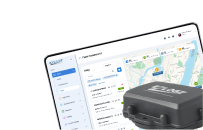
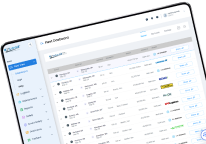
Connected fleet platforms help create a more complete operational picture.
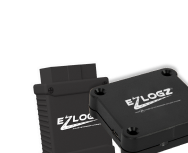
EZLogz solutions support multiple areas of fleet management, including electronic logging, GPS tracking, vehicle inspections, safety technology, and fleet visibility.
By bringing operational information together, fleet managers can spend less time searching for data and more time using it to improve fleet performance.
From Fleet Data to Fleet Intelligence
Successful fleet management is not about collecting the largest possible amount of information.
It is about having the right information at the right time and knowing how to use it.
Fleet data can reveal where fuel is being wasted, which vehicles require attention, where drivers may need coaching, which routes create delays, and whether assets are being used efficiently.
When managers consistently analyze these patterns and act on them, fleet operations become more proactive.
The process is straightforward:
Data → Insight → Decision → Action → Measurement
Each cycle allows managers to improve efficiency, reduce risk, and control costs.
As transportation operations become increasingly connected, data-driven decision-making will continue to play a larger role in successful fleet management.
With accurate ELD, GPS, safety, inspection, maintenance, and vehicle-performance information, fleets can gain greater visibility into everyday operations and make decisions based on evidence rather than assumptions.
FAQ
Data-driven fleet management is the practice of using information collected from vehicles, drivers, telematics systems, ELDs, maintenance records, GPS platforms, and other fleet technologies to guide operational decisions. It helps managers identify patterns, measure performance, and make decisions based on measurable data rather than assumptions.
Fleet managers commonly track vehicle location, mileage, fuel consumption, idle time, driver hours, safety events, inspection results, maintenance costs, vehicle downtime, route performance, and asset utilization. The most important metrics depend on the fleet’s operational goals.
Fleet data can reveal unnecessary idling, inefficient routes, excessive mileage, low vehicle utilization, fuel-wasting driving behaviors, and recurring maintenance problems. Managers can use this information to address inefficiencies and measure whether corrective actions reduce expenses.
Common fleet KPIs include fuel cost per mile, idle time, vehicle utilization, maintenance cost per vehicle, downtime, on-time delivery rate, driver safety events, Hours of Service violations, and cost per trip. Fleets should prioritize KPIs that directly support their business objectives.
Telematics systems collect information from vehicles and combine it with GPS and operational data. Fleet managers can use telematics to monitor vehicle activity, driving behavior, mileage, engine performance, fuel-related trends, and other performance indicators.
Fleet data can identify patterns involving speeding, harsh braking, rapid acceleration, distracted driving, and other risky behaviors. Managers can use these insights to provide targeted coaching and then measure whether driver performance improves.
Mileage, diagnostic information, inspection records, repair history, and vehicle usage data help managers identify maintenance needs before they lead to breakdowns. Fleets can schedule service based on actual vehicle usage and condition rather than relying only on fixed maintenance intervals.
Yes. ELD records, Hours of Service information, DVIRs, maintenance documentation, and other digital records can help managers identify potential compliance issues, maintain required documentation, and prepare more effectively for inspections and audits.
When fleet information is stored in separate systems, spreadsheets, and paper records, it can be difficult to identify relationships between operational issues. Centralized fleet data gives managers a broader view of vehicles, drivers, safety, compliance, and performance, making analysis and decision-making easier.