

When deliveries arrive as expected, fleets can improve customer satisfaction, strengthen shipper relationships, and keep operations moving efficiently. When delays become frequent, the consequences can extend far beyond a single missed appointment.
Late deliveries may lead to rescheduling, longer dwell times, reduced driver productivity, higher operating costs, and dissatisfied customers.
Many of these problems can be reduced with better visibility and more accurate operational data.
Fleet technology gives dispatchers and managers the information they need to monitor vehicles, understand driver availability, identify delays, and make faster decisions.
From GPS tracking and ELD data to telematics, maintenance systems, and digital inspections, connected fleet technology can play an important role in improving delivery performance.
Why On-Time Delivery Matters
Reliable delivery performance affects nearly every part of fleet operations.
Customers expect accurate delivery windows and consistent service. Shippers want dependable carriers. Drivers need schedules that reflect real road conditions and legal Hours of Service limits.
When a fleet consistently delivers on time, it can create several operational benefits.
These may include:
- Improved customer satisfaction
- Stronger shipper relationships
- Better driver productivity
- More efficient vehicle utilization
- Fewer scheduling disruptions
- More predictable daily operations
On-time delivery is also connected to cost control.
A delayed vehicle may create additional idling, overtime, detention, fuel consumption, or scheduling problems later in the day.
For this reason, fleets should view delivery performance as part of a larger operational system rather than only a driver responsibility.
Common Causes of Delivery Delays
Before improving delivery performance, fleet managers need to understand what causes delays.
Some issues happen on the road. Others begin during planning.
Traffic and Route Disruptions
Congestion, construction, accidents, road closures, and unexpected traffic patterns can affect even well-planned routes.
When dispatch teams do not have real-time visibility, they may not recognize a problem until a delivery is already significantly delayed.
Poor Dispatch Planning
A delivery schedule may look realistic on paper but become difficult to complete if dispatchers do not have accurate information about vehicle location, driver availability, or previous stops.
Assigning the wrong vehicle or driver can create unnecessary delays before a trip even begins.
Hours of Service Constraints
Drivers must operate within applicable Hours of Service requirements.
If dispatchers do not consider available driving time when assigning loads, a driver may be forced to stop before reaching the delivery location.
This can result in missed appointments and last-minute schedule changes.
Vehicle Breakdowns
Mechanical problems can quickly disrupt delivery schedules.
Unexpected repairs may lead to towing, roadside delays, replacement vehicle arrangements, or canceled loads.
Preventive maintenance can help reduce this risk.
Excessive Idling and Unplanned Stops
Small delays can accumulate throughout a route.
Long fuel stops, unnecessary idling, extended breaks, and unplanned stops may seem minor individually but can significantly affect a delivery schedule over the course of a day.
Communication Gaps
When drivers and dispatchers cannot quickly share information, delays become harder to manage.
A dispatcher who learns about a problem too late has fewer options to adjust a route, notify a customer, or reassign a load.
How Fleet Technology Improves On-Time Deliveries
Fleet technology helps turn operational data into faster decisions.
The more visibility a fleet has into its vehicles, drivers, routes, and maintenance status, the easier it becomes to identify risks before they result in missed deliveries.
Real-Time GPS Tracking
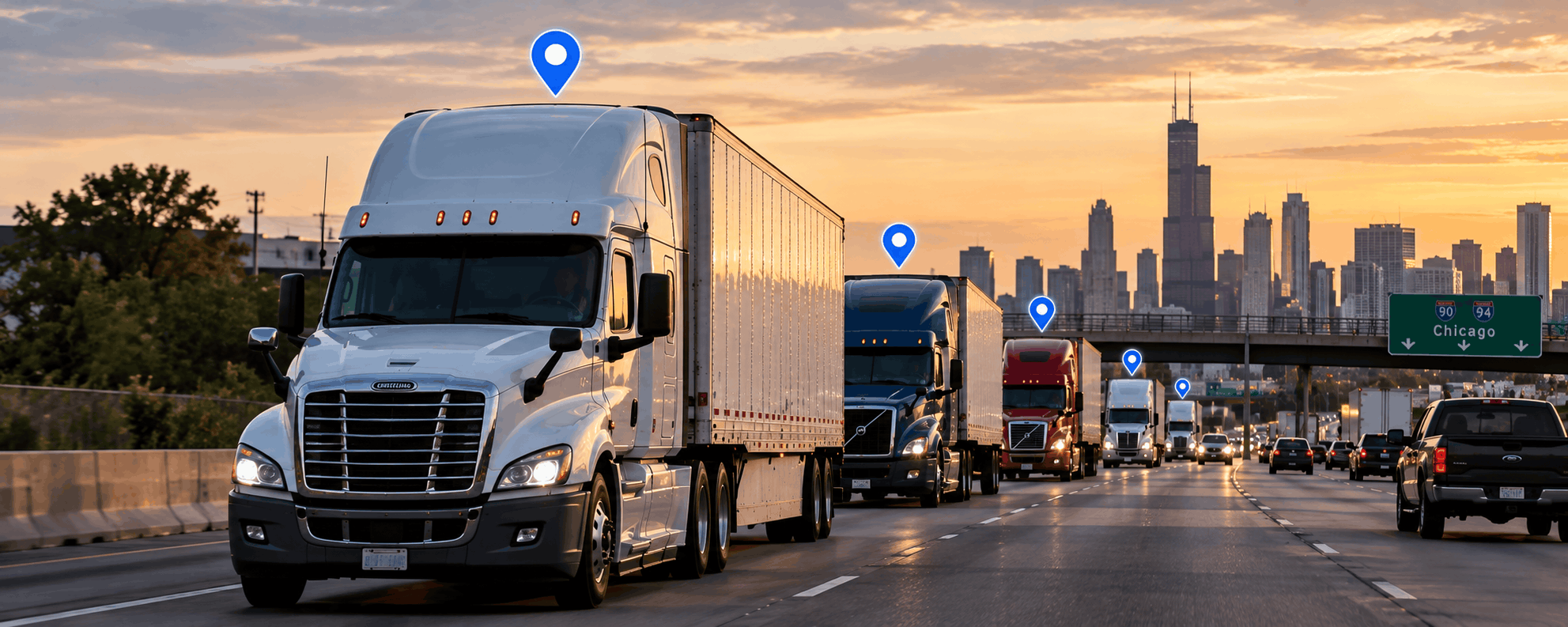
GPS tracking gives dispatchers visibility into vehicle location and route progress.
Instead of calling drivers for updates, dispatchers can review current vehicle positions and determine whether a truck is moving according to schedule.
This can help fleet teams:
- Monitor active routes
- Identify unexpected stops
- Detect route deviations
- Improve dispatch coordination
- Provide more accurate customer updates
Real-time location data is especially useful when conditions change during the trip.
If a vehicle is delayed, the dispatcher can react sooner rather than waiting until the scheduled delivery time has already passed.
Smarter Route Planning
Efficient routing is one of the most direct ways to improve delivery performance.
Fleet technology can help managers review routes, stop sequences, mileage, and vehicle location data.
This information can support better planning and reduce unnecessary driving.
Improved route planning may help fleets:
- Reduce excess mileage
- Avoid inefficient route patterns
- Improve stop sequencing
- Reduce travel time
- Better match vehicles with delivery locations
The goal is not always to find the shortest route.
The best route is often the one that provides the most reliable combination of distance, timing, driver availability, and delivery requirements.
Using ELD Data for Better Dispatch Decisions
Electronic Logging Device data can give dispatchers valuable insight into driver availability.
Rather than assigning a load based only on location, dispatchers can also consider how much legal driving time a driver has remaining.
Useful information may include:
- Current duty status
- Remaining driving hours
- Required breaks
- On-duty time
- Available shift time
This helps fleet managers create more realistic delivery schedules.
A truck may be close to a pickup location, but that does not necessarily mean the driver has enough available time to complete the delivery.
Using ELD and HOS data during dispatch planning can reduce scheduling mistakes.
More Accurate ETAs
Accurate estimated arrival times can improve both internal planning and customer communication.
Fleet systems that combine GPS, route, and vehicle data can help dispatchers estimate when a truck is likely to reach its destination.
Better ETA visibility allows fleets to communicate earlier when conditions change.
For customers, an early update is often more useful than learning about a delay after the expected delivery time has passed.
Accurate ETAs can also help warehouses and receiving teams prepare for vehicle arrivals.
Fleet Telematics
Telematics systems provide information about how vehicles are being operated.
Fleet managers can use telematics data to identify patterns that may contribute to delays.
These may include:
- Excessive idling
- Long stops
- Route deviations
- Speed patterns
- Vehicle usage
- Unexpected movement
Over time, this data can help managers identify recurring inefficiencies.
For example, if vehicles regularly spend excessive time at specific stops, the fleet can investigate whether those delays are caused by customer processes, driver behavior, or scheduling issues.
Preventive Maintenance
A reliable delivery schedule depends on reliable vehicles.
Preventive maintenance helps fleets reduce the risk of unexpected breakdowns.
Fleet technology can help managers track:
- Vehicle mileage
- Engine hours
- Service intervals
- Maintenance history
- Inspection results
- Repair needs
Automated reminders can help ensure that routine service is completed before problems become more serious.
Reducing unexpected downtime can improve vehicle availability and help fleets maintain more consistent delivery schedules.
Digital DVIRs
Driver Vehicle Inspection Reports are another important part of vehicle reliability.
Digital DVIR systems can make it easier for drivers to report defects and for maintenance teams to review those issues quickly.
Instead of waiting for paper reports to reach the office, information can be transmitted electronically.
This can help maintenance teams identify and address problems sooner.
Faster defect reporting can reduce the risk of a minor mechanical issue becoming a major road failure.
Automated Fleet Alerts
Fleet managers cannot manually watch every vehicle at every moment.
Automated alerts can help teams focus on situations that require attention.
Depending on the system, alerts may be configured for events such as:
- Route deviations
- Vehicle faults
- Long stops
- Excessive idling
- Upcoming maintenance
- HOS limitations
- Safety events
Alerts can help dispatchers react faster when operational conditions change.
This is especially valuable in larger fleets where multiple vehicles may be operating simultaneously.
Better Driver-Dispatcher Communication
Technology can also improve communication between drivers and dispatch teams.
Connected fleet systems can make it easier to share information about route changes, delivery instructions, schedule updates, and unexpected delays.
Clear communication helps both sides make better decisions.
For example, if a driver encounters heavy traffic or a closed road, dispatch may be able to provide an alternative route or notify the customer before the delay becomes critical.
Using Fleet Analytics to Prevent Future Delays
Real-time fleet data helps manage current deliveries.
Historical fleet data helps improve future ones.
Fleet analytics can reveal recurring problems that may not be obvious when looking at individual trips.
Managers can review patterns such as:
- Routes that regularly run late
- Customers with long dwell times
- Drivers experiencing repeated scheduling conflicts
- Vehicles with frequent downtime
- Delivery windows that are consistently unrealistic
- High-idling locations
- Repeated maintenance issues
This information can help fleet managers make long-term operational improvements.
For example, if a particular delivery location regularly requires much more time than planned, the fleet can adjust future schedules to reflect the actual dwell time.
Key Fleet KPIs for On-Time Delivery
Fleet managers should track performance using a focused set of metrics.
Useful KPIs may include:
- On-time delivery rate
- Average delay time
- ETA accuracy
- Average dwell time
- Route completion time
- Idle time
- Vehicle utilization
- Unplanned downtime
- Maintenance-related delays
- Available driver hours
The goal is not simply to collect more data.
Fleet managers should use KPIs to identify trends and determine where operational changes can improve performance.
Building a More Reliable Delivery Workflow
Technology works best when it supports a clear operational process.
A reliable delivery workflow can be divided into four stages.
Before Dispatch
Before assigning a load, the fleet should review:
- Driver availability
- Remaining HOS
- Vehicle condition
- Delivery requirements
- Route information
- Maintenance status
This helps prevent unrealistic assignments.
During the Trip
Dispatchers should monitor:
- Vehicle location
- Route progress
- Driver availability
- Potential delays
- Unexpected stops
The earlier a problem is identified, the more options the fleet has to respond.
When a Delay Occurs
If a delivery is at risk, the fleet should determine the cause and take appropriate action.
This may include adjusting the route, changing the schedule, communicating with the customer, or reassigning part of the workload.
Early communication is important.
After Delivery
Fleet managers should review performance and identify what caused any significant delay.
One late delivery may be an isolated event.
Repeated delays usually indicate a process that needs improvement.
How EZLOGZ Can Support More Efficient Deliveries
Improving delivery performance requires visibility across drivers, vehicles, routes, compliance, and fleet activity.
EZLOGZ provides connected fleet technology designed to support commercial fleet operations.
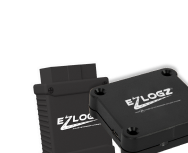
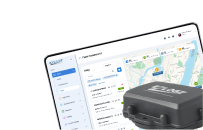
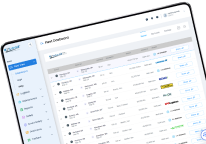
With tools for ELD and Hours of Service management, GPS tracking, fleet monitoring, digital vehicle inspections, asset visibility, video telematics, and operational data, fleets can gain a clearer view of what is happening across their operations.
This visibility can help dispatchers and fleet managers make faster decisions when schedules change or unexpected issues occur.
Instead of relying on disconnected information, fleet teams can use digital data to improve planning, communication, and operational efficiency.
Final Thoughts
Improving on-time delivery is not simply about asking drivers to move faster.
Reliable delivery performance depends on planning, vehicle availability, driver hours, route visibility, communication, and maintenance.
Fleet technology helps connect these areas.
With real-time GPS data, ELD information, telematics, maintenance tracking, digital inspections, and automated alerts, fleet managers can identify delays earlier and respond more effectively.
The result is a more informed operation with better visibility and more reliable delivery performance.
For fleets looking to improve on-time delivery, the most effective strategy is to combine connected technology with consistent operational processes.
Frequently Asked Questions
How does fleet technology improve on-time delivery?
Fleet technology improves visibility into vehicle location, driver availability, maintenance status, routes, and potential delays. This helps dispatchers make faster and more informed decisions.
How can GPS tracking reduce delivery delays?
GPS tracking allows dispatchers to monitor vehicle location and route progress in real time. It can help identify route deviations, long stops, and delays earlier.
Can ELD data improve dispatch planning?
Yes. ELD data can help dispatchers understand available driver hours and Hours of Service limitations before assigning loads.
What fleet KPIs should be tracked for delivery performance?
Common metrics include on-time delivery rate, ETA accuracy, average delay time, dwell time, idle time, vehicle utilization, and unplanned downtime.
How does preventive maintenance support on-time delivery?
Preventive maintenance reduces the risk of unexpected breakdowns that can remove vehicles from service and disrupt delivery schedules.
How can fleets improve ETA accuracy?
Using GPS, route data, telematics, and real-time vehicle information can help fleets provide more accurate arrival estimates and update customers earlier when conditions change
On-time delivery is one of the most important indicators of fleet performance.
When deliveries arrive as expected, fleets can improve customer satisfaction, strengthen shipper relationships, and keep operations moving efficiently. When delays become frequent, the consequences can extend far beyond a single missed appointment.
Late deliveries may lead to rescheduling, longer dwell times, reduced driver productivity, higher operating costs, and dissatisfied customers.
Many of these problems can be reduced with better visibility and more accurate operational data.
Fleet technology gives dispatchers and managers the information they need to monitor vehicles, understand driver availability, identify delays, and make faster decisions.
From GPS tracking and ELD data to telematics, maintenance systems, and digital inspections, connected fleet technology can play an important role in improving delivery performance.
Why On-Time Delivery Matters
Reliable delivery performance affects nearly every part of fleet operations.
Customers expect accurate delivery windows and consistent service. Shippers want dependable carriers. Drivers need schedules that reflect real road conditions and legal Hours of Service limits.
When a fleet consistently delivers on time, it can create several operational benefits.
These may include:
- Improved customer satisfaction
- Stronger shipper relationships
- Better driver productivity
- More efficient vehicle utilization
- Fewer scheduling disruptions
- More predictable daily operations
On-time delivery is also connected to cost control.
A delayed vehicle may create additional idling, overtime, detention, fuel consumption, or scheduling problems later in the day.
For this reason, fleets should view delivery performance as part of a larger operational system rather than only a driver responsibility.
Common Causes of Delivery Delays
Before improving delivery performance, fleet managers need to understand what causes delays.
Some issues happen on the road. Others begin during planning.
Traffic and Route Disruptions
Congestion, construction, accidents, road closures, and unexpected traffic patterns can affect even well-planned routes.
When dispatch teams do not have real-time visibility, they may not recognize a problem until a delivery is already significantly delayed.
Poor Dispatch Planning
A delivery schedule may look realistic on paper but become difficult to complete if dispatchers do not have accurate information about vehicle location, driver availability, or previous stops.
Assigning the wrong vehicle or driver can create unnecessary delays before a trip even begins.
Hours of Service Constraints
Drivers must operate within applicable Hours of Service requirements.
If dispatchers do not consider available driving time when assigning loads, a driver may be forced to stop before reaching the delivery location.
This can result in missed appointments and last-minute schedule changes.
Vehicle Breakdowns
Mechanical problems can quickly disrupt delivery schedules.
Unexpected repairs may lead to towing, roadside delays, replacement vehicle arrangements, or canceled loads.
Preventive maintenance can help reduce this risk.
Excessive Idling and Unplanned Stops
Small delays can accumulate throughout a route.
Long fuel stops, unnecessary idling, extended breaks, and unplanned stops may seem minor individually but can significantly affect a delivery schedule over the course of a day.
Communication Gaps
When drivers and dispatchers cannot quickly share information, delays become harder to manage.
A dispatcher who learns about a problem too late has fewer options to adjust a route, notify a customer, or reassign a load.
How Fleet Technology Improves On-Time Deliveries
Fleet technology helps turn operational data into faster decisions.
The more visibility a fleet has into its vehicles, drivers, routes, and maintenance status, the easier it becomes to identify risks before they result in missed deliveries.
Real-Time GPS Tracking
GPS tracking gives dispatchers visibility into vehicle location and route progress.
Instead of calling drivers for updates, dispatchers can review current vehicle positions and determine whether a truck is moving according to schedule.
This can help fleet teams:
- Monitor active routes
- Identify unexpected stops
- Detect route deviations
- Improve dispatch coordination
- Provide more accurate customer updates
Real-time location data is especially useful when conditions change during the trip.
If a vehicle is delayed, the dispatcher can react sooner rather than waiting until the scheduled delivery time has already passed.
Smarter Route Planning
Efficient routing is one of the most direct ways to improve delivery performance.
Fleet technology can help managers review routes, stop sequences, mileage, and vehicle location data.
This information can support better planning and reduce unnecessary driving.
Improved route planning may help fleets:
- Reduce excess mileage
- Avoid inefficient route patterns
- Improve stop sequencing
- Reduce travel time
- Better match vehicles with delivery locations
The goal is not always to find the shortest route.
The best route is often the one that provides the most reliable combination of distance, timing, driver availability, and delivery requirements.
Using ELD Data for Better Dispatch Decisions
Electronic Logging Device data can give dispatchers valuable insight into driver availability.
Rather than assigning a load based only on location, dispatchers can also consider how much legal driving time a driver has remaining.
Useful information may include:
- Current duty status
- Remaining driving hours
- Required breaks
- On-duty time
- Available shift time
This helps fleet managers create more realistic delivery schedules.
A truck may be close to a pickup location, but that does not necessarily mean the driver has enough available time to complete the delivery.
Using ELD and HOS data during dispatch planning can reduce scheduling mistakes.
More Accurate ETAs
Accurate estimated arrival times can improve both internal planning and customer communication.
Fleet systems that combine GPS, route, and vehicle data can help dispatchers estimate when a truck is likely to reach its destination.
Better ETA visibility allows fleets to communicate earlier when conditions change.
For customers, an early update is often more useful than learning about a delay after the expected delivery time has passed.
Accurate ETAs can also help warehouses and receiving teams prepare for vehicle arrivals.
Fleet Telematics
Telematics systems provide information about how vehicles are being operated.
Fleet managers can use telematics data to identify patterns that may contribute to delays.
These may include:
- Excessive idling
- Long stops
- Route deviations
- Speed patterns
- Vehicle usage
- Unexpected movement
Over time, this data can help managers identify recurring inefficiencies.
For example, if vehicles regularly spend excessive time at specific stops, the fleet can investigate whether those delays are caused by customer processes, driver behavior, or scheduling issues.
Preventive Maintenance
A reliable delivery schedule depends on reliable vehicles.
Preventive maintenance helps fleets reduce the risk of unexpected breakdowns.
Fleet technology can help managers track:
- Vehicle mileage
- Engine hours
- Service intervals
- Maintenance history
- Inspection results
- Repair needs
Automated reminders can help ensure that routine service is completed before problems become more serious.
Reducing unexpected downtime can improve vehicle availability and help fleets maintain more consistent delivery schedules.
Digital DVIRs
Driver Vehicle Inspection Reports are another important part of vehicle reliability.
Digital DVIR systems can make it easier for drivers to report defects and for maintenance teams to review those issues quickly.
Instead of waiting for paper reports to reach the office, information can be transmitted electronically.
This can help maintenance teams identify and address problems sooner.
Faster defect reporting can reduce the risk of a minor mechanical issue becoming a major road failure.
Automated Fleet Alerts
Fleet managers cannot manually watch every vehicle at every moment.
Automated alerts can help teams focus on situations that require attention.
Depending on the system, alerts may be configured for events such as:
- Route deviations
- Vehicle faults
- Long stops
- Excessive idling
- Upcoming maintenance
- HOS limitations
- Safety events
Alerts can help dispatchers react faster when operational conditions change.
This is especially valuable in larger fleets where multiple vehicles may be operating simultaneously.
Better Driver-Dispatcher Communication
Technology can also improve communication between drivers and dispatch teams.
Connected fleet systems can make it easier to share information about route changes, delivery instructions, schedule updates, and unexpected delays.
Clear communication helps both sides make better decisions.
For example, if a driver encounters heavy traffic or a closed road, dispatch may be able to provide an alternative route or notify the customer before the delay becomes critical.
Using Fleet Analytics to Prevent Future Delays
Real-time fleet data helps manage current deliveries.
Historical fleet data helps improve future ones.
Fleet analytics can reveal recurring problems that may not be obvious when looking at individual trips.
Managers can review patterns such as:
- Routes that regularly run late
- Customers with long dwell times
- Drivers experiencing repeated scheduling conflicts
- Vehicles with frequent downtime
- Delivery windows that are consistently unrealistic
- High-idling locations
- Repeated maintenance issues
This information can help fleet managers make long-term operational improvements.
For example, if a particular delivery location regularly requires much more time than planned, the fleet can adjust future schedules to reflect the actual dwell time.
Key Fleet KPIs for On-Time Delivery
Fleet managers should track performance using a focused set of metrics.
Useful KPIs may include:
- On-time delivery rate
- Average delay time
- ETA accuracy
- Average dwell time
- Route completion time
- Idle time
- Vehicle utilization
- Unplanned downtime
- Maintenance-related delays
- Available driver hours
The goal is not simply to collect more data.
Fleet managers should use KPIs to identify trends and determine where operational changes can improve performance.
Building a More Reliable Delivery Workflow
Technology works best when it supports a clear operational process.
A reliable delivery workflow can be divided into four stages.
Before Dispatch
Before assigning a load, the fleet should review:
- Driver availability
- Remaining HOS
- Vehicle condition
- Delivery requirements
- Route information
- Maintenance status
This helps prevent unrealistic assignments.
During the Trip
Dispatchers should monitor:
- Vehicle location
- Route progress
- Driver availability
- Potential delays
- Unexpected stops
The earlier a problem is identified, the more options the fleet has to respond.
When a Delay Occurs
If a delivery is at risk, the fleet should determine the cause and take appropriate action.
This may include adjusting the route, changing the schedule, communicating with the customer, or reassigning part of the workload.
Early communication is important.
After Delivery
Fleet managers should review performance and identify what caused any significant delay.
One late delivery may be an isolated event.
Repeated delays usually indicate a process that needs improvement.
How EZLOGZ Can Support More Efficient Deliveries
Improving delivery performance requires visibility across drivers, vehicles, routes, compliance, and fleet activity.
EZLOGZ provides connected fleet technology designed to support commercial fleet operations.
With tools for ELD and Hours of Service management, GPS tracking, fleet monitoring, digital vehicle inspections, asset visibility, video telematics, and operational data, fleets can gain a clearer view of what is happening across their operations.
This visibility can help dispatchers and fleet managers make faster decisions when schedules change or unexpected issues occur.
Instead of relying on disconnected information, fleet teams can use digital data to improve planning, communication, and operational efficiency.
Final Thoughts
Improving on-time delivery is not simply about asking drivers to move faster.
Reliable delivery performance depends on planning, vehicle availability, driver hours, route visibility, communication, and maintenance.
Fleet technology helps connect these areas.
With real-time GPS data, ELD information, telematics, maintenance tracking, digital inspections, and automated alerts, fleet managers can identify delays earlier and respond more effectively.
The result is a more informed operation with better visibility and more reliable delivery performance.
For fleets looking to improve on-time delivery, the most effective strategy is to combine connected technology with consistent operational processes.
FAQ:
How does fleet technology improve on-time delivery?
Fleet technology improves visibility into vehicle location, driver availability, maintenance status, routes, and potential delays. This helps dispatchers make faster and more informed decisions.
How can GPS tracking reduce delivery delays?
GPS tracking allows dispatchers to monitor vehicle location and route progress in real time. It can help identify route deviations, long stops, and delays earlier.
Can ELD data improve dispatch planning?
Yes. ELD data can help dispatchers understand available driver hours and Hours of Service limitations before assigning loads.
What fleet KPIs should be tracked for delivery performance?
Common metrics include on-time delivery rate, ETA accuracy, average delay time, dwell time, idle time, vehicle utilization, and unplanned downtime.
How does preventive maintenance support on-time delivery?
Preventive maintenance reduces the risk of unexpected breakdowns that can remove vehicles from service and disrupt delivery schedules.
How can fleets improve ETA accuracy?
Using GPS, route data, telematics, and real-time vehicle information can help fleets provide more accurate arrival estimates and update customers earlier when conditions change