

Contents:
- What Is Digital Transformation in Commercial Transportation?
- Key Technologies Driving Transportation Digitalization
- How Digital Transformation Improves Fleet Operations
- Digital Compliance and Transportation Safety
- Predictive Maintenance and Connected Vehicles
- The Function of Data in Modern Commercial Transportation
- Challenges of Transportation Digitalization
- How to Build a Digital Transformation Strategy
- Measuring the ROI of Fleet Digitalization
- The Future of Digital Commercial Transportation
- How EZLOGZ Supports Fleet Digital Transformation
- FAQ:
- Building a Connected and Analytics-Based Fleet
Commercial transportation is entering a new era formed by connected vehicles, cloud computing, artificial intelligence, and real-time operational data. Processes that once depended on paper records, telephone calls, spreadsheets, and manual inspections can now be managed through integrated digital frameworks.
For fleet operators, digital transformation isn’t simply the adoption of new software. It is a fundamental change in how vehicles, drivers, dispatchers, maintenance teams, and managers work together. Information moves more quickly, routine processes become automated, and decisions can be based on current fleet conditions rather than incomplete historical records.
These capabilities help transportation companies control costs, improve driver safety, preserve compliance, and provide more predictable service. As operational complexity rises, digital transformation gives commercial fleets the visibility and flexibility required to remain competitive.
What Is Digital Transformation in Commercial Transportation?
Digital transformation in commercial transportation refers to adopting digital technology into fleet operations, management processes, and business strategies. Its purpose is to replace isolated manual systems with connected tools that collect, exchange, and analyze information.
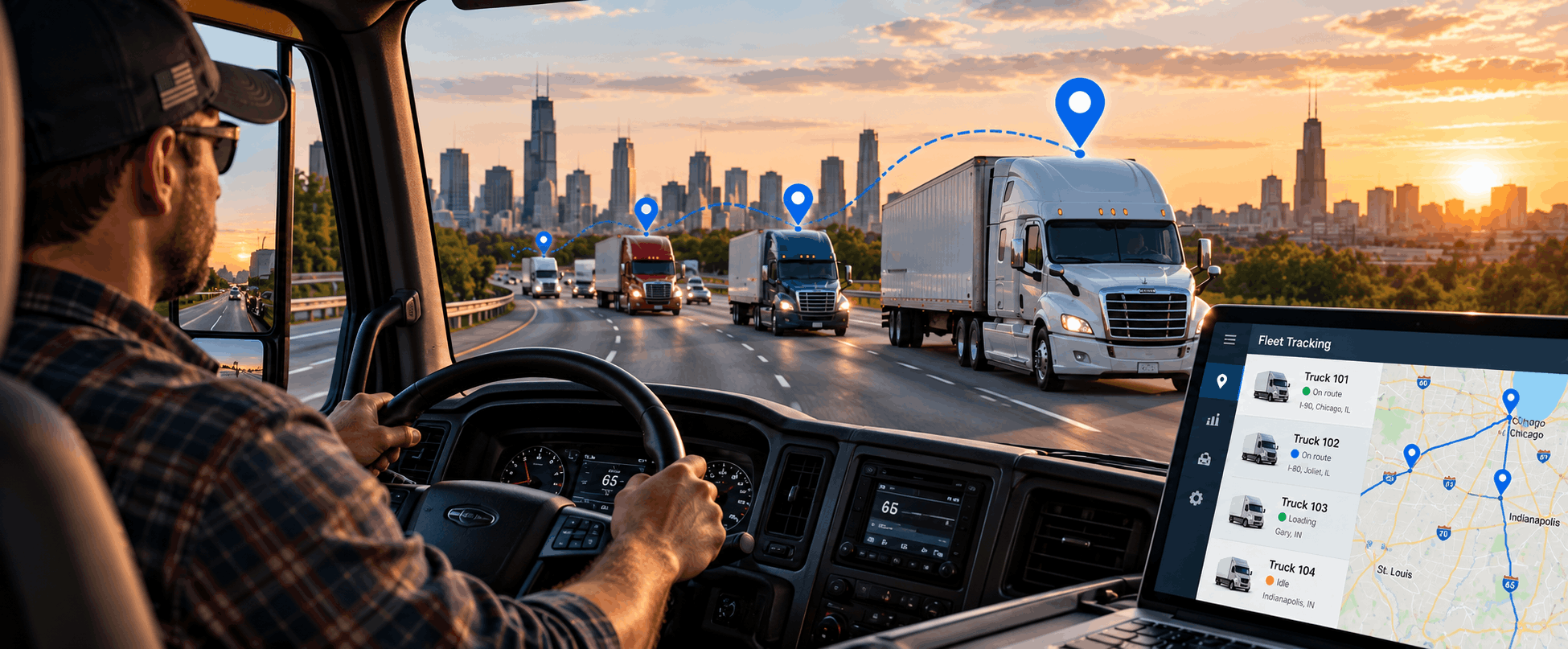
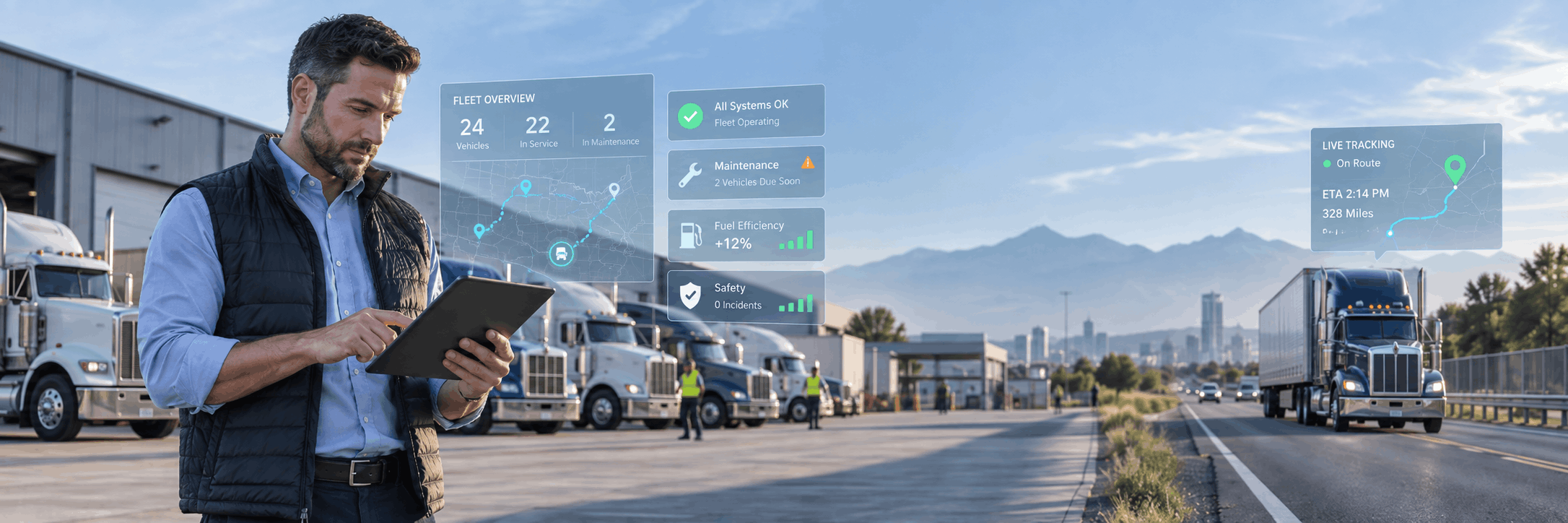
A digitally connected fleet may use electronic logging technology, GPS tracking, telematics, cloud-based fleet management software, mobile applications, AI-powered dash cameras, and automated reporting. When these technologies operate as part of one ecosystem, fleet managers gain a complete view of vehicles, drivers, routes, compliance, maintenance, and operating costs.
From Traditional Fleet Management to Digital Operations
Traditional fleet management frequently involves fragmented processes. Dispatchers communicate with drivers by telephone, maintenance records are stored in separate files, and compliance data may not be reviewed until a problem occurs.
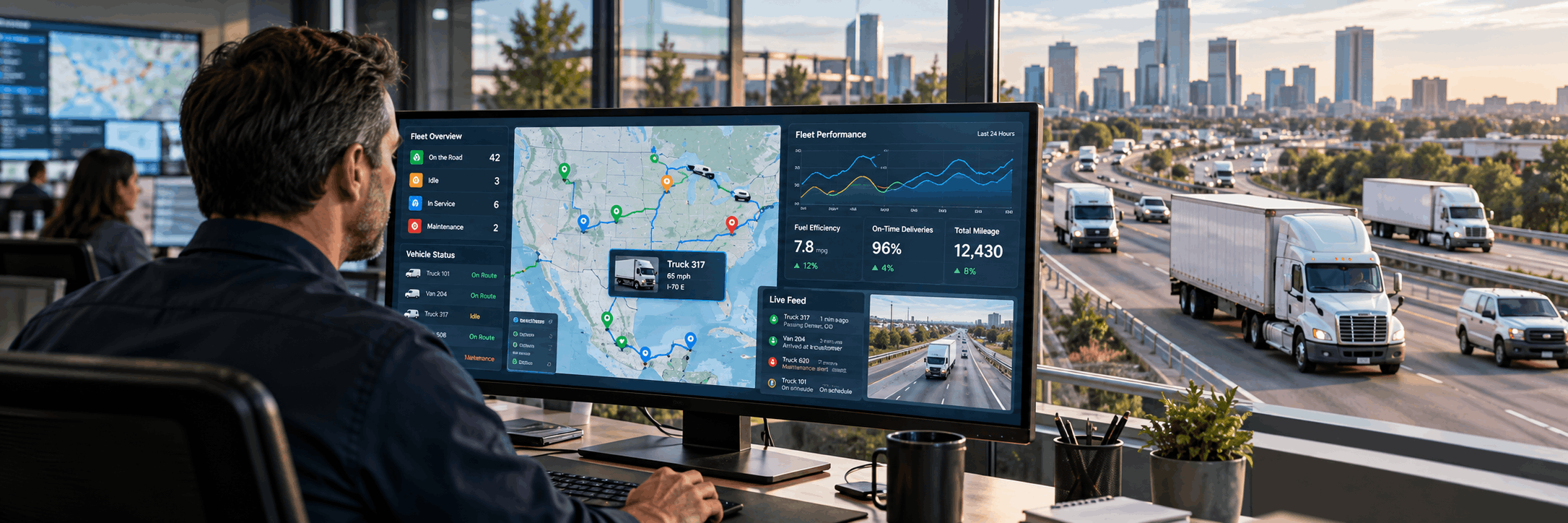
Digital fleet management centralizes these activities. Dispatchers can view vehicle locations, managers can monitor driver availability, and maintenance teams can receive alerts when a vehicle requires attention. Instead of searching through multiple systems, authorized employees can access relevant information from a shared platform.
This transition lowers administrative effort and helps departments coordinate their work more effectively.
The Role of Live Data
Real-time information is one of the foundations of transportation digitalization. GPS and telematics systems can continuously transmit information about vehicle location, speed, engine status, mileage, idle time, and driver behavior.
This information allows managers to respond to current conditions. If traffic disrupts a planned route, dispatchers can redirect the vehicle. If a mechanical warning appears, maintenance personnel can investigate it before the vehicle experiences a serious failure. If a driver approaches an Hours of Service limit, the fleet can adjust the assignment before a compliance issue occurs.
The result is a more proactive operating model in which problems can be addressed before they significantly affect safety, cost, or customer service.
Key Technologies Driving Transportation Digitalization
No single technology creates a fully digital fleet. Transformation occurs when several complementary systems work together and exchange reliable information.
Electronic Logging and Automated Compliance
Electronic logging is an important starting point for many commercial fleets. Modern ELD devices automatically record driving time and relevant vehicle data, helping carriers keep accurate Hours of Service records and reduce their dependence on paper logs.
Electronic records give drivers and fleet managers better visibility into available driving hours. They also simplify record retrieval and support faster preparation for inspections and audits. When connected to a larger fleet management platform, logging information can assist with dispatching, scheduling, payroll, and performance analysis.
The strategic value of electronic logging therefore goes beyond basic compliance. It creates a dependable source of operational data that can support other fleet processes.
GPS and Telematics Systems
GPS tracking shows where commercial vehicles and assets are located. Telematics expands this visibility by collecting information about how vehicles are being operated.
Fleet managers can use these systems to monitor:
- Current vehicle locations;
- Route progress and arrival times;
- Speed and harsh driving events;
- Engine activity and diagnostic information;
- Fuel consumption and excessive idling;
- Unauthorized vehicle use;
- Entry into or exit from defined geofenced areas.
This level of visibility helps dispatchers assign the closest suitable vehicle, communicate more accurate delivery estimates, and investigate operational irregularities. It can also support theft recovery and improve the management of trailers, equipment, and other mobile assets.
Cloud-Based Fleet Management Software
Cloud technology allows fleet information to be accessed securely from different locations and compatible devices. Managers do not need to remain in a central office to review vehicle activity, driver status, or operational reports.
Cloud-based software also makes it easier to connect fleet management with other business systems. Data can be shared with accounting, payroll, dispatch, customer relationship management, maintenance, and transportation management platforms.
A properly integrated system reduces duplicate data entry and creates a more uniform operational record. It also allows growing companies to add users, vehicles, and features without completely rebuilding their technical infrastructure.
Artificial Intelligence and Predictive Analytics
Commercial fleets produce substantial volumes of data. Artificial intelligence can evaluate this information more quickly than manual analysis and detect patterns that might otherwise remain hidden.
AI-driven systems can help fleets:
- Predict possible mechanical failures;
- Detect inefficient routes;
- Identify high-risk driving styles;
- Forecast maintenance needs;
- Analyze fuel consumption;
- Recognize unusual vehicle activity;
- Give priority to safety interventions.
Predictive analytics moves fleet management from reporting past events toward anticipating future outcomes. Instead of learning about a problem after it causes downtime or financial loss, managers can receive an early warning and take preventive action.
AI-Powered Dash Cameras
Connected dash cameras combine video evidence with vehicle and driver data. AI-enabled systems are able to identify events such as unsafe following distance, distraction, harsh braking, or sudden lane movement.
When an event occurs, the platform can preserve the relevant footage and notify fleet personnel. Managers can then review the context instead of relying only on a numerical alert.
Video information supports targeted driver coaching, accident investigation, insurance claims, and protection against false allegations. When used transparently and responsibly, camera systems can become valuable safety tools rather than simple surveillance devices.
Mobile Fleet Management Applications
Mobile applications connect drivers with dispatchers and office personnel. Drivers can receive assignments, upload documents, complete inspections, review available hours, report problems, and communicate without relying on paper forms.
Mobile access can also improve the speed and accuracy of information exchange. A driver can submit a vehicle inspection report immediately, while a dispatcher can update an assignment without waiting for the vehicle to return to the terminal.
This connectivity is particularly important for fleets whose employees and assets operate across large geographic areas.
How Digital Transformation Improves Fleet Operations
Digitalization creates the greatest value when it addresses particular operational problems rather than adding technology without a clear objective.
More Efficient Dispatch and Route Planning
Real-time location data helps dispatchers understand where each vehicle is and whether it can complete a new assignment. Routing software can consider distance, traffic, delivery windows, vehicle restrictions, and driver availability.
Better planning reduces unnecessary mileage and improves on-time performance. It can also make operations more resilient when traffic, weather, mechanical issues, or customer changes disrupt the existing plan.
Lower Fuel and Operating Costs
Fuel is one of the largest variable expenses for many commercial fleets. Digital systems can identify excessive idling, inefficient routes, unauthorized vehicle use, aggressive acceleration, and other behaviors that increase consumption.
Managers can use this information to create driver coaching programs and operating policies based on measurable patterns. Even modest improvements across many vehicles can produce meaningful savings.
Digitalization can also reduce costs associated with paperwork, manual data entry, preventable maintenance, compliance violations, and inefficient vehicle utilization.
Decreased Administrative Work
Automation can replace repetitive tasks such as entering driver hours, preparing routine reports, organizing inspection records, and transferring information between departments.
Decreasing manual work allows employees to focus on exceptions and higher-value decisions. It can also improve data correctness because information is recorded directly by connected systems rather than repeatedly copied into separate files.
Faster and More Accurate Decisions
A central platform provides managers with a consistent view of fleet activity. Instead of waiting for weekly reports, they can evaluate current performance and investigate issues as they develop.
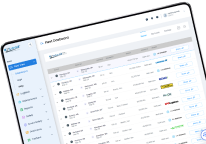
Dashboards and automated reports make it easier to compare routes, vehicles, terminals, and drivers. Managers can identify which parts of the operation are performing well and where corrective action may be required.
Digital Compliance and Transportation Safety
Adherence and safety are closely connected. Accurate records, responsible scheduling, vehicle inspections, and driver monitoring all help make commercial operations safer.
Automating Hours of Service Management
Electronic logging technology gives drivers a better understanding of their remaining driving time. Dispatchers can also use this information when planning assignments.
Such visibility reduces the risk of creating schedules that cannot be completed within applicable limits. Automated alerts can notify drivers and managers when a potential violation is approaching, allowing them to take corrective action.
Digital Vehicle Inspection Reports
Digital inspection reports make it easier for drivers to document vehicle defects and send that information to the appropriate personnel. Photos, notes, timestamps, and repair updates can be stored with the inspection record.
This creates a clearer process from defect identification to repair confirmation. It also helps fleets demonstrate that reported safety problems were reviewed and addressed.
Monitoring Driver Behavior
Telematics and camera data can identify speeding, harsh braking, rapid acceleration, distraction, and other risk indicators. However, collecting data alone does not improve safety.
Fleets must translate information into consistent coaching, training, and recognition programs. Drivers should understand what is being measured, how the information will be used, and what actions they can take to improve.
A balanced safety program should recognize responsible performance while concurrently addressing risky behavior.
Maintaining Audit-Ready Records
Digital storage makes compliance documents easier to organize, retrieve, and review. Fleet managers can verify whether records are complete before an inspection or audit occurs.
Automated reporting also helps identify missing information, unresolved log annotations, or recurring compliance problems. This turns compliance management into a continuous process rather than an emergency response.
Predictive Maintenance and Connected Vehicles
Vehicle maintenance has typically relied on fixed service intervals and driver-reported problems. Connected vehicle data adds one more layer of intelligence by showing how each asset is actually performing.
Using Vehicle Data to Detect Mechanical Problems
Engine diagnostics, fault codes, mileage, operating hours, temperature readings, and fuel data can help maintenance teams identify developing issues.
For example, repeated diagnostic alerts may indicate that a component requires inspection. Unusual fuel consumption may point to a mechanical problem or inefficient operation. Maintenance personnel can evaluate these signals before scheduling repairs.
Moving from Reactive to Preventive Maintenance
Reactive maintenance begins after a vehicle breaks down. Preventive and predictive maintenance aim to service the vehicle before a failure interrupts operations.
A digital maintenance system can automatically create reminders based on mileage, engine hours, calendar intervals, or diagnostic data. It can also preserve service histories, repair costs, parts usage, and warranty information.
This organized method lowers the chance of missed maintenance and helps fleets determine whether an asset remains economical to operate.
Reducing Unforeseen Downtime
Unplanned downtime affects more than repair costs. It can cause missed deliveries, replacement vehicle expenses, driver delays, and customer dissatisfaction.
Predictive maintenance improves scheduling by allowing repairs to be coordinated with existing downtime. It also helps managers identify vehicles with recurring problems and make more informed replacement decisions.
The Function of Data in Modern Commercial Transportation
Data becomes valuable only when it is accurate, accessible, and connected to business objectives.
Creating a Single Source of Fleet Information
When departments maintain separate records, different versions of the same information can exist. An integrated fleet platform creates a central source for vehicle, driver, route, maintenance, and compliance data.
Such consistency improves collaboration. Dispatchers, safety managers, maintenance teams, and executives can work from the same operational information while receiving access appropriate to their roles.
Turning Unprocessed Data into Actionable Insights
Fleet platforms should not overwhelm managers with disconnected alerts and reports. They should help users distinguish between routine information and events that require action.
Useful dashboards present trends, exceptions, and priorities. Instead of merely showing that fuel use increased, the system should help determine which vehicles, routes, or behaviors contributed to the change.
Important Fleet Performance Measures
The most relevant metrics depend on the fleet’s operating model, but typical indicators include:
- Fuel consumption per vehicle or mile;
- Total idle time;
- On-time arrival rate;
- Empty or non-revenue mileage;
- Vehicle utilization;
- Maintenance cost per mile;
- Preventable accident frequency;
- Driver safety scores;
- Compliance violations;
- Average repair time.
Fleets should concentrate on metrics linked to performance targets. Monitoring too many indicators can distract managers from the measures that directly affect safety, efficiency, and profitability.
Protecting Fleet Data and Driver Privacy
Greater connectivity also creates greater responsibility. Transportation companies must protect vehicle, customer, employee, and business information from unauthorized access.
Security measures may include access controls, multifactor authentication, encryption, software updates, employee training, and clear data-retention policies. Fleets should also explain monitoring practices to drivers and limit data use to legitimate operational purposes.
Cybersecurity and privacy should be incorporated into digital transformation from the beginning, rather than treated as later additions.
Challenges of Transportation Digitalization
Digital transformation delivers significant benefits, but implementation calls for careful planning.
Upfront Technology Costs
Hardware, software subscriptions, installation, integration, and training can require an initial investment. Fleets should evaluate total value rather than selecting a solution based only on its monthly price.
A lower-cost system may become expensive if it creates additional administrative work, lacks necessary integrations, or must be replaced as the fleet grows.
Integrating New and Existing Systems
Disconnected tools can create new information silos. Before choosing a platform, fleet operators should determine whether it can exchange data with existing dispatch, accounting, maintenance, and customer systems.
Integration requirements should be documented early in the selection process.
Driver and Employee Resistance
Employees may resist technology if they do not comprehend its purpose or believe it will make their work more difficult. Clear communication is essential.
Fleet leaders should explain how the system improves safety, reduces paperwork, and supports more effective operations. Drivers and dispatchers should also be involved in testing because they can identify practical issues that may not be visible to senior management.
Training Fleet Personnel
Even advanced technology will deliver limited value if employees do not know how to use it. Training ought to address everyday workflows as well as unusual situations, such as device malfunctions, connectivity problems, or incorrect data.
Ongoing refresher training is particularly important when software features or regulations change.
Selecting Scalable Technology
A system that works for ten vehicles may not support a fleet of several hundred. Companies should consider future vehicle numbers, operating regions, users, integrations, and reporting requirements.
Scalable technology allows a fleet to expand without repeatedly replacing its core platform.
How to Build a Digital Transformation Strategy
A structured strategy helps fleets avoid unnecessary technology spending and implementation disruption.
Step 1: Evaluate Existing Fleet Processes
Document how dispatching, compliance, inspections, maintenance, fuel management, and reporting are currently handled. Identify repetitive work, delays, missing information, and recurring errors.
Step 2: Define Operational Objectives
Establish measurable priorities such as lowering idle time, improving on-time delivery, lowering maintenance costs, or decreasing compliance violations.
Step 3: Identify the Most Important Technologies
Select tools that directly support those objectives. A fleet with frequent breakdowns may prioritize maintenance data, while an operation with poor route visibility may start with GPS and dispatch integration.
Step 4: Choose an Integrated Fleet Platform
Evaluate whether the platform can centralize information, connect to existing systems, support regulatory requirements, and expand with the business.
Step 5: Launch a Pilot Program
Test the system with a limited group of vehicles and employees. A pilot provides an opportunity to review data correctness, workflows, connectivity, and training requirements.
Step 6: Train Drivers and Fleet Managers
Provide role-specific training and clear support procedures. Employees should know both how to use the technology and why the organization is adopting it.
Step 7: Measure Results and Scale the System
Compare performance against the baseline established before implementation. If the pilot meets its objectives, extend the technology across the fleet while continuing to monitor results.
Measuring the ROI of Fleet Digitalization
The return on digital transformation should be evaluated through direct savings and wider operational improvements.
Measurable benefits may include:
- Reduced fuel consumption;
- Lower administrative labor costs;
- Fewer compliance violations;
- Less unplanned downtime;
- Reduced maintenance expenses;
- Improved vehicle utilization;
- Fewer preventable accidents;
- Lower insurance and claims costs;
- Higher driver productivity;
- Better customer retention.
Fleets should calculate total technology costs, including equipment, subscriptions, installation, integration, training, and internal support. These costs can then be compared with verified savings and performance gains over an appropriate period.
Some benefits, for example improved safety culture or stronger customer confidence, may be difficult to express as a single financial figure. They should still be included in the overall assessment.
The Future of Digital Commercial Transportation
Commercial transportation will become increasingly connected, automated, and analytics-based. Vehicles will produce more detailed information, while AI systems will become better at interpreting that data and recommending actions.
Predictive compliance tools may identify risks before violations occur. Connected maintenance systems will detect developing mechanical problems with greater accuracy. AI-assisted dispatching will evaluate more variables when assigning vehicles and planning routes.
Electrification will also create new management requirements, including battery monitoring, charging schedules, energy consumption, and range planning. Digital fleet platforms will be essential for coordinating these processes.
Autonomous and semi-autonomous technologies will not eliminate the need for fleet management. Instead, they will increase the significance of reliable data, system integration, remote oversight, and cybersecurity.
How EZLOGZ Supports Fleet Digital Transformation
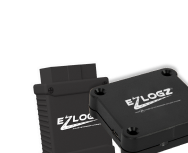
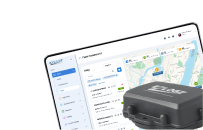
EZLOGZ provides an integrated ecosystem created to connect important areas of commercial fleet management. Its solutions bring together electronic logging, GPS and asset tracking, AI-powered video technology, fleet monitoring, and operational reporting.
By consolidating these capabilities, fleet operators can reduce fragmented workflows and obtain a clearer view of drivers, vehicles, routes, safety events, and compliance records.
The platform can support transportation companies as they move from manual fleet administration toward connected, data-driven management. Rather than adopting isolated tools for individual problems, fleets can build a technological foundation that supports efficiency, safety, compliance, and future growth.
FAQ:
What does digital transformation mean in commercial transportation?
It means using connected digital technologies to improve fleet operations, compliance, safety, maintenance, dispatching, and business decision-making. It usually involves replacing manual or isolated processes with integrated systems that exchange live data.
Why is digital transformation important for fleet operators?
Digital transformation gives fleet managers better visibility and control. It can reduce administrative work, prevent avoidable costs, improve driver safety, support compliance, and help companies respond more quickly to operational changes.
Which technologies should a fleet adopt first?
The answer depends on the fleet’s most important challenges. Many commercial fleets begin with electronic logging, GPS tracking, telematics, and centralized fleet management software. Technologies should be selected according to measurable business objectives.
Can small commercial fleets benefit from digitalization?
Yes. Small fleets regularly operate with limited administrative resources, making automation notably valuable. Digital tools may reduce paperwork, simplify compliance, improve vehicle utilization, and give managers more time to focus on customers and growth.
How does fleet digitalization reduce operating costs?
It can reduce fuel waste, unnecessary mileage, excessive idling, administrative labor, preventable repairs, unplanned downtime, and compliance-related expenses. The exact savings depend on fleet size, operating conditions, and how consistently the technology is used.
What role does AI play in commercial transportation?
AI analyzes fleet data for identifying patterns, predict risks, and rank actions. It can support predictive maintenance, route optimization, safety monitoring, fuel analysis, and operational forecasting.
How long does it take to digitize fleet operations?
Implementation time varies according to fleet size, system complexity, integration requirements, and employee training. A staged rollout beginning with a pilot group can reduce disruption and allow the company to resolve problems before full deployment.
How can fleet operators measure digital transformation ROI?
Operators should establish baseline costs and performance indicators before implementation. After deployment, they can measure changes in fuel consumption, downtime, maintenance costs, administrative hours, compliance results, accident rates, and vehicle utilization.
Building a Connected and Analytics-Based Fleet
Digital transformation is becoming a core requirement for efficient commercial transportation. Connected systems allow fleet managers to replace incomplete manual processes with real-time visibility, automated workflows, and measurable performance data.
Successful transformation does not depend on adopting every available technology. It requires selecting the right tools, integrating them effectively, training employees, and connecting each investment to a definite operational goal.
Commercial fleets that take this planned approach can improve safety, strengthen compliance, control costs, and create more reliable service. They also build a flexible digital foundation capable of supporting new regulations, technologies, and business opportunities as transportation remains evolving.