


A delivery van may travel only a few dozen miles in a shift yet complete more stops than a long-haul truck makes in a week. Every parking delay, wrong turn, missed delivery window, and second delivery attempt adds time and cost. For last-mile delivery companies, managing these small interruptions across an entire fleet is often the difference between a profitable route and an expensive one.
Effective last-mile delivery fleet management connects vehicles, drivers, dispatchers, and delivery information. GPS tracking supplies location visibility, while routing, dispatch, and order-management tools help teams decide what should happen next. Used together, these systems can improve delivery reliability, reveal inefficient routes, and make daily operating costs easier to control.
Why Last-Mile Delivery Requires a Different Fleet Management Approach
High Stop Density Changes the Economics of a Route
A delivery route is not simply the shortest drive between two points. Each stop requires parking, locating an entrance, unloading, confirming a recipient, and getting back into traffic. Apartment buildings, gated communities, loading restrictions, and limited curb space create delays that mileage reports alone do not explain. A company that tracks only miles driven may miss the time lost at individual stops.
Customer expectations make the problem more demanding. Businesses may promise narrow delivery windows or same-day service, but a single failed handoff can trigger another trip, a support call, and a complaint. Dispatchers need to see both vehicle progress and delivery exceptions before the route falls behind schedule.
Last-Mile Delivery Compared With Long-Haul Trucking
| Operational factor | Last-mile delivery | Long-haul trucking |
| Route pattern | Many short stops | Long highway segments |
| Typical vehicles | Vans and box trucks | Tractor-trailers |
| Main efficiency measure | Cost per delivery and stops per hour | Cost per mile and transit time |
| Dispatch priority | Stop sequencing and delivery windows | Trip planning and driver availability |
| Common delay | Parking, congestion, failed handoff | Traffic, weather, terminal dwell |
Where Hidden Delivery Costs Accumulate
Last-mile costs include more than fuel and driver wages. Overtime, repeated attempts, unproductive vehicle time, tire and brake wear, customer-service work, and inefficiently balanced routes all contribute. The first step toward improvement is separating unavoidable service time from avoidable delays and measuring both consistently.
8 Essential Fleet Management Strategies for Last-Mile Delivery Companies
1. Optimize Multi-Stop Delivery Routes
A practical delivery route should reflect the number of stops, service time at each address, promised arrival windows, vehicle capacity, and road restrictions. Multi-stop optimization tools can evaluate these constraints and propose a sequence that reduces unnecessary travel. GPS history then helps managers compare planned routes with actual driving and identify recurring detours.
Consider a courier assigned 35 stops across a city. Grouping nearby addresses may reduce backtracking, but the fastest sequence can still be unsuitable if several customers require morning deliveries. The strongest plan balances driving distance with service commitments rather than optimizing mileage alone.
2. Track Delivery Vehicles in Real Time
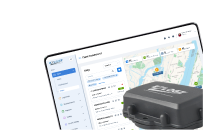
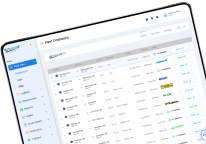
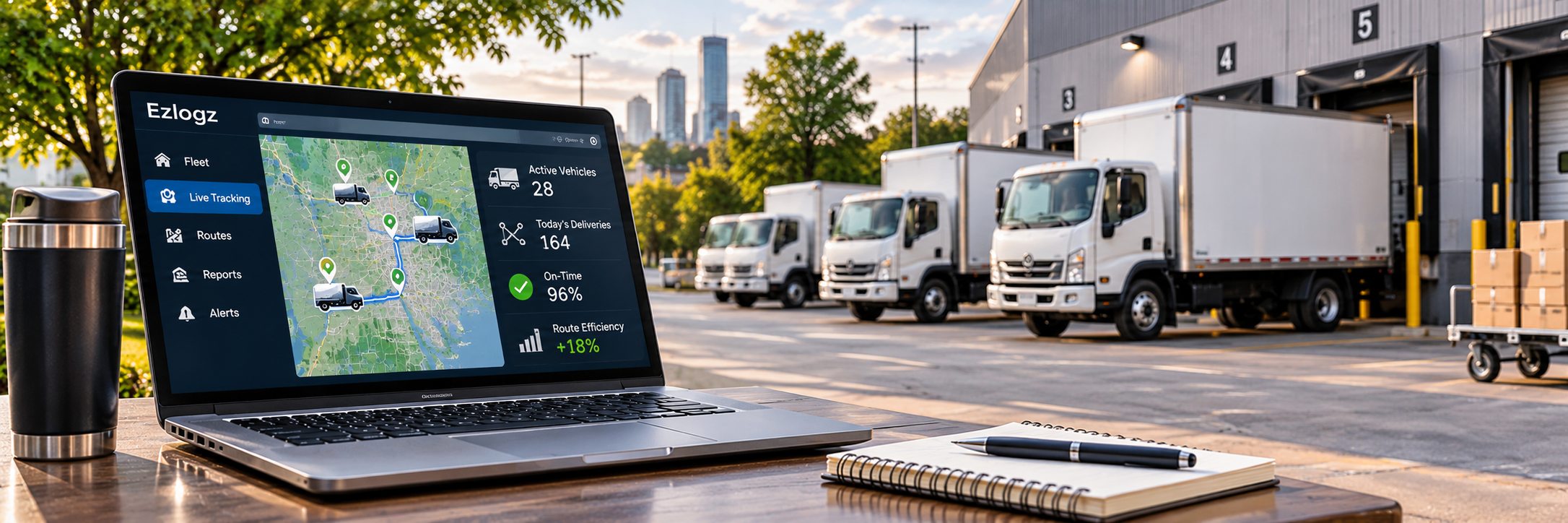
Real-time delivery vehicle tracking gives dispatchers a shared view of where vehicles are, which service zones they are approaching, and where unexpected stops occur. A GPS dashboard can reduce repetitive check-in calls and help staff respond when a driver is delayed or a nearby vehicle is better positioned for a new assignment.
Location updates depend on device settings and network connectivity. Managers should evaluate update frequency, coverage, trip history, and alert customization instead of assuming every platform provides continuous location updates everywhere.
3. Balance Driver Workloads and Dispatch Assignments
The number of assigned stops is not a complete measure of workload. Thirty easy commercial stops may take less time than twenty apartment deliveries requiring repeated access attempts. Dispatchers should account for estimated service time, geographic density, driver shift limits, vehicle capacity, and the likelihood of difficult handoffs.
When one route becomes overloaded, a dispatcher may be able to reassign a suitable stop to another available driver. Better balancing can reduce late deliveries and overtime, provided reassignment does not create additional mileage or confuse the customer.
4. Reduce Fuel Waste, Idling, and Unnecessary Miles
Frequent acceleration, traffic queues, extended idling, and route backtracking can increase fuel costs. GPS tracking helps analyze trip distance and stop patterns; compatible telematics may provide more detailed information about idle time, driving behavior, and engine operation. Managers can use these patterns to review routes and coach drivers without judging performance from a single event.
Fuel savings should be measured against comparable delivery volumes and routes. A reduction in total fuel use is less meaningful if the company also completed substantially fewer deliveries.
5. Improve Delivery Status Updates and Customer Communication
Customers want useful arrival information and prompt updates when plans change. Vehicle location data can support estimated arrival times, while connected delivery-management systems can provide order-level status, customer notifications, and exception messages. These capabilities are not interchangeable: a GPS location ping does not itself prove that a package was handed to the right recipient.
Where supported, electronic proof of delivery—such as a signature, scan, or photo—can close the information gap between arriving at an address and completing the delivery. Fewer ambiguous statuses mean fewer avoidable calls to dispatch and customer support.
6. Schedule Maintenance Around Daily Delivery Demand
Last-mile driving often involves repeated starts, braking, tight turns, and frequent curbside stops. Vans and box trucks need preventive maintenance based on the manufacturer’s requirements, vehicle use, inspection results, and mileage or engine hours when available. Service reminders and maintenance records help managers schedule work before a vehicle is required for a high-volume route.
A fleet manager may reserve a spare vehicle for a van approaching its next service interval rather than allow the maintenance appointment to disrupt a busy delivery day. Tracking supports planning, but it cannot diagnose every mechanical fault without additional compatible sensors or inspection data.
7. Use Driver Safety Data for Coaching
Speeding, harsh braking, rapid acceleration, and distracting behavior can create safety risks and maintenance costs. When a fleet uses compatible telematics or video systems, managers can review trends, investigate events in context, and develop coaching based on recurring patterns. The objective should be safer driving—not simply generating more alerts.
Clear policies about what information is collected, why it is collected, and who can access it help establish fair and responsible use of driver-monitoring technology.
8. Measure Cost per Delivery, Not Just Cost per Mile
A delivery fleet may drive fewer miles and still perform poorly if drivers spend more time waiting, repeat a high percentage of deliveries, or complete too few stops per hour. Cost per completed delivery places expenses in the context of actual output. Compare it alongside first-attempt success, service quality, and driver hours to avoid rewarding speed at the expense of reliable delivery.
Choosing and Implementing Fleet Management Software for Last-Mile Delivery
Features to Evaluate Before Selecting a Platform
No single fleet management product necessarily handles GPS tracking, multi-stop optimization, order dispatch, customer notifications, and proof of delivery. Start with the tools that address the company’s most expensive bottlenecks, then confirm integrations and data-sharing requirements before signing a contract.
| Capability | Why it matters |
| GPS vehicle tracking | Shows fleet locations, trip history, and movement |
| Multi-stop routing | Plans stops around time windows and route constraints |
| Dispatch management | Coordinates daily driver and vehicle assignments |
| Geofencing | Records arrivals and departures at defined locations |
| Driver and vehicle reporting | Supports safety, mileage, and usage analysis |
| Maintenance management | Helps plan servicing and vehicle availability |
| Order and delivery integrations | Connects vehicle information with delivery status |
| Access controls and exports | Supports responsible data use and reporting |
Fleet KPIs Worth Tracking Every Week
1. Cost per completed delivery: total relevant operating expenses divided by successfully completed deliveries.
2. Deliveries per driver-hour: completed deliveries divided by driver hours worked.
3. On-time delivery rate: deliveries completed within the promised window divided by total qualifying deliveries.
4. First-attempt success rate: deliveries completed on the first visit divided by attempted deliveries.
5. Average time per stop: stop-related service time divided by total stops.
6. Miles per delivery: total distance divided by completed deliveries.
7. Fuel cost per delivery: fleet fuel spend divided by completed deliveries.
8. Vehicle availability: percentage of scheduled operating time when vehicles are ready for use.
Example: Calculating Last-Mile Cost Savings
Assume a hypothetical fleet completes 8,000 deliveries per month. Before operational improvements, monthly fleet operating costs are $64,000, or $8.00 per delivery. After route reviews, fewer repeated trips, and more consistent scheduling, costs fall to $58,400 while delivery volume stays unchanged. Cost per delivery becomes $7.30.
| Metric | Before | After |
| Monthly completed deliveries | 8,000 | 8,000 |
| Operating expenses | $64,000 | $58,400 |
| Cost per delivery | $8.00 | $7.30 |
| Monthly gross savings | — | $5,600 |
This hypothetical change represents an 8.75% reduction in operating expenses. It is not an Ezlogz customer result. A real return-on-investment calculation should subtract software subscriptions, device costs, training, installation, and other implementation expenses and avoid double-counting savings.
A Practical Rollout for Delivery Fleet Teams
1. Measure existing delivery costs, failed attempts, mileage, and driver hours for a representative period.
2. Map recurring problems by delivery zone, customer location, and time of day.
3. Select GPS tracking and other software features that address those specific problems.
4. Pilot the workflow with a small set of vehicles and comparable routes.
5. Configure meaningful alerts and explain data policies to drivers and dispatchers.
6. Confirm that routing, order-management, and customer-notification integrations work as expected.
7. Compare cost per delivery and service quality against the baseline before expanding.
How Ezlogz Fits Into Last-Mile Fleet Management
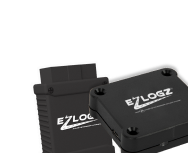
Ezlogz offers commercial fleet-management technology, including GPS tracking, route-related visibility, geofencing, reporting, and connected vehicle-management capabilities. For delivery companies, these tools can provide a foundation for monitoring vehicles, reviewing trips, and improving dispatch visibility. Businesses that need specialized delivery sequencing, customer notifications, or proof-of-delivery workflows should confirm which functions are included and which require other software or integrations.
Explore Ezlogz fleet-management solutions at https://ezlogz.com/ to evaluate how location visibility and operational reporting can support your delivery business.
FAQ:
It is the coordination of delivery vehicles, drivers, routes, maintenance, and daily assignments for the final leg of a shipment. The aim is to complete deliveries reliably while managing time and cost.
It can centralize vehicle information, support dispatch decisions, organize performance reporting, and—when compatible modules are available—connect routing and delivery workflows.
GPS tracking gives dispatchers location and trip information that can reduce unnecessary status calls, improve visibility into delays, and support better assignment decisions.
The main opportunities include reducing unnecessary mileage, balancing routes, managing idling, scheduling preventive maintenance, and improving first-attempt delivery success.
It is the process of finding a workable sequence for many delivery stops while considering factors such as traffic, service duration, capacity, and delivery windows.
It can support better dispatch coordination and highlight inefficient travel patterns. Productivity improvements depend on how managers use the data and organize delivery work.
Cost per completed delivery, deliveries per driver-hour, on-time delivery rate, first-attempt success, miles per delivery, and vehicle availability provide a useful starting point.
Better scheduling, accurate recipient information, timely customer updates, and clear exception workflows may reduce preventable unsuccessful attempts.
Yes. Even a small fleet can benefit from location visibility and consistent performance measurement, provided the cost and complexity fit its operating needs.
Prioritize reliable GPS tracking, practical reporting, dispatch visibility, route planning where required, useful integrations, appropriate data controls, and transparent total pricing.


Comments