


Editorial note: This topic already exists on Ezlogz.com. Use this draft as a revision of that page, not a second competing publication.
Freight logistics becomes difficult when every participant sees a different piece of the shipment. A dispatcher may know the tractor location, a warehouse may know the loading status, and a customer may know only that a delivery is expected today. The gaps between those views create repetitive calls, poorly timed pickups, missed appointments, and unnecessary operating costs.
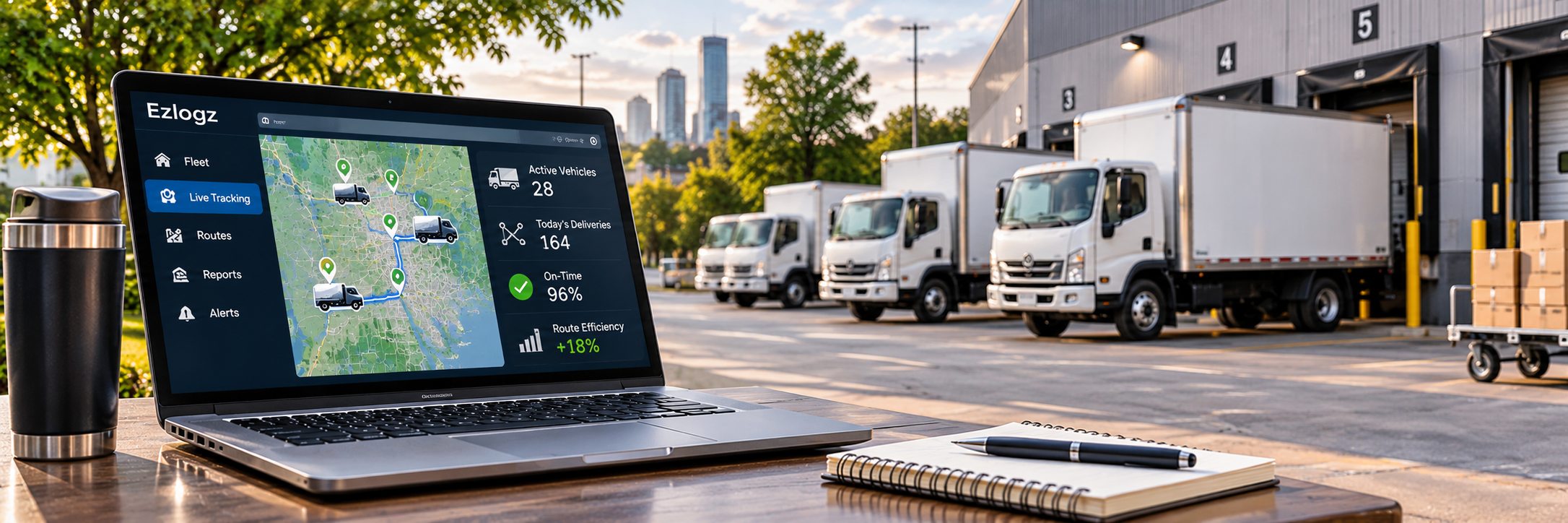
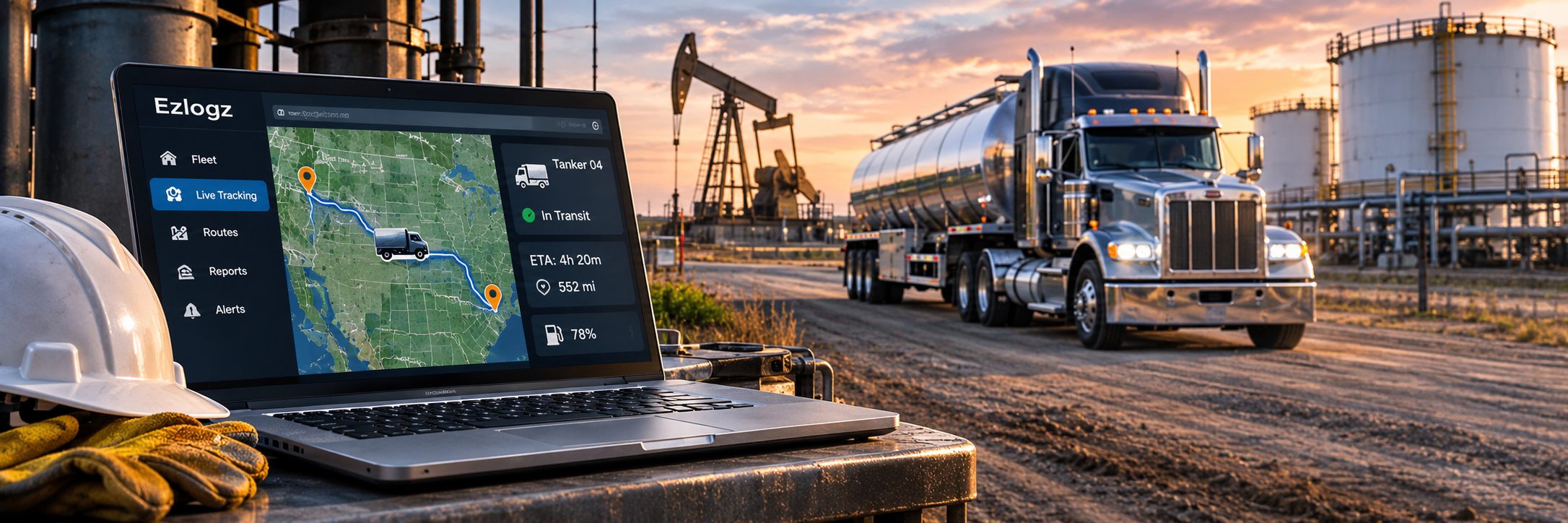
GPS solutions for freight and logistics companies can provide a common location timeline for trucks and trailers. Their full value emerges when location is connected with shipment identifiers, facility events, transportation management systems, and exception workflows. Tracking technology does not replace freight planning; it gives planners more dependable information for making decisions.
From Vehicle Location to Freight Shipment Visibility
A Truck Position Is Not Always a Shipment Position
One tractor can haul several loads over the course of a day, and a trailer can be left at a terminal after its tractor departs. Truck GPS answers where the vehicle is; shipment visibility must also identify the load, trailer, handoff, and status. Businesses with trailer pools or intermodal transfers need more than a tractor-only map.
Shared Events Reduce Manual Status Requests
Geofences can record when trucks arrive at warehouses and when they depart. A transportation management system can connect those events to a planned pickup or delivery, where an integration exists. Customers and dispatchers then work from a more consistent timeline rather than relying entirely on phone calls and estimated check-ins.
Operational Data Must Be Interpreted Carefully
A stopped truck may be loading, waiting for an available dock, taking a required break, or dealing with a road problem. Location history highlights the event but does not automatically identify the cause. Better reporting combines GPS with driver updates, order milestones, and facility information.
| Tracking layer | Primary purpose | Limitation |
| Tractor GPS | Show commercial truck movement | May not follow a detached trailer |
| Trailer tracking | Show independent trailer position | Does not identify shipment status alone |
| Shipment events | Link freight to milestones | Requires accurate load identifiers |
| Geofencing | Record facility arrivals and departures | Does not prove loading completed |
| TMS connection | Join orders with tracking | Depends on supported integrations |
8 Ways GPS Tracking Strengthens Freight and Logistics Operations
1. Build a More Complete Shipment Timeline
Location data, trailer assignments, and pickup or delivery milestones can be assembled into a useful shipment view. Managers can identify where a load was last recorded and which handoff occurred most recently. The system needs reliable relationships between shipment IDs and the equipment carrying them.
2. Improve Multi-Load Dispatch Decisions
A vehicle closest to a pickup is not necessarily the correct assignment. Dispatchers also need available capacity, suitable equipment, route commitments, and driver hours. GPS visibility narrows the search and supports faster decisions when connected to current dispatch records.
3. Reduce Empty Equipment Movement
Historical trip reports can show regular empty returns, unnecessary trailer transfers, and costly repositioning. Logistics teams can use these patterns to work on backhauls, pickup scheduling, and asset placement. Tracking reveals the opportunity; revenue and dispatch decisions determine the savings.
4. Provide More Realistic Arrival Estimates
A dependable ETA reflects current position, remaining distance, traffic, stops, and expected service time. GPS updates allow dispatchers to revise an ETA as a trip progresses. Customers benefit when the operator communicates uncertainty early instead of sending a late surprise.
5. Measure Facility Entry, Exit, and Dwell Time
Geofences around terminals and warehouses create timestamps for truck arrivals and departures. Comparing those records can highlight customer sites with repeat bottlenecks. A measured dwell period does not by itself establish contractual detention liability; staff should verify appointment terms and operating circumstances.
6. Track Trailers Independently
A parked trailer can become an invisible asset if tracking is tied exclusively to the tractor. Trailer GPS devices help operators locate equipment, review unauthorized movement, and reduce time spent searching yards. Device power and reporting frequency must be selected for the expected duty cycle.
7. Reduce Repeated Administrative Updates
If dispatch, customer service, and operations teams can see a consistent trip status, fewer phone calls are needed to confirm basic position. The greatest benefit usually comes when shipment milestones are also available through supported integrations. Staff remain responsible for resolving exceptions rather than trusting automated estimates blindly.
8. Use Freight KPIs to Guide Improvement
On-time pickup, on-time delivery, empty-mile share, trailer utilization, facility dwell time, and cost per mile turn location records into practical management information. Review comparable lanes and customers separately. A single fleet-wide average can hide routes with very different operating conditions.
How Freight Carriers Should Evaluate GPS Solutions and ROI
Choose a System Around Freight Workflows
Document which vehicles, trailers, loads, facilities, and customer systems need visibility. Check location update intervals, geofencing, trailer hardware, historical reporting, and supported integrations. Also review access permissions and data retention because shipment information may be commercially sensitive.
Measure Before and After Results
Establish a baseline for empty miles, dispatcher status-call time, warehouse waiting, missed appointments, and equipment utilization. Make an improvement change, then compare similar lanes and comparable periods. Subtract all ongoing service and hardware costs before claiming an ROI.
Example for a 40-Truck Freight Carrier
Imagine an operator reduces non-revenue travel expenses by $1,700 per month, saves $1,000 in manual status work, and avoids $800 in preventable coordination losses. The hypothetical gross gain is $3,500 monthly. With recurring tracking expenses of $1,400, modeled net savings are $2,100 before installation, training, or integration costs.
Positioning Ezlogz in a Connected Logistics Stack
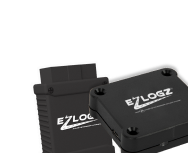
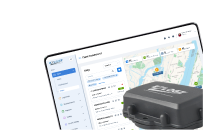
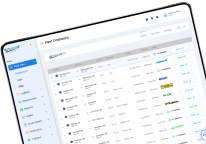
Ezlogz publishes GPS capabilities including vehicle visibility, geofencing, route history, and reports. Freight companies can use these as core tracking functions while verifying whether their TMS, shipment portal, and trailer hardware are supported. The article is intended as a substantive update to the existing Ezlogz page on this topic.
| KPI | What it indicates |
| On-time pickup rate | Pickup schedule reliability |
| On-time delivery rate | Service performance |
| Empty-mile percentage | Non-revenue movement |
| Average facility dwell | Loading and unloading bottlenecks |
| Trailer utilization | Equipment productivity |
| Status calls per load | Administrative workload |
A Practical Freight Visibility Implementation Roadmap
Map the Shipment Data First
Identify how a load number links to the assigned tractor, trailer, carrier, pickup appointment, and delivery destination. A precise GPS position is of little use if the platform displays the wrong equipment against a shipment. Confirm responsibility for updating assignments during trailer swaps.
Configure Exception Rules With Operations
Define events that genuinely require action: a missed pickup appointment, an unplanned long stop, a detached trailer leaving a secure yard, or an ETA that threatens a committed delivery. Avoid sending every movement notification to everyone. Assign a team owner to each exception category and document follow-up steps.
Review Results by Lane and Customer
Compare similar lanes before and after the new workflow, taking seasonal demand and traffic changes into account. Review facility dwell time alongside appointment records and revenue. This keeps claimed savings realistic and helps customer service and dispatch identify improvements with the strongest financial effect.
FAQ
It is location monitoring for vehicles and equipment used to move freight, supporting dispatch and shipment visibility.
No. Shipment tracking also requires reliable identification of the load and the equipment or carrier transporting it.
Some tracking platforms support integrations, but compatibility with a particular TMS must be checked.
It provides arrival and departure events at terminals, distribution centers, and customer facilities.
It helps identify empty travel patterns, while dispatch planning and load matching create the operational savings.
It uses a tracker on a trailer so the equipment can be located independently of its tractor.
It can support dwell-time evidence, but contract terms and verified operational details determine whether charges apply.
Yes. Connected location and order data can support more accurate ETAs and fewer repetitive status requests.
On-time pickup and delivery, empty-mile share, dwell time, equipment utilization, and cost per mile are widely useful.
Compare verified benefits with all hardware, service, integration, and operating costs over a consistent time period.
Explore Ezlogz commercial GPS tracking solutions: https://ezlogz.com/gps-asset-tracking/
Existing article to update: https://ezlogz.com/blog/gps-solutions-for-freight-and-logistics-companies/




Comments