


Efficient truck dispatch operations are essential for trucking companies that need to coordinate drivers, vehicles, shipments, and delivery schedules. Every transportation assignment involves multiple decisions, from selecting an available truck to monitoring its route and ensuring that freight reaches its destination on time.
Managing these activities becomes increasingly challenging as fleets expand, delivery expectations increase, and transportation networks become more complex. Dispatchers must respond to unexpected delays, communicate with drivers, monitor equipment availability, and maintain accurate shipment information throughout the day.
Traditional dispatch methods often depend on manual spreadsheets, phone calls, and periodic driver updates. Although these processes may work for smaller operations, they can create communication delays, inefficient vehicle assignments, and limited visibility across larger fleets.
GPS tracking for truck dispatch helps transportation companies overcome these challenges by providing near-real-time information about vehicle locations and movement. Instead of relying entirely on manual updates, dispatchers can use digital tracking systems to monitor active shipments, identify nearby trucks, and respond more quickly to changing conditions.
When combined with fleet management software, GPS tracking also supports route planning, driver coordination, delivery notifications, and performance analysis. These capabilities help trucking businesses organize daily operations more effectively while maintaining better control over transportation costs and service quality.
Why Traditional Truck Dispatch Operations Are Inefficient
Truck dispatching requires continuous coordination between drivers, dispatch departments, warehouses, customers, and fleet managers. Each assignment involves scheduling, communication, route planning, and resource allocation.
When important operational information is not available in one location, even simple dispatch decisions may take longer than necessary.
Limited Visibility Into Truck Locations
One of the biggest challenges of traditional dispatching is determining exactly where each truck is located.
Without GPS tracking, dispatchers often depend on drivers to report their positions through phone calls, text messages, or periodic check-ins. These updates may become outdated quickly, especially when traffic conditions or delivery schedules change.
For example, a dispatcher managing 25 trucks across several states may need to contact multiple drivers before identifying the vehicle best positioned for an urgent pickup.
This process creates unnecessary administrative work and increases the risk of assigning a shipment to a truck that is farther away than another suitable vehicle.
Real-time truck tracking provides a centralized view of fleet locations, allowing dispatchers to access relevant vehicle information without repeatedly contacting individual drivers.
Delayed Communication and Dispatch Decisions
Transportation schedules can change unexpectedly because of congestion, severe weather, loading delays, mechanical problems, or customer requests.
When dispatchers learn about these issues too late, their options become limited.
A delayed truck may miss a delivery appointment, which can affect its next pickup and create scheduling problems for other vehicles.
Common challenges in manual truck dispatch operations include:
- Inaccurate information about vehicle locations and availability.
- Repeated phone calls to confirm driver progress.
- Delays in assigning newly available loads.
- Difficulty responding to route disruptions.
- Limited information about vehicle utilization.
- Inconsistent customer delivery updates.
- Unnecessary empty miles and additional fuel consumption.
A centralized GPS dispatch management system helps reduce these problems by making vehicle location information more accessible.
Inefficient Routing and Empty Miles
Empty miles represent the distance a commercial truck travels without carrying revenue-generating freight.
These miles contribute to fuel consumption, tire wear, maintenance requirements, and driver time without directly generating transportation revenue.
Poor dispatch coordination can increase empty mileage when trucks are assigned to pickups without considering their current locations.
For example, a dispatcher may send a vehicle 75 miles to collect a load even though another appropriate truck is only 20 miles away.
GPS tracking allows dispatchers to compare vehicle locations and evaluate opportunities to reduce unnecessary repositioning.
However, location is only one factor. Dispatchers must also consider cargo requirements, equipment compatibility, customer appointments, driver availability, and Hours of Service limitations.
How GPS Tracking Improves Daily Truck Dispatch Operations
GPS technology transforms dispatching by providing ongoing visibility into vehicle movement and shipment progress.
Instead of organizing daily operations around incomplete or delayed information, dispatchers can use current tracking data to make more informed decisions.
Real-Time Truck Locations and Fleet Visibility
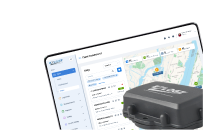
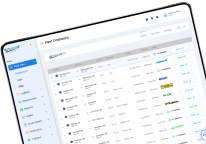
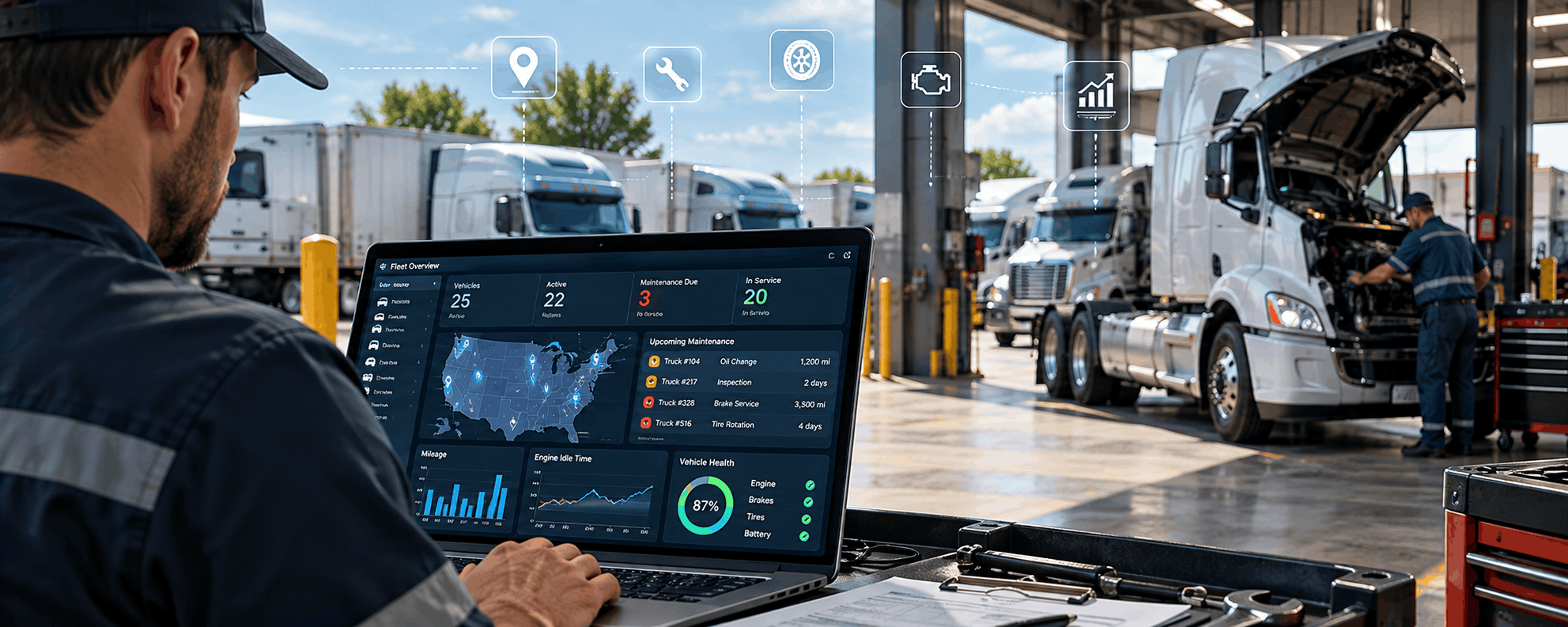
Real-time GPS tracking allows dispatchers to view vehicle locations through a centralized fleet management dashboard.
Depending on the software and tracking devices used, the platform may display vehicle positions, movement status, trip history, and the time of the most recent location update.
This information helps dispatchers understand where trucks are operating and how active shipments are progressing.
The main operational benefits include:
- Faster vehicle identification. Dispatchers can locate trucks assigned to specific routes or geographic areas.
- Improved shipment visibility. Fleet managers can monitor vehicles traveling toward pickup and delivery destinations.
- Better workload distribution. Dispatch teams can compare vehicle locations before allocating additional assignments.
- Earlier detection of unusual stops. Unexpected inactivity may indicate traffic delays, loading problems, or other operational issues.
- More consistent coordination. Multiple dispatchers can work from the same location information.
For example, when a customer requests an additional pickup, the dispatcher can review available trucks near the loading facility rather than contacting every driver individually.
GPS visibility is especially valuable for regional and long-haul trucking companies operating across multiple states.
Because tracking systems rely on connectivity and location reporting intervals, dispatchers should verify the freshness of GPS information before making time-sensitive decisions.
Faster Driver and Truck Assignment
Efficient load assignment requires matching transportation requirements with the right vehicle and driver.
Traditional dispatching may involve manually reviewing vehicle schedules, checking driver availability, and contacting multiple employees to confirm their status.
GPS tracking simplifies this process by showing the current geographic positions of vehicles.
When integrated with broader dispatch management tools, it allows dispatchers to evaluate several factors:
- Distance between the vehicle and pickup location.
- Current assignment and expected completion time.
- Truck type, trailer compatibility, and cargo capacity.
- Driver availability and remaining driving hours.
- Customer pickup and delivery requirements.
- Planned routes and subsequent assignments.
- Potential empty mileage.
Consider a trucking company with three vehicles operating near Dallas.
Truck A is 15 miles from a new pickup location but is already assigned to another shipment. Truck B is 35 miles away and will become available shortly. Truck C is 20 miles away but lacks the appropriate trailer.
Although Truck A and Truck C are geographically closer, Truck B may be the most appropriate choice.
GPS tracking provides the location data required to begin this comparison, while integrated dispatch records and ELD information help determine which vehicle can actually complete the assignment.
Smarter Routing and Dynamic Schedule Adjustments
Route planning is an important part of trucking dispatch operations because travel distance, congestion, delivery appointments, and driver availability affect operating efficiency.
GPS tracking allows dispatchers to compare vehicle movement with planned transportation routes.
When connected to traffic-aware routing tools, GPS information can support route adjustments that account for changing road conditions.
Dispatch teams can use these capabilities to:
- Identify trucks experiencing unexpected delays.
- Monitor progress toward scheduled stops.
- Coordinate changes to upcoming pickup appointments.
- Evaluate alternative routes using suitable navigation systems.
- Reduce unnecessary travel between assignments.
- Improve coordination across multiple deliveries.
For example, a truck approaching a distribution center may encounter a significant highway closure.
Without ongoing tracking, the dispatcher might discover the problem only after receiving a driver call.
With GPS-supported dispatching, the team can identify a lack of progress earlier, assess the situation, and notify the receiving facility.
If an appropriate alternative route is available, the driver can follow updated instructions while respecting commercial vehicle restrictions and safety requirements.
GPS tracking alone does not automatically optimize routes. Advanced routing functions require compatible navigation, traffic, and planning capabilities.
More Accurate ETAs and Proactive Delivery Updates
Estimated times of arrival are critical for freight transportation.
Warehouses use delivery schedules to allocate loading docks, organize labor, and prepare shipments. Customers depend on accurate arrival information to coordinate receiving operations.
Traditional ETA calculations may rely on scheduled departure times and estimated travel durations.
However, these estimates can become inaccurate when traffic congestion, loading delays, weather conditions, or mandatory rest periods affect a trip.
GPS tracking helps dispatchers monitor actual vehicle progress.
When combined with suitable ETA calculation tools, this information supports more realistic arrival estimates.
Improved ETA visibility can help trucking companies:
- Notify customers about potential delays earlier.
- Coordinate warehouse receiving appointments.
- Reduce unnecessary waiting at delivery facilities.
- Improve planning for subsequent truck assignments.
- Provide more consistent shipment status information.
- Support better communication between dispatchers and customer service teams.
For example, if a delivery originally scheduled for 2:00 PM is likely to arrive at 3:15 PM, the dispatcher can notify the customer before the scheduled appointment.
Early communication gives the receiving facility an opportunity to adjust its workflow.
Accurate ETA forecasts should consider more than vehicle location. Traffic, remaining driving hours, route restrictions, scheduled stops, and expected loading or unloading times can all affect actual arrival times.
Geofencing and Automated Arrival Notifications
Geofencing is a location-based technology that creates virtual boundaries around selected geographic areas.
Fleet managers can configure geofences around warehouses, distribution centers, customer facilities, terminals, and other frequently visited locations.
When a compatible GPS tracking system detects that a vehicle has entered or exited one of these boundaries, it can generate a digital notification.
Geofencing supports several dispatch activities:
- Recording arrival at pickup locations.
- Identifying departure from loading facilities.
- Monitoring vehicle arrival at delivery destinations.
- Tracking departures after completed stops.
- Identifying unexpected movement around designated facilities.
- Supporting analysis of facility dwell times.
For example, a dispatcher managing frequent deliveries to the same warehouse can use geofence events to maintain more consistent arrival and departure records.
These records can help identify locations where trucks regularly experience extended waiting periods.
Geofencing does not automatically confirm that loading, unloading, or delivery documentation has been completed. These events may require separate verification.
Fewer Manual Check-Ins and Better Driver Communication
Communication is essential to dispatching, but frequent status requests can interrupt drivers and consume dispatchers’ time.
Without digital vehicle tracking, dispatchers may repeatedly contact drivers to ask about their locations or estimated arrival times.
GPS tracking makes much of this information available through a fleet management dashboard.
As a result, dispatch teams can reserve direct communication for situations that require action.
These situations may include:
- New load assignments.
- Revised pickup appointments.
- Delivery instructions.
- Route disruptions requiring coordination.
- Mechanical problems or emergencies.
- Customer requests requiring driver input.
Reduced routine communication allows dispatchers to spend more time coordinating transportation activities and resolving operational problems.
Drivers also benefit from fewer unnecessary interruptions while operating their vehicles.
Traditional Dispatch vs. GPS-Supported Dispatch
| Dispatch Activity | Traditional Dispatch | GPS-Supported Dispatch |
|---|---|---|
| Vehicle location | Phone calls and manual updates | Centralized GPS dashboard |
| Truck assignment | Manual availability checks | Location-informed selection |
| Route monitoring | Periodic driver reports | Ongoing vehicle visibility |
| Delivery ETA | Static travel estimates | Updated trip information |
| Facility arrival | Driver confirmation | Geofencing notifications |
| Delay management | Reactive communication | Earlier disruption identification |
| Fleet utilization | Manual operational reports | Digital tracking and analytics |
| Driver communication | Frequent status requests | More targeted communication |
| Route history | Paper or manual records | Recorded GPS trip history |
| Dispatch performance | Limited reporting | Measurable operational indicators |
GPS tracking does not eliminate the need for experienced dispatchers. Instead, it gives them better information for handling complex transportation decisions.
GPS Tracking, ELD Integration, and Dispatch Performance
GPS tracking becomes more valuable when connected with other transportation management technologies.
Integration with Electronic Logging Devices, dispatch software, and fleet analytics can provide a more complete view of operational conditions.
Using GPS and ELD Data for HOS-Aware Dispatching
Commercial trucking companies operating in the United States must comply with applicable Federal Motor Carrier Safety Administration Hours of Service regulations.
These requirements limit how long covered drivers may drive and establish rules governing duty status and rest periods.
Dispatchers must consider these restrictions when assigning transportation jobs.
For example, a driver located close to a pickup facility may not have enough remaining driving hours to complete the next shipment.
When GPS tracking is integrated with ELD information, dispatchers can review vehicle location and relevant driver duty-status data together.
This supports better coordination by helping dispatch teams:
- Identify trucks whose drivers have sufficient available hours.
- Avoid assigning unrealistic schedules.
- Account for required rest periods.
- Coordinate pickups around driver availability.
- Reduce preventable HOS-related scheduling disruptions.
GPS tracking does not replace an ELD, nor does it independently establish regulatory compliance.
Companies must continue maintaining accurate records and following applicable federal and state requirements.
Reducing Empty Miles and Improving Truck Utilization
Efficient fleet utilization is important because trucking companies incur operating expenses whenever vehicles are in service.
Fuel, maintenance, insurance, equipment depreciation, and labor contribute to the cost of transporting freight.
Empty mileage increases operating expenses without directly generating freight revenue.
GPS tracking helps dispatchers evaluate available trucks near potential pickup locations.
Consider a truck completing a delivery near Indianapolis.
If another suitable shipment is available nearby, the dispatcher may assign that load rather than sending the vehicle back to its terminal without freight.
This decision depends on several conditions, including equipment suitability, customer schedules, driver hours, and shipment availability.
GPS data helps identify opportunities, but dispatch planning determines whether they can be used.
Measuring Dispatch Efficiency With Fleet KPIs
GPS tracking generates operational data that fleet managers can use to evaluate dispatch performance.
Rather than relying only on subjective assessments, companies can monitor specific metrics and compare results over time.
| Fleet KPI | What It Measures | Operational Value |
|---|---|---|
| On-time delivery rate | Deliveries completed within scheduled windows | Measures service reliability |
| Empty miles percentage | Empty mileage as a share of total mileage | Indicates load planning efficiency |
| Vehicle utilization | Productive use of available fleet capacity or time | Helps evaluate asset productivity |
| Dispatch response time | Time required to address assignments or disruptions | Measures coordination efficiency |
| ETA accuracy | Difference between predicted and actual arrival times | Evaluates scheduling quality |
| Average idle time | Duration of engine idling | Supports operating cost analysis |
| Facility dwell time | Time spent at pickup and delivery facilities | Identifies recurring delays |
| Route deviation frequency | Unplanned differences from assigned routes | Supports route performance review |
Fleet managers should establish baseline measurements before introducing new dispatch procedures.
Comparing performance across similar operating periods can help determine whether the changes are producing meaningful results.
Practical Example: GPS-Supported Truck Dispatching
Consider a hypothetical regional trucking company operating 30 commercial trucks.
During a busy afternoon, a dispatcher receives an urgent request for an additional freight pickup.
The shipment must be collected within two hours and delivered the following morning.
Using a GPS-supported fleet management system, the dispatcher follows this process:
- Reviews the locations of trucks operating near the pickup facility.
- Identifies three vehicles within a reasonable distance.
- Checks current assignments and equipment compatibility.
- Reviews relevant ELD information to confirm driver availability.
- Selects the truck that best meets the shipment requirements.
- Communicates the assignment to the driver.
- Monitors progress toward the pickup location.
- Receives a geofence arrival notification, if configured.
- Tracks the active trip and updates the customer when necessary.
- Reviews the completed assignment for scheduling and mileage efficiency.
Without centralized tracking, several of these steps might require additional phone calls and manual coordination.
The example illustrates how GPS tracking supports dispatch decisions without suggesting that every company will achieve identical results.
How to Implement GPS-Based Dispatch Management With Ezlogz
Introducing GPS tracking into dispatch operations requires a structured approach.
Simply installing tracking devices does not guarantee better operational performance. Trucking companies must establish processes that turn vehicle information into useful decisions.
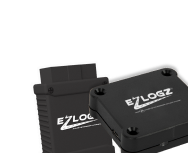
Ezlogz offers fleet management technology for commercial trucking operations, including GPS tracking and electronic logging capabilities.
Combining compatible tracking tools with dispatch procedures can help transportation businesses improve operational visibility and communication.
Centralize Truck Tracking and Dispatch Information
A centralized fleet management environment allows authorized employees to access relevant operational information without switching constantly between disconnected tools.
Useful dispatch information may include vehicle locations, route progress, driver status, and shipment records.
Where supported by the selected platform and integrations, combining this information helps dispatchers understand both the geographic position and operational availability of fleet resources.
Centralization can also improve coordination between dispatch shifts by providing shared records of vehicle movement and previous activities.
Establish an Efficient GPS Dispatch Workflow
Trucking companies can implement GPS-based dispatch management through a series of practical steps.
Step 1: Evaluate existing dispatch challenges.
Review recurring delays, communication problems, empty mileage, inaccurate ETAs, and manual administrative tasks.
Step 2: Select compatible GPS tracking technology.
Choose equipment appropriate for the vehicles, operating regions, and reporting needs of the business.
Step 3: Configure dispatcher access.
Establish appropriate permissions so authorized dispatch personnel can view the information required for their responsibilities.
Step 4: Connect relevant fleet systems.
Where supported, integrate GPS data with ELD, dispatch records, and other operational tools.
Step 5: Configure operational notifications.
Set up useful geofences and alerts that help dispatchers recognize important events without generating excessive notifications.
Step 6: Train dispatchers and drivers.
Explain how tracking information will be used, how assignments should be communicated, and when direct driver confirmation remains necessary.
Step 7: Establish performance indicators.
Monitor metrics such as delivery punctuality, empty miles, vehicle utilization, and dispatch response times.
Step 8: Review results and improve procedures.
Use operational reports to identify recurring inefficiencies and adjust dispatch practices.
Monitor Results and Continuously Improve Dispatching
The long-term value of GPS tracking depends on how consistently trucking companies use the information.
Fleet managers should periodically analyze vehicle movement, pickup delays, route efficiency, and idle time.
For example, repeated delays at a particular warehouse may indicate that pickup appointments need better scheduling.
Similarly, consistent empty mileage on a specific route may suggest opportunities to coordinate backhaul shipments.
GPS history can also help identify differences between planned and actual trip durations, supporting more realistic future schedules.
These observations allow dispatch teams to make gradual improvements based on measurable operational conditions.
Supporting More Efficient Trucking Operations With Ezlogz
For trucking companies looking to improve daily coordination, GPS tracking is an important component of modern fleet management.
A connected operational environment can help dispatchers maintain vehicle visibility, monitor assignments, and coordinate more effectively with drivers.
By combining location information with reliable processes and available fleet management tools, transportation businesses can reduce avoidable administrative work and make better-informed scheduling decisions.
Explore Ezlogz to learn more about its fleet management and trucking technology solutions.
FAQ:
1. How does GPS tracking improve truck dispatch operations?
GPS tracking provides dispatchers with current vehicle locations and movement information. This helps them assign trucks, monitor shipments, identify potential delays, and communicate more effectively with drivers and customers.
2. Can GPS tracking help dispatchers assign trucks faster?
Yes. GPS tracking allows dispatchers to identify vehicles near pickup locations without contacting every driver individually. Combined with equipment, assignment, and driver availability information, it supports faster and more appropriate load assignments.
3. How does real-time GPS tracking reduce delivery delays?
Real-time GPS tracking helps dispatchers recognize unexpected stops, slow progress, and route disruptions earlier. This allows them to coordinate schedule adjustments, notify customers, and respond before delays create additional operational problems.
4. Can GPS dispatch software reduce empty miles?
GPS dispatch software can support lower empty mileage by helping dispatchers identify suitable trucks near available freight. However, actual reductions depend on load availability, driver schedules, equipment compatibility, and effective dispatch planning.
5. What is the difference between GPS tracking and truck dispatch software?
GPS tracking primarily monitors vehicle positions and movement. Truck dispatch software manages transportation assignments, schedules, and communication workflows. Integrated solutions use location data to support dispatch decisions and operational planning.
6. How does GPS tracking improve communication between dispatchers and drivers?
GPS tracking reduces the need for repetitive calls requesting vehicle locations. Dispatchers can review current tracking information and contact drivers when new assignments, delays, delivery instructions, or other important operational issues require attention.
7. Can GPS tracking work with ELD systems?
Yes. Compatible GPS tracking and ELD systems can provide location and driver duty-status information within connected fleet management workflows. This helps dispatchers evaluate vehicle availability while considering applicable Hours of Service requirements.
8. How does geofencing help trucking dispatch operations?
Geofencing creates virtual boundaries around locations such as warehouses and distribution centers. Compatible GPS tracking systems can generate entry and exit notifications, helping dispatchers monitor arrivals, departures, and facility-related delays.
9. Is GPS tracking useful for small trucking companies?
Yes. Small trucking companies can benefit from centralized vehicle visibility, fewer manual status requests, improved delivery monitoring, and more efficient load assignments. The value depends on fleet size, operating complexity, and how the technology is used.
10. What GPS tracking features should trucking dispatchers look for?
Useful features include real-time vehicle locations, route history, geofencing, configurable alerts, location reporting reliability, performance analytics, appropriate user permissions, and compatibility with dispatch management and ELD systems.





Comments