

Contents:
- What Makes a Trucking Company Competitive Today?
- From Reactive Fleet Management to Proactive Control
- Essential Technologies for a More Competitive Fleet
- Reducing Operating Costs with Better Data
- Turning Safety into a Competitive Strength
- Improving Dispatch and Customer Service
- Supporting Drivers Instead of Adding Friction
- Why Integrated Fleet Technology Has an Advantage
- A Practical Technology Implementation Plan
- Metrics That Show Whether Technology Is Working
- Measuring Return on Investment
- How Small and Mid-Sized Fleets Can Compete with Larger Carriers
- Building a Connected Fleet with EZLOGZ
- FAQ:
Competition in trucking is no longer determined by fleet size alone. A carrier with fewer vehicles can outperform a larger competitor when it controls costs more precisely, responds faster to customers, keeps equipment productive, and gives drivers the support they need to work safely and efficiently.
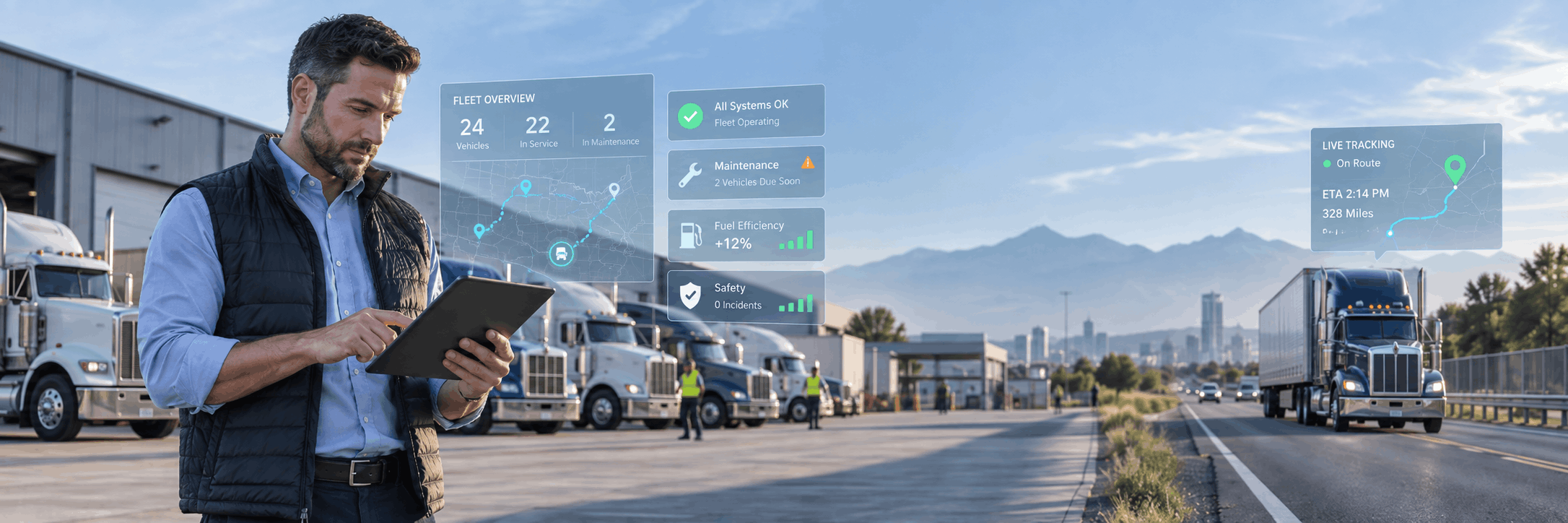
That is where smart technology creates a meaningful advantage. Connected electronic logging devices, GPS tracking, telematics, AI-enabled dash cameras, digital inspections, mobile applications, and automated reporting give managers a clearer view of the operation. More importantly, they turn that visibility into practical decisions: which truck to dispatch, which route to adjust, which driver needs coaching, which asset requires service, and which customer or lane produces a sustainable margin.
Technology does not make a trucking company competitive simply because it has been installed. Results depend on choosing the right tools, integrating them with daily workflows, and measuring whether they improve the business. When those elements work together, a fleet can reduce avoidable costs, strengthen safety, deliver more reliable service, and scale without allowing administrative complexity to grow at the same rate.
What Makes a Trucking Company Competitive Today?
A competitive carrier consistently delivers value to customers while protecting its own margins. That requires performance across several connected areas.
First, the company must understand and control its operating costs. Fuel, maintenance, insurance, labor, compliance, and equipment ownership all affect cost per mile. A business that cannot identify where money is being lost may accept freight that looks profitable but produces little or no contribution after accounting for the true cost of service.
Second, it must provide dependable service. Shippers expect accurate delivery windows, proactive updates, complete documentation, and a fast response when plans change. Reliability is not limited to arriving on time; it also includes giving customers useful information before a delay becomes a surprise.
Third, the carrier must protect drivers, cargo, equipment, and the public. A strong safety program can reduce disruptions, support more consistent performance, and preserve the company’s reputation. Accurate compliance processes are equally important because violations and incomplete records can consume management time and interfere with operations.
Finally, the business must be able to grow without losing control. Adding trucks, drivers, customers, and terminals creates more data and more decisions. Manual systems that seem manageable with five trucks often become a source of errors with twenty or fifty. Scalable technology helps standardize work before growth exposes weak processes.
From Reactive Fleet Management to Proactive Control
Traditional fleet management often depends on information that arrives after the event. Dispatch learns about a delay when a customer calls. Maintenance discovers a defect after a roadside failure. Management notices excessive fuel expense at the end of the month. Safety personnel investigates risky behavior only after an incident.
Smart fleet technology changes the timing of information. Instead of waiting for a problem to become expensive, managers can receive current data and exception-based alerts. A dispatcher can see that a vehicle has stopped unexpectedly. A safety manager can review a verified harsh-braking event. A maintenance team can act on a diagnostic code before the truck misses a delivery. A compliance specialist can address an incomplete record before an inspection.
The competitive advantage comes from shortening the time between an operational change and the company’s response. Faster awareness produces more options. A dispatcher who identifies a likely delay two hours in advance may be able to reroute another vehicle, adjust a dock appointment, or warn the customer. The same delay discovered ten minutes before arrival leaves far fewer choices.
This does not mean managers should receive an alert for every data point. Effective systems separate normal activity from exceptions that require attention. The objective is to reduce uncertainty, not create another stream of noise.
Essential Technologies for a More Competitive Fleet
No single device solves every operational problem. The strongest results usually come from a connected technology stack in which systems share accurate data and support the same business goals.
Electronic Logging Devices and Compliance Visibility
An electronic logging device automatically records driving time by synchronizing with the vehicle engine. According to the Federal Motor Carrier Safety Administration, this supports faster, more accurate management of duty-status records.
For a carrier, the value extends beyond replacing paper logs. Current Hours of Service information helps dispatchers determine whether a driver can legally complete an assignment before accepting or dispatching the load. Automated warnings can flag approaching limits, unidentified driving time, missing certifications, and other records that require review.
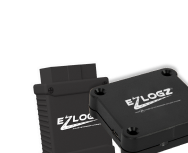
When ELD data is connected to dispatch, safety, payroll, and reporting workflows, the company avoids repeated data entry and reduces the risk of different departments working from inconsistent information. A solution such as the EZLOGZ ELD platform can therefore function as both a compliance tool and an operational data source.
Real-Time GPS and Asset Tracking
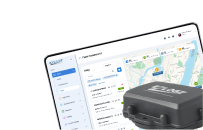
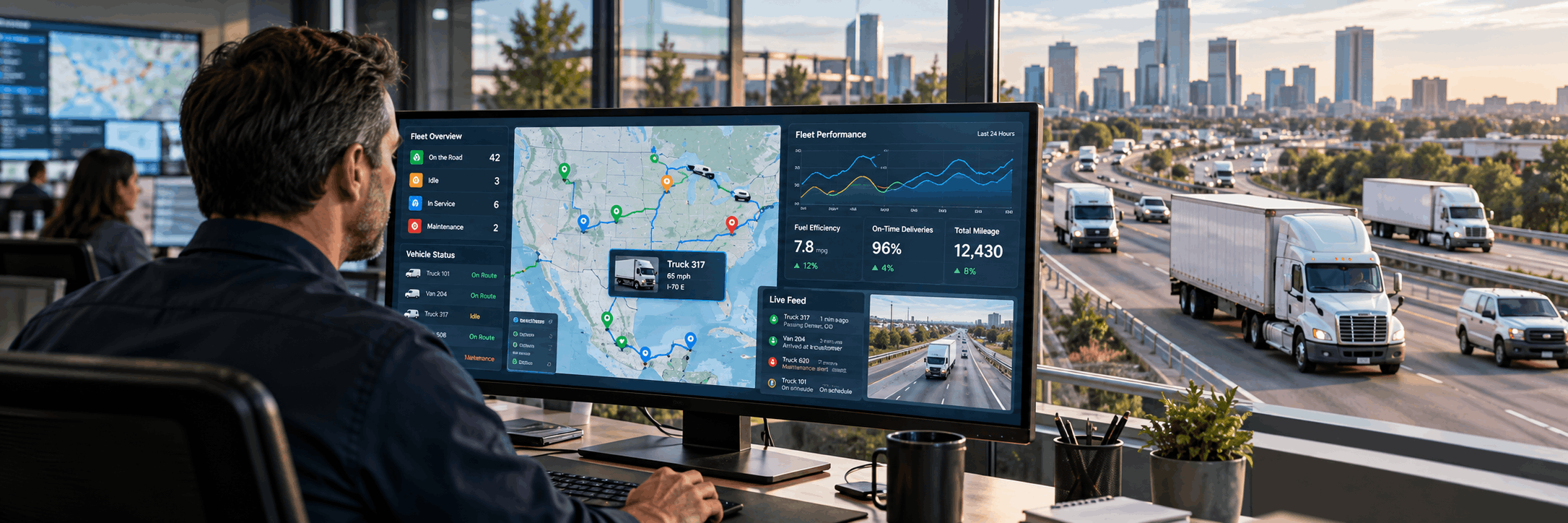
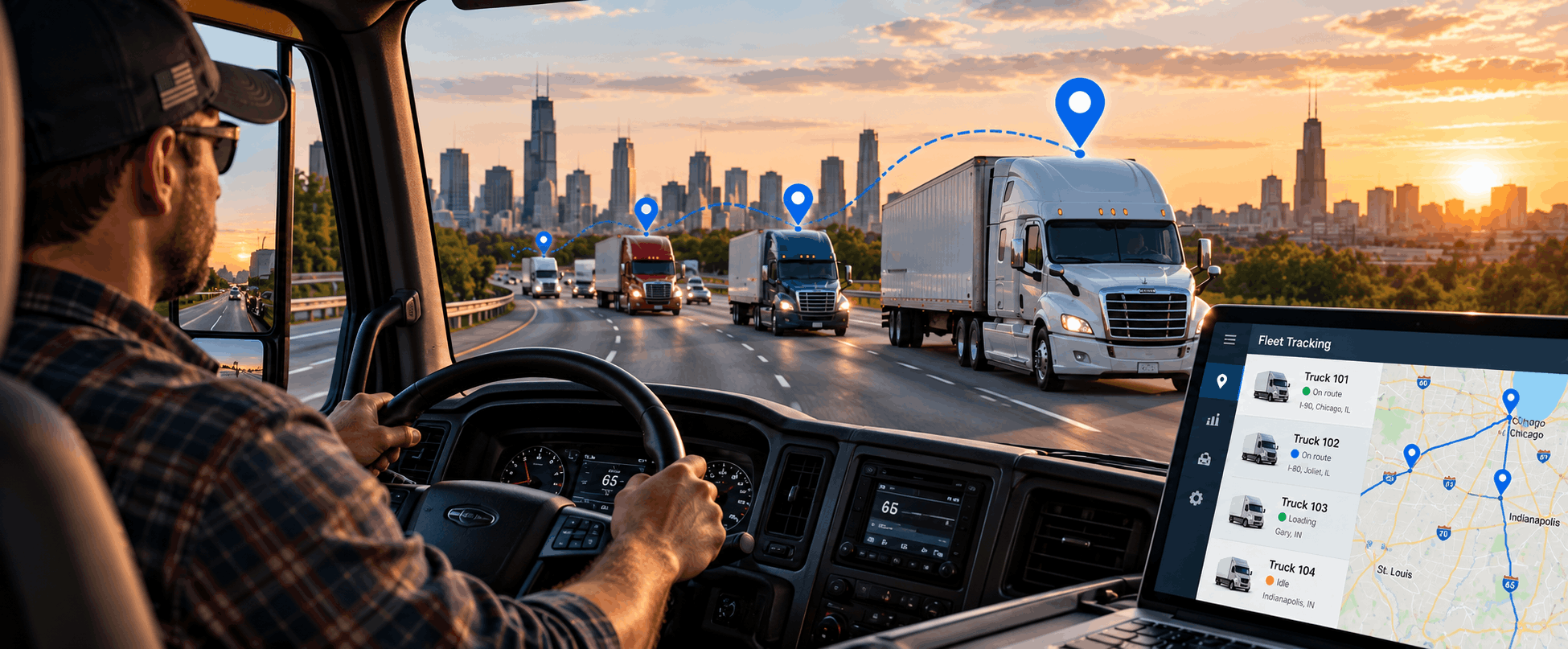
Real-time location data gives dispatchers a live view of trucks, trailers, and other mobile assets. They can identify the nearest suitable vehicle, verify route progress, estimate arrival times, and respond to deviations without repeatedly calling drivers.
Geofences make location data more useful. A fleet can create virtual boundaries around terminals, customer facilities, fuel stops, repair locations, or restricted areas. Arrival and departure events can then be recorded automatically. This supports detention analysis, customer communication, asset security, and more accurate operational histories.
GPS and asset tracking also help managers identify weak utilization. If a trailer remains at one location for several days or a truck repeatedly travels unnecessary miles, the system provides evidence for investigating the cause.
AI-Enabled Dash Cameras
Telematics may show that a vehicle braked sharply, but video explains why. The driver may have been following too closely, or the driver may have reacted correctly when another vehicle entered the lane. That context matters for fair coaching, accident investigation, and claims management.
AI-enabled cameras can help identify events associated with distraction, unsafe following distance, lane movement, speeding, or sudden braking. These alerts allow safety teams to focus on moments that deserve review instead of manually searching through hours of footage.
The purpose should be prevention and context, not surveillance for its own sake. Fleets need clear policies explaining what is recorded, who may access the footage, how long it is retained, and how it will be used. When drivers understand the process, truck dash cameras can protect employees as effectively as they identify risky behavior.
Digital Vehicle Inspections
Paper inspection forms delay information and make follow-up difficult to verify. A digital Driver Vehicle Inspection Report lets the driver record a defect, add notes or photos, and submit the report immediately. Maintenance personnel can review the issue, document corrective action, and preserve the complete history.
This workflow connects the person who identifies the problem with the team responsible for resolving it. It also makes unresolved defects more visible. A digital DVIR process can reduce missing records, improve accountability, and help the company keep equipment ready for service.
Vehicle Diagnostics and Maintenance Automation
Unexpected breakdowns are expensive because the repair is only one part of the loss. Towing, roadside labor, driver delay, replacement equipment, missed appointments, and customer dissatisfaction can make a preventable failure much more costly than scheduled maintenance.
Connected vehicle data can reveal diagnostic trouble codes, mileage, engine hours, battery condition, temperature changes, and other indicators. Combined with service history, this information helps maintenance teams decide which vehicles require immediate attention and which can remain in operation until a planned service window.
Fleet software can also automate reminders based on mileage, time, engine hours, or asset condition. Over time, managers gain the information needed to compare repair costs, downtime, and reliability across vehicles. This supports better decisions about preventive work, warranties, parts inventory, and equipment replacement.
Mobile Fleet Management
A mobile application extends the fleet platform from the office to the road. Drivers can review assignments, manage logs, complete inspections, upload documents, and communicate with dispatch from a compatible device. Managers can monitor critical activity even when they are away from a terminal.
The best mobile workflows reduce effort. Drivers should not need to navigate multiple applications or enter the same information repeatedly. Tasks must be clear, quick, and designed to avoid distraction. The EZLOGZ mobile app supports a connected workflow between drivers and fleet personnel, helping information reach the right team sooner.
Integrated Reporting and APIs
Many fleets use separate systems for dispatch, accounting, payroll, maintenance, fuel, compliance, and customer service. If those systems cannot exchange data, employees become the integration layer. They export reports, copy values into spreadsheets, reconcile conflicting records, and correct avoidable errors.
Fleet API integrations allow compatible platforms to share data automatically. An arrival event can update a dispatch record. Verified mileage can support fuel-tax reporting. Driver and vehicle identifiers can remain consistent across systems. Managers gain a more complete operating picture without building every workflow around manual transfers.
Integration is not merely an IT concern. It directly affects administrative cost, reporting speed, data quality, and the company’s ability to scale.
Reducing Operating Costs with Better Data
The value of smart technology becomes clearest when it changes a measurable cost.
Fuel Efficiency
Fuel use is influenced by route selection, vehicle condition, load weight, speed, acceleration, braking, and idling. Telematics allows managers to compare those factors across drivers, vehicles, and operating conditions.
The U.S. Department of Energy notes that aggressive driving can reduce fuel economy and that telematics feedback can help drivers change fuel-consuming behavior. A fleet can use this information to identify where improvement is realistic rather than applying one generic target to every route.
For example, a manager may discover that one vehicle consumes more fuel than similar trucks on the same lane. The cause could be driving behavior, tire pressure, an engine problem, or an equipment configuration. Data identifies the exception; a qualified employee still determines the cause and corrective action.
Idling and Unproductive Time
Some idling is operationally necessary, particularly in extreme weather or specialized applications. However, prolonged or unexplained idling consumes fuel, adds engine hours, and can indicate inefficient loading, detention, routing, or driver habits.
Location and engine data show when idling occurs and place it in context. A fleet can distinguish a truck waiting at a customer facility from one idling unnecessarily at the terminal. That distinction leads to better decisions: coach the driver, adjust the route, renegotiate detention terms, or address a customer process that repeatedly delays equipment.
Empty and Out-of-Route Miles
Every non-revenue mile still consumes fuel, driver time, maintenance capacity, and equipment life. GPS visibility, driver availability, and load information help dispatchers match the right vehicle with the right assignment. Load-planning tools can also reveal backhaul opportunities and recurring network imbalances.
The goal is not to eliminate every empty mile, which is rarely practical. It is to understand why those miles occur and reduce the portion that produces no strategic benefit.
Administrative Cost
Manual work is often less visible than fuel expense, but its impact grows with the fleet. Re-entering log data, assembling inspection files, calculating mileage, preparing reports, and searching for documents all consume paid time.
Automated workflows allow employees to focus on exceptions and decisions instead of routine transcription. Services such as IFTA reporting can organize mileage and fuel information more efficiently, while integrated records make compliance documents easier to retrieve.
Turning Safety into a Competitive Strength
Safety affects far more than accident frequency. It influences driver wellbeing, vehicle availability, claims, insurance relationships, customer confidence, regulatory exposure, and the company’s ability to attract professional employees.
Smart technology gives a fleet the evidence needed to move from general safety messaging to targeted action. Telematics can identify repeated speeding, aggressive acceleration, hard cornering, or harsh braking. Video can show the road and driver context behind a high-risk event. Inspection and maintenance records can reveal equipment-related patterns.
The most effective process follows a continuous cycle:
- Detect a verified risk or recurring pattern.
- Review the event in context.
- Coach the driver or correct the operational cause.
- Record the action taken.
- Measure whether the behavior improves.
This approach is more useful than judging an employee from a single isolated alert. It also creates an opportunity to recognize safe performance. Fleets can reward drivers who maintain strong safety records, complete documentation accurately, protect fuel efficiency, and provide dependable service.
Technology should support a fair safety culture. Policies must apply consistently, managers must consider operating context, and drivers should have an opportunity to explain events. When employees see that data is used to protect them and recognize good work, coaching is more likely to produce lasting improvement.
Improving Dispatch and Customer Service
Customers rarely see a carrier’s internal technology, but they experience its results.
Real-time vehicle locations and Hours of Service data help dispatchers build achievable plans. They can see whether the nearest truck is actually suitable for the load, whether the driver has enough legal driving time, and whether the equipment will be available when required. Better planning reduces last-minute changes and unnecessary calls.
When road conditions, weather, detention, or equipment problems affect a delivery, connected systems allow the carrier to respond earlier. Dispatch can evaluate an alternate route, move the appointment, send another vehicle, or provide a revised ETA. Even when a delay cannot be prevented, proactive communication demonstrates control and professionalism.
Digital documentation improves the post-delivery experience as well. Proof of delivery, timestamps, inspection records, and route histories can reach the office quickly, reducing disputes and supporting faster invoicing.
Over time, these capabilities become part of the carrier’s commercial value proposition. A company can demonstrate on-time performance, ETA accuracy, response time, safety results, and documentation quality when bidding for contracts. It competes on verified service rather than price alone.
Supporting Drivers Instead of Adding Friction
Drivers determine whether fleet technology succeeds in daily operations. A system that creates extra steps, unreliable connections, or confusing alerts may be technically advanced but operationally weak.
The implementation should begin by asking how the tool affects a driver’s workday. Does it simplify logging? Are assignments complete and easy to understand? Can documents be uploaded without repeated entry? Are inspections faster? Does dispatch use current availability data to avoid unrealistic schedules?
Technology can also make performance reviews more objective. Instead of relying on assumptions, managers can discuss specific events and patterns. Video may protect a driver from an inaccurate complaint. Route history may show that repeated late arrivals are caused by customer detention rather than poor performance. Reliable data makes accountability fairer for both drivers and managers.
Driver involvement is essential during selection and testing. A small pilot group can identify problems that are invisible in a sales demonstration. Their feedback can improve training, device placement, notification settings, and workflow design before the system is deployed throughout the fleet.
Why Integrated Fleet Technology Has an Advantage
A collection of standalone tools may solve individual problems, but fragmentation creates its own cost. Separate logins, incompatible reports, duplicate records, and inconsistent identifiers make it harder to understand the operation as a whole.
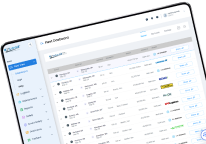
An integrated platform connects compliance, location, safety, vehicle, driver, and reporting information. Managers can move from an alert to the relevant driver, vehicle, trip, video, or document without manually assembling the history. Leadership gains a consistent view of performance across departments.
Centralization also improves automation. A geofence event can update a trip status. A vehicle defect can create a maintenance task. Available Hours of Service can inform dispatch. Mileage data can support reporting. Each connection removes a manual handoff and reduces the time between information and action.
For a growing carrier, this structure is especially valuable. The company can add vehicles, users, locations, and workflows without rebuilding its operating system every time the business expands.
A Practical Technology Implementation Plan
Buying software is not the same as improving operations. A disciplined rollout connects the investment to a specific business result.
1. Define the Operational Problem
Start with the issue creating the greatest cost or risk. It may be high idle time, incomplete logs, preventable accidents, maintenance downtime, weak asset visibility, or slow customer updates. A precise problem produces a clearer technology requirement.
2. Record a Baseline
Measure current performance before deploying the new system. Depending on the goal, the baseline may include fuel consumption, idle hours, empty miles, administrative labor, inspection completion, HOS violations, maintenance downtime, safety events, or on-time delivery.
Without a baseline, managers may feel that operations have improved but cannot demonstrate the value.
3. Evaluate Workflow Fit
Assess how the system works for drivers, dispatchers, safety personnel, maintenance teams, and administrators. Review device compatibility, connectivity, integrations, data ownership, reporting, cybersecurity, support, scalability, and total cost of ownership.
The best demonstration uses realistic fleet scenarios rather than generic features.
4. Run a Pilot
Deploy the technology with a representative group of vehicles and drivers. Test the accuracy of data, reliability of hardware, usefulness of alerts, quality of support, and effect on daily work.
A pilot should be long enough to capture normal operating variation but controlled enough that problems can be corrected quickly.
5. Train by Role
Drivers, dispatchers, managers, and administrators use the same system differently. Training should focus on the tasks each group must complete, the decisions the data will support, and the policies governing its use.
Explain why the change is being made. Employees are more likely to adopt a system when they understand the operational problem it is meant to solve.
6. Review Results and Refine the Process
Compare pilot performance with the baseline. Determine whether the improvement came from the technology, a workflow change, training, or a combination of factors. Adjust alerts, reports, responsibilities, and policies before expanding the rollout.
7. Scale with Standardized Procedures
Document the final workflow and assign ownership. Define who reviews alerts, who follows up on defects, how coaching is recorded, how reports are distributed, and how data quality is checked. Standardization prevents the system from being used differently across teams or terminals.
Metrics That Show Whether Technology Is Working
The right metrics depend on the company’s goals, but a balanced scorecard may include:
| Business area | Useful performance indicators |
| Cost control | Cost per mile, fuel cost per mile, idle time, maintenance cost per vehicle |
| Productivity | Revenue per truck, vehicle utilization, empty-mile percentage, loads per truck |
| Reliability | On-time delivery rate, ETA accuracy, unplanned downtime, average repair time |
| Safety | Preventable incident rate, speeding events, harsh-driving trends, coaching completion |
| Compliance | HOS violations, unidentified driving events, DVIR completion, unresolved defects |
| Customer service | Update response time, documentation turnaround, claims or complaint rate |
| Workforce | Driver turnover, training completion, app adoption, administrative time per driver |
Metrics should be reviewed in context. A truck operating in mountainous terrain cannot be compared fairly with one running a flat highway route without adjustment. A vehicle assigned to local work will have a different idle and fuel profile from an over-the-road unit. Data should improve judgment, not replace it.
Measuring Return on Investment
Fleet technology creates value through direct savings, recovered productivity, risk reduction, and new revenue. A practical calculation begins with:
Annual financial benefit − annual technology cost = estimated annual net benefit
Technology cost should include devices, installation, subscriptions, integrations, training, internal administration, and replacement equipment. Benefits may include:
- Lower fuel consumption;
- Reduced idle time and unnecessary mileage;
- Fewer emergency repairs and less downtime;
- Fewer hours spent on manual administration;
- Improved vehicle utilization;
- Reduced claims or preventable incidents;
- Fewer compliance disruptions;
- Faster invoicing and documentation;
- Stronger customer retention;
- Additional capacity created without adding office staff.
Some benefits are easier to measure than others. Fuel savings can be compared directly, while the value of avoiding a serious incident is probabilistic. The company should separate verified savings from estimated risk reduction and clearly state its assumptions.
ROI is not a one-time calculation. If expected results do not appear, the fleet should investigate adoption, data quality, alert settings, training, integrations, and workflow ownership. A powerful platform cannot create value if employees do not act on the information it provides.
How Small and Mid-Sized Fleets Can Compete with Larger Carriers
Smart technology can be especially valuable for smaller companies because they have fewer administrative resources and less capacity to absorb preventable losses. Automation allows one employee to manage work that might otherwise require several disconnected processes.
Smaller fleets also have an implementation advantage: they can often test, adjust, and standardize workflows faster than a large organization. Decisions involve fewer layers, and managers are closer to drivers and customers.
The most effective approach is to start with the problem that offers the clearest return. A fleet does not need to activate every possible feature on the first day. It may begin with ELD compliance and GPS visibility, then add video safety, digital inspections, maintenance automation, or deeper integrations as the team develops experience.
Scalability matters from the beginning. The selected system should support additional trucks, users, reports, and integrations without forcing the company to replace its core platform as it grows.
Building a Connected Fleet with EZLOGZ
EZLOGZ brings essential fleet functions into a connected technology environment. Its solutions include electronic logging, GPS and asset tracking, AI-enabled dash cameras, mobile fleet management, digital vehicle inspections, reporting, and API integrations.
For drivers, connected tools can simplify logging, inspections, communication, and document submission. For dispatchers, real-time location and availability data support faster, more realistic decisions. Safety and compliance teams gain clearer records and more relevant events to review. Company leaders receive the performance information required to manage cost, service, risk, and growth.
The central benefit is not the number of features. It is the ability to replace fragmented processes with a coordinated operational system. That helps carriers respond sooner, use assets more productively, support drivers more effectively, and provide customers with the transparency they increasingly expect.
To explore the right combination of tools for your operation, request an EZLOGZ demo and evaluate the platform using your own vehicles, workflows, and performance goals.
FAQ:
The first investment should address the company’s most expensive or disruptive problem. Many carriers begin with an ELD and GPS tracking because these technologies improve compliance, dispatch visibility, and record accuracy. A fleet with a high accident rate may prioritize video safety, while one experiencing repeated breakdowns may focus on diagnostics and maintenance automation.
Yes. Telematics can show excessive idling, aggressive acceleration, speeding, route deviation, and abnormal vehicle performance. Managers can use these insights to coach drivers, improve routing, investigate mechanical problems, and create realistic fuel-efficiency targets.
GPS tracking provides current vehicle locations and supports more reliable arrival estimates. Dispatchers can inform customers about delays before they become surprises, verify arrival and departure times, and answer shipment-status questions without repeatedly contacting drivers.
No. Video can protect drivers by documenting road conditions, other motorists’ behavior, and events leading to a collision or safety alert. Fleets should adopt transparent camera policies and use footage for fair coaching, incident investigation, and claims support.
Well-designed technology reduces paperwork, improves communication, supports realistic scheduling, and makes performance reviews more objective. It contributes to retention when the company involves drivers in implementation, provides effective training, and uses data consistently and fairly.
An integrated platform generally provides better data consistency and reduces duplicate work. Standalone systems may be appropriate for specialized needs, but they should support reliable integrations so employees are not forced to transfer information manually.
The fleet should measure indicators tied to the original business goal. Common examples include fuel cost per mile, idle time, empty mileage, HOS violations, inspection completion, unplanned downtime, safety-event trends, on-time delivery, and administrative labor.
The timeline depends on fleet size, existing performance, implementation cost, user adoption, and the problem being addressed. Some improvements, such as faster location visibility or reduced paperwork, may appear quickly. Maintenance, safety, and retention benefits usually require a longer measurement period.
Creating a Durable Competitive Advantage
Smart technology gives trucking companies the visibility and control required to compete in an industry where small inefficiencies can quickly erode margins. It connects the truck with the office, turns operational activity into measurable data, and helps managers act before routine problems become costly disruptions.
The strongest fleets use this capability across the business. They control fuel and mileage, plan maintenance earlier, automate compliance work, coach drivers with context, improve delivery communication, and measure the actual economics of their customers and lanes.
Technology is therefore not simply an equipment purchase. It is part of a management system built around accurate information, consistent processes, and timely action. When a carrier combines the right platform with employee involvement and clear performance goals, it can operate more efficiently, deliver more reliable service, and grow without losing control.
That is how smart technology becomes more than a collection of devices. It becomes a durable competitive advantage.